Your users are already telling you what to build, through support tickets, feature requests, survey responses, and churn interviews. The challenge isn't a lack of input. It's that feedback lives in a dozen different places, making it nearly impossible to spot patterns or prioritize with confidence. That's exactly the problem a voice of customer platform solves.
VoC tools give product teams a single place to collect, organize, and analyze what customers actually want. The best ones go further: they help you prioritize based on real demand, surface trends you'd otherwise miss, and close the loop by showing users their feedback led to action. For product managers juggling competing requests from sales, support, and leadership, that clarity is a game-changer.
We built Koala Feedback to solve this exact problem, centralized feedback collection, voting, prioritization boards, and public roadmaps, so we know what matters in a VoC tool. In this guide, we break down the 10 best voice of customer platforms for product teams, comparing features, strengths, and trade-offs to help you pick the right fit.
Koala Feedback is a product feedback platform built for SaaS teams that need more than a suggestion box. It centralizes user input, surfaces what matters most through voting and prioritization, and then communicates progress back to users through a public roadmap, all from one tool.
At its core, Koala Feedback acts as a full-cycle voice of customer platform, handling everything from initial idea capture through to roadmap communication. Here is what the platform covers out of the box:
Your users submit ideas through a branded feedback portal you can customize with your own domain, logo, and colors. Koala Feedback automatically deduplicates and categorizes each submission, which cuts the manual work of sorting through repetitive requests considerably and keeps your boards clean as volume grows.

When users vote and comment on each other's ideas, your team gets a ranked, data-backed list of what to build next instead of relying on whoever was loudest in the last planning meeting.
Users can also leave comments on existing requests, which adds qualitative context to the raw vote count. That combination helps your team understand the reasoning behind each request, not just how many people want it, giving you stronger footing when pushing back on stakeholder pressure.
Once you commit to a feature, Koala Feedback's public roadmap lets you communicate your product direction transparently to users. You set customizable statuses like planned, in progress, and completed, so users always know where a request stands without your team sending manual updates after every sprint.
Closing the loop this way builds genuine trust and reduces repeat submissions, since users can see their feedback directly shaped your roadmap.
Koala Feedback offers a free plan that makes it accessible for early-stage teams and small SaaS businesses getting started with structured feedback collection. Paid tiers unlock more customization options, higher feedback volume limits, and additional features. Visit koalafeedback.com for current pricing details.
Productboard is a product management platform built for teams that need to connect customer insights directly to their development backlog. It targets mid-size to enterprise product organizations managing high volumes of feedback across multiple channels and product lines.
As a voice of customer platform, Productboard helps teams capture feedback from sources including email, Slack, Intercom, and Zendesk, then links that input directly to specific features in your product plan. The platform focuses on turning raw customer input into actionable product intelligence rather than just storing requests in a list.
Productboard pulls in customer feedback from tools your team already uses, so you don't need users to submit ideas through a separate portal if that doesn't fit your workflow. You can tag and link each piece of feedback to a feature or initiative, which creates a clear trail between what customers say and what your team decides to build next.
This direct mapping between customer input and feature planning is where Productboard separates itself from basic feedback tools.
Your team can score features using built-in prioritization frameworks that factor in user impact, business value, and effort. Productboard surfaces which initiatives have the strongest case based on real customer data rather than gut feel. You can also share tailored roadmap views with different stakeholder groups, giving executives and customers appropriate visibility into what's coming.
Productboard offers a free trial on paid plans, with paid tiers starting at around $19 per maker per month and scaling up for larger teams with more advanced requirements.
Canny is a dedicated feedback management tool aimed at product teams that want a focused, straightforward approach to capturing and organizing user input. It sits comfortably in the voice of customer platform category by giving users a structured way to submit ideas, vote on existing requests, and track product progress over time.
Canny covers the core feedback loop from idea capture through to roadmap communication. The platform is intentionally scoped around feedback management rather than full product planning, which makes it simpler to deploy than broader tools but also means you may need separate tooling for deeper prioritization or product strategy work.
Your users submit requests through a dedicated feedback portal where they can vote on ideas others have already submitted. Canny automatically detects and merges duplicate submissions, keeping your boards clean without requiring manual sorting on your end. That deduplication feature saves significant review time as request volume climbs.
The vote count on each request gives your team concrete demand data, so prioritization conversations stay grounded in real user signals rather than internal assumptions.
Canny lets you publish a public roadmap that reflects the current status of planned, in-progress, and shipped features. Users who submitted or voted on a request can see exactly where it stands without reaching out to your support team.
When a feature ships, Canny can automatically notify users who voted on that request, which closes the feedback loop without your team sending individual follow-ups.
Canny offers a free plan for small teams with basic needs. Paid plans start at $99 per month, scaling up based on team size and feature requirements.
UserVoice is a feedback and product intelligence platform built primarily for enterprise and mid-market SaaS teams that need structured workflows around idea collection and internal reporting. It has been in the market for over a decade and is positioned as a complete voice of customer platform for organizations with defined processes around how feedback gets reviewed and acted on.
UserVoice focuses on giving product teams a systematic approach to capturing, routing, and reviewing customer ideas alongside internal signals from sales and customer success teams. Rather than relying on users alone to submit requests, it includes tools that let your customer-facing staff log feedback on behalf of customers during calls and conversations, which matters when your users are less likely to self-serve through a portal.
Your team can collect feedback from multiple intake points, including customer-facing portals, internal submission tools, and integrations with CRM and support platforms. UserVoice consolidates these inputs into a single board, where submissions are reviewed, tagged, and grouped by theme.
This centralized intake model is especially useful for teams where sales and support hear feedback that customers never submit through a portal on their own.
UserVoice includes built-in prioritization frameworks that factor in the revenue tied to requesting accounts, not just raw vote counts. This lets you weight feedback by business impact, which helps justify roadmap decisions to leadership using financial data rather than request volume alone.
UserVoice does not publish standard pricing publicly. You need to contact their sales team for a custom quote, which reflects its focus on enterprise buyers with more complex requirements.
Aha! Ideas is the feedback and ideation module within the broader Aha! product suite, designed for product teams that want a dedicated voice of customer platform integrated with strategic planning tools. It targets teams that need to go beyond basic request tracking and connect user input directly to their product strategy and prioritization process.
The platform gives your team a structured channel for collecting and organizing feature requests from customers, internal stakeholders, and sales teams. Aha! Ideas is built to work alongside Aha! Roadmaps, the company's core product management tool, so feedback flows directly into your planning workflow without manual hand-off steps between systems.
Your users submit ideas through a branded ideas portal where they can vote and comment on existing requests. One standout capability is audience segmentation: you can filter and analyze feedback by user attributes like plan type, company size, or region, which helps you weigh requests based on the customers they actually represent rather than treating every vote equally.
Segmenting feedback by customer type gives your team a more accurate picture of demand than raw vote counts alone.
Aha! Ideas includes built-in scoring models that factor in strategic fit, customer impact, and effort to help your team rank ideas objectively. Once you commit to an initiative, you can promote it directly to your Aha! roadmap, creating a clean, auditable path from user request to shipped feature with no context lost between tools.
Aha! Ideas offers a free 30-day trial on all plans. Paid plans for the Ideas Essentials tier start at $9 per user per month, with advanced tiers available for larger teams that need deeper workflow integrations.
Jira Product Discovery is Atlassian's purpose-built product discovery tool designed for teams that already live inside the Jira ecosystem. It bridges the gap between customer insight collection and actual delivery work, making it a strong voice of customer platform option for engineering-led organizations.
The platform gives product managers a dedicated space to capture ideas, link customer insights, and connect directly to Jira Software issues. Rather than treating feedback as something separate from development, it keeps customer signals and delivery work inside the same ecosystem, removing the friction of switching between tools for teams already running on Atlassian products.
Your team can attach customer feedback directly to ideas or initiatives within Jira Product Discovery, creating a clear trail from what customers said to what your team decides to build. Each idea can reference linked Jira Software issues, so engineers and product managers always understand the customer context behind a given ticket without digging through separate tools.
This tight connection between customer input and delivery work reduces the risk of building features without a clear understanding of the underlying user need.
The tool includes flexible prioritization views that let your team rank ideas by impact, effort, and custom fields you define. You can also invite stakeholders to contribute insights or vote on ideas, keeping input from across your organization in one place rather than scattered across documents or Slack threads.
Jira Product Discovery offers a free plan for up to three contributors, with paid plans starting at $10 per contributor per month.
Pendo is a product experience platform that combines in-app engagement tools with a built-in voice of customer platform layer. It targets product teams at growth-stage and enterprise SaaS companies that want to collect feedback directly from users while they're inside the product, rather than routing them to a separate portal.
The platform gives your team in-app surveys, NPS polls, and targeted guides that activate based on what users actually do inside your product. Unlike tools that rely on users choosing to submit feedback on their own, Pendo surfaces collection at the right moment in the user journey, which tends to generate higher response rates and more contextually accurate input.
Because Pendo tracks user behavior and session data, every piece of feedback your team receives comes attached to what a user was doing at the time of submission. Your team can see which features a respondent uses frequently, what plan type they're on, and how long they've been a customer without asking follow-up questions.
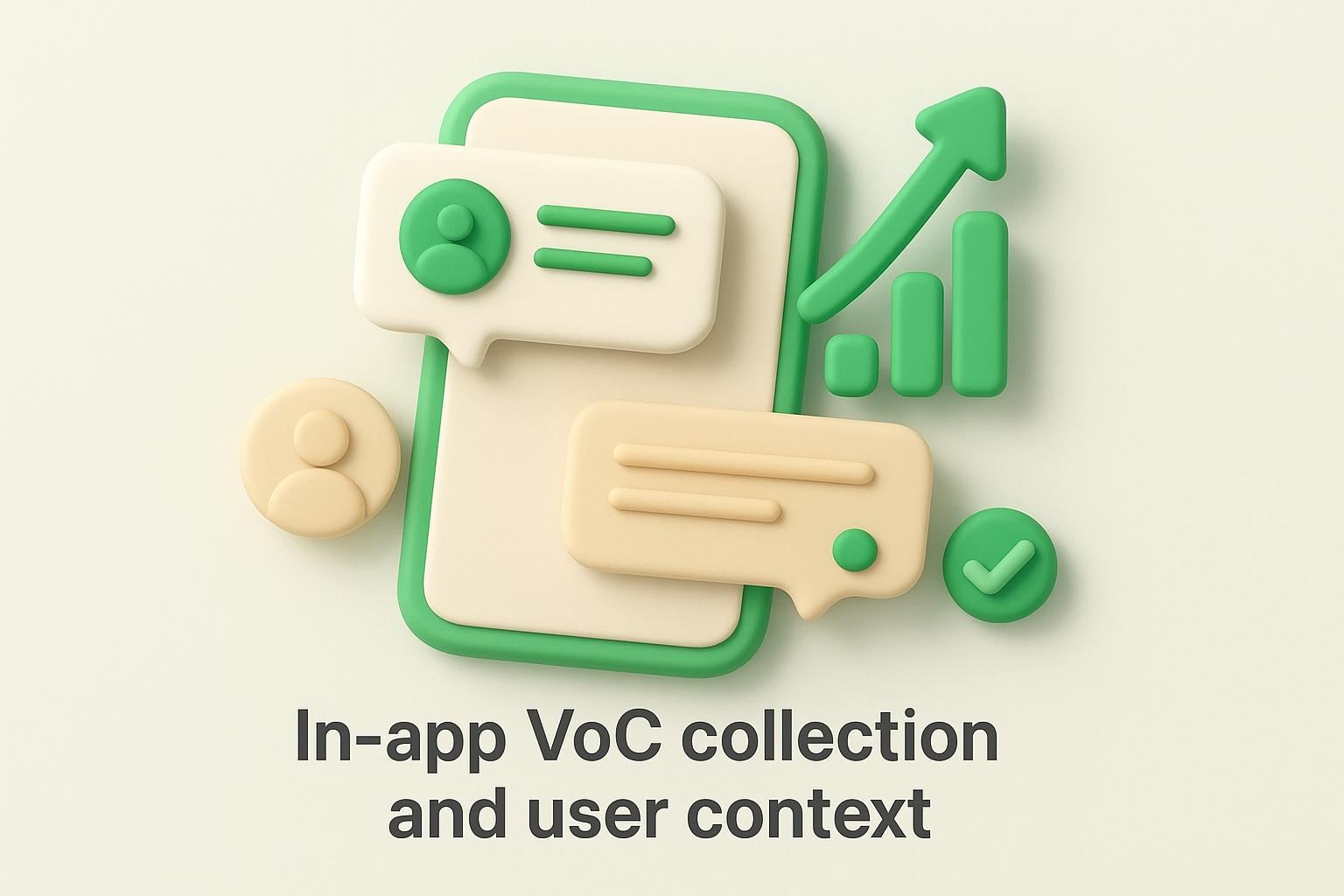
This behavioral context makes Pendo feedback significantly more actionable than anonymous submissions you'd receive through a standalone portal.
Pendo combines quantitative usage analytics with qualitative feedback in a single platform, so you can cross-reference what users say with what they actually do in your product. You can build automated workflows that trigger surveys after specific in-app events, helping your team collect targeted input at key moments without manual intervention.
Pendo offers a free plan with limited features suited for small teams. Paid plans are available, but pricing requires contacting their sales team directly for a custom quote based on your user volume and feature needs.
Zendesk is primarily known as a customer support platform, but it also functions as a practical voice of customer platform for teams that want to extract product insight from support interactions. It targets companies across all sizes that handle high volumes of customer conversations and need a structured way to turn that input into something their product team can act on.
Zendesk centralizes customer support tickets, live chat, and messaging conversations into a single workspace. Rather than asking users to submit feedback through a separate channel, it captures what customers already communicate naturally when they reach out for help, making it a useful source of unfiltered user sentiment for product teams with existing support operations.
Every support ticket your team handles contains real customer language about pain points, missing features, and broken workflows. Zendesk lets you surface those signals at scale by reviewing ticket trends over time rather than reading each conversation individually.
The volume of support data Zendesk sits on makes it one of the richest sources of organic VoC input available to teams that use it consistently.
Your team can apply custom tags to tickets based on theme, product area, or request type. Those tags feed into Zendesk's built-in reporting dashboards, where you can track which topics generate the most volume and share that data directly with your product team to inform prioritization decisions.
Zendesk offers paid plans starting at $19 per agent per month, with more advanced tiers available for teams that need deeper analytics and automation capabilities.
Qualtrics XM is an enterprise-grade experience management platform used by large organizations that run structured voice of customer platform programs across multiple business functions. It serves teams that need rigorous survey methodology, omnichannel data collection, and executive-level reporting rather than a lightweight feedback portal.
Qualtrics XM gives your team a comprehensive toolkit for designing, distributing, and analyzing customer feedback programs at scale. It covers NPS, CSAT, CES, and custom survey types, pulling responses from web, email, SMS, phone, and in-app channels into a unified experience management system.
Your team can deploy feedback collection across every customer touchpoint without managing separate tools for each channel. Qualtrics XM lets you configure automated survey triggers based on transaction events, support interactions, or milestone moments, so your feedback arrives when the customer experience is still fresh.
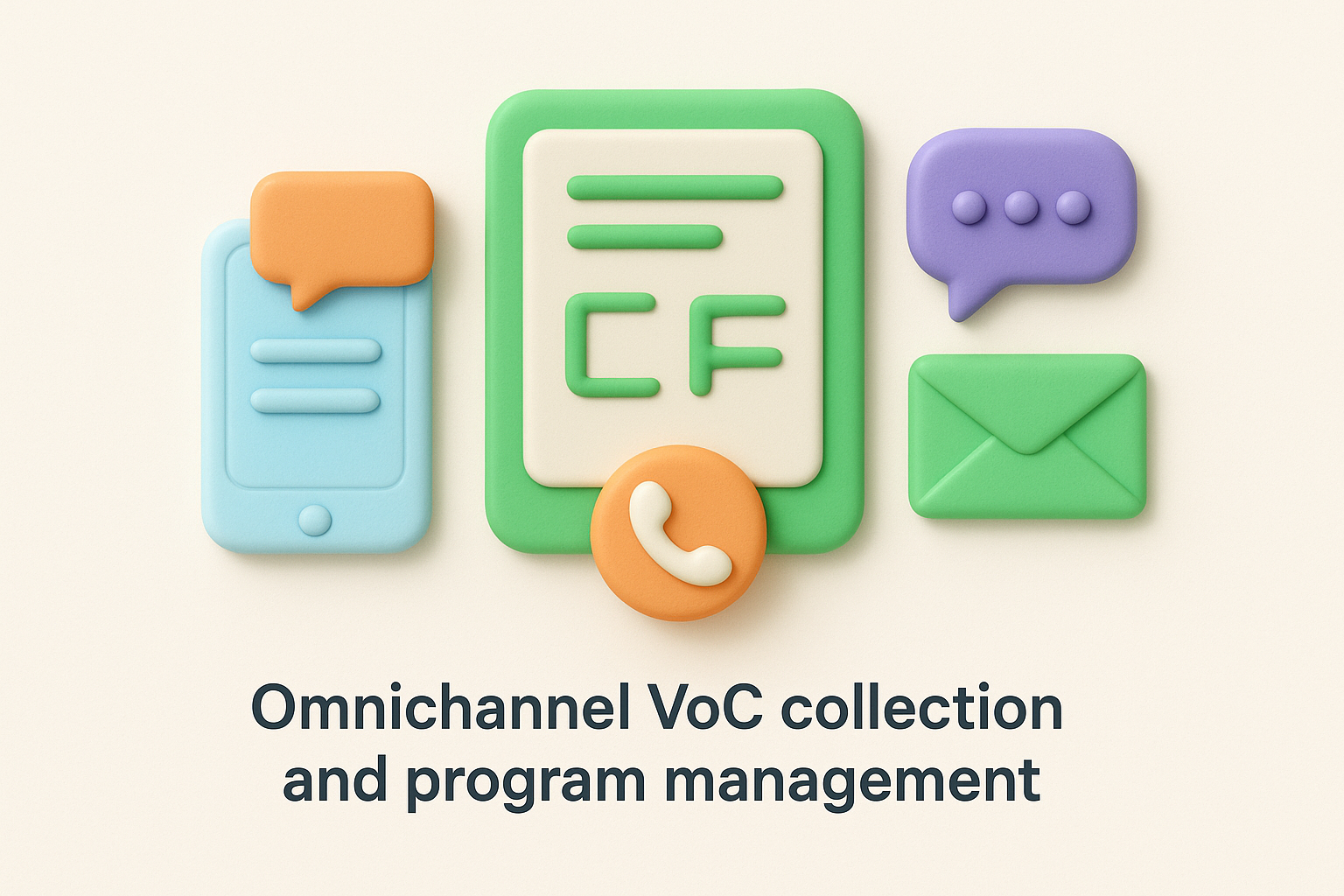
The breadth of channel coverage makes Qualtrics XM particularly well-suited for enterprise teams that interact with customers across a complex mix of digital and offline touchpoints.
Qualtrics XM includes built-in text analytics that automatically categorize and score open-ended responses using natural language processing. Your team can view trends through pre-built and customizable dashboards that surface sentiment shifts, topic clusters, and statistical drivers of customer satisfaction without requiring a data analyst to interpret the output.
Qualtrics XM does not publish standard pricing publicly. You need to contact their sales team for a custom quote, which reflects the platform's positioning as an enterprise solution with implementation support included.
Medallia is an enterprise voice of customer platform built for large organizations that need to capture and act on feedback across complex, high-volume customer journeys. It targets CX program leaders, product teams, and operations stakeholders at companies where customer interactions happen across multiple channels, locations, and business units simultaneously.
Medallia gives your team a centralized system for collecting structured and unstructured feedback from customers at every touchpoint in the journey. The platform handles everything from digital and in-app surveys to call center recordings and social listening, consolidating those signals into a single experience management layer your entire organization can access.
Your team can deploy feedback collection triggers across web, mobile, email, SMS, and in-person channels without managing separate tools for each. Medallia captures solicited feedback through surveys and unsolicited feedback through conversation analysis, which means you get a fuller picture of customer sentiment than survey data alone provides.
This combination of solicited and unsolicited signals gives enterprise teams a more complete and accurate read on customer experience than any single-channel approach can deliver.
Medallia uses AI-driven text analytics to classify and score open-ended responses at scale, surfacing themes and sentiment trends across large response volumes automatically. The platform also includes real-time alerting capabilities that notify frontline teams when a customer signals dissatisfaction, enabling your team to follow up before that customer churns.
Medallia does not publish standard pricing publicly. You need to contact their sales team directly for a custom quote based on your organization's scale and requirements.
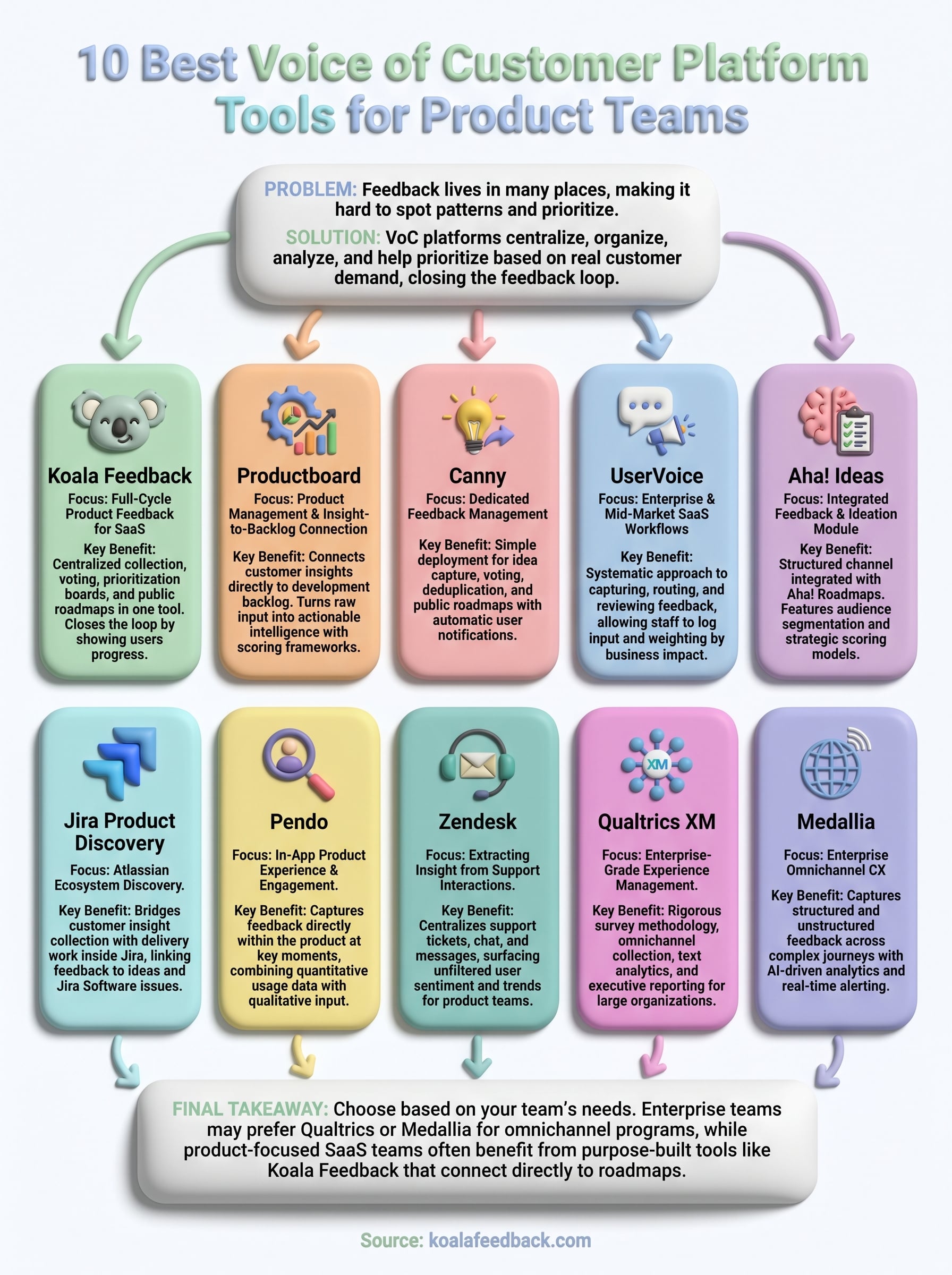
The right voice of customer platform depends on where your team is today and what you actually need feedback to do for you. Enterprise teams running omnichannel CX programs will find the depth of Qualtrics XM or Medallia more appropriate, while product-focused SaaS teams typically get more value from purpose-built tools that connect feedback directly to roadmap decisions.
If you want a platform that covers feedback collection, prioritization, and roadmap communication in one place without the complexity of an enterprise suite, Koala Feedback is worth a serious look. Your users already have opinions about what to build next. The only question is whether you have a system in place to capture, organize, and act on that input before it gets lost.
Start collecting structured user feedback with Koala Feedback and give your product decisions a foundation in real customer data.

Start today and have your feedback portal up and running in minutes.