Building a roadmap by hand still eats up hours you don't have. You're pulling feedback from five different channels, guessing at priority scores, and redoing slides every time a stakeholder asks
Koala Feedback tops this list because it was built specifically to solve the mess you're dealing with right now: feedback scattered everywhere and no clean path from "customers want this" to "here's our roadmap." It's a dedicated product roadmap ai tool that pairs a public feedback portal with AI-assisted organization, so you spend less time sorting and more time deciding what to build.
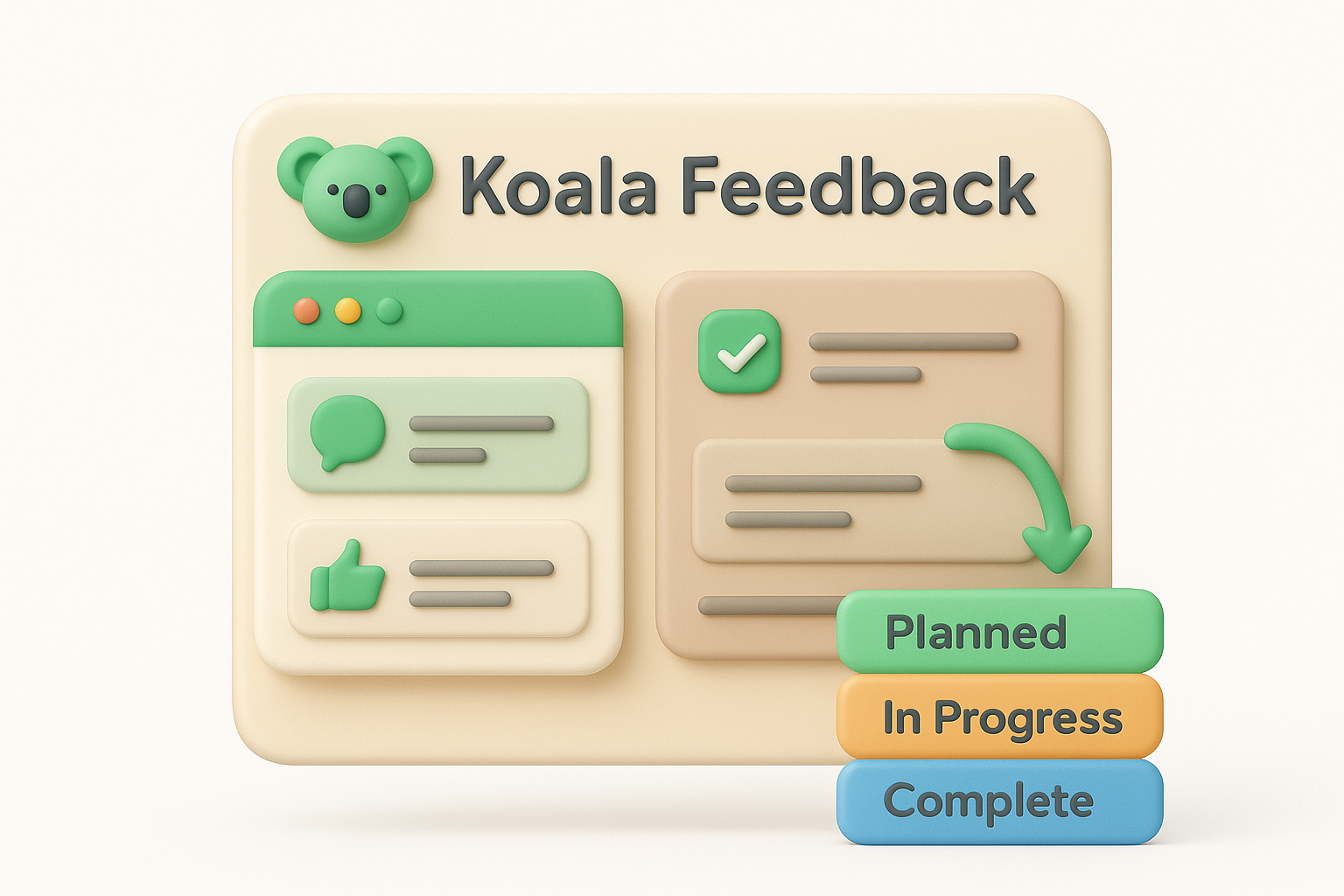
You start by giving customers and internal teams a branded feedback portal where they submit ideas, vote on existing ones, and comment. Behind the scenes, Koala Feedback's AI scans incoming submissions and flags likely duplicates, grouping similar requests so "add dark mode" and "need a night theme" land in the same bucket instead of splitting your vote count. From there, you drag prioritized items onto prioritization boards organized by product area, then push the ones you've committed to onto a public roadmap with statuses like Planned, In Progress, and Complete.
A roadmap tool only earns its keep if it turns raw feedback into decisions, not just a longer list.
Koala Feedback keeps its pricing structure simple compared to enterprise-heavy competitors, which matters if you're a smaller team that doesn't want to negotiate a contract just to try a roadmap tool. Plans are tiered by the number of tracked users and boards, generally running from a starter tier suited to small teams up through business tiers built for larger, multi-product organizations, and every plan includes the core feedback, voting, and roadmap functionality rather than locking essentials behind a paywall. You can see current tiers and what's included in each on the Koala Feedback pricing page, and every plan comes with a free trial so you can test the AI categorization against your own backlog before committing.
Koala Feedback fits product teams at SaaS companies who want one system that handles feedback intake, prioritization, and roadmap communication without stitching together three separate tools. It's a strong match for startups and mid-market teams that need to move fast and show stakeholders (internal or external) a clear, always-current view of what's shipping next. If your biggest pain point is duplicate feedback drowning out real signal, or you're tired of manually rebuilding roadmap slides, this is the tool built for exactly that problem. Teams juggling enterprise-scale product suites with dozens of stakeholder groups may eventually want the deeper reporting some larger platforms offer, but for most teams this is the fastest path from scattered feedback to a roadmap people trust.
Productboard built its reputation as a dedicated product management platform, and it's one of the more established names when people search for a product roadmap ai tool that can also handle deep customer insight work. Where Koala Feedback keeps things lean and roadmap-focused, Productboard leans into a fuller product management workflow, feedback, insights, prioritization scoring, and roadmap visualization all under one roof.
Teams feed Productboard with feedback pulled from support tickets, sales calls, surveys, and direct customer notes, and its AI engine parses that unstructured text to surface recurring themes and feature requests. From there, you score features against custom criteria (think reach, impact, effort) inside a prioritization matrix, and the tool generates visual Productboard roadmaps you can share externally or keep internal. Insights get tagged back to the original customer, so when a feature ships, you can trace it directly to the request that started it.
The more feedback sources you connect, the more useful an AI layer becomes, but only if it still points you toward a decision.
Productboard's pricing scales with company size and feature depth, and it's noticeably higher than lighter-weight tools once you need AI insights or advanced integrations, which typically sit in higher-tier or custom enterprise plans. Smaller teams often find themselves paying for capabilities built for larger product orgs. There's a free trial, but you'll want a demo call to understand what's actually included at your team's size before committing.
Productboard suits mid-size to enterprise product teams with dedicated product ops resources and multiple feedback channels to unify. If your organization already has research analysts and needs granular scoring frameworks across dozens of features, it's worth the learning curve. Smaller teams that just need a fast, transparent roadmap without the enterprise overhead will likely find it heavier than necessary.
Aha! has been in the roadmapping space longer than most competitors, and it built its name on exhaustive strategic planning features before AI ever entered the conversation. Now it layers AI on top of that existing depth, positioning itself as a product roadmap ai tool for teams that want strategy, ideas, and roadmaps tied together in one system rather than a lightweight feedback-to-roadmap loop.
You start by defining your strategic goals and initiatives inside Aha!, then connect features and ideas from the built-in ideas portal to those goals. Aha!'s AI assistant, Aha! Copilot, drafts feature descriptions, generates release notes, and summarizes idea submissions so your team spends less time writing and more time reviewing. Everything ties back to a strategy layer, so a roadmap item isn't just a task, it's linked to the business goal it's supposed to move.
A roadmap that isn't tied to strategy is just a to-do list with due dates.
Aha!'s pricing runs on a per-user model split across several product suites (Roadmaps, Ideas, Whiteboards, and more), and costs climb quickly once you need multiple suites for a full team. It's priced closer to enterprise software than a simple feedback tool, and the sheer number of plan combinations can make it hard to figure out what you actually need before talking to sales. A free trial is available, but expect to spend real time in setup given how configurable the platform is.
Aha! fits established product teams with dedicated product ops or strategy functions who want roadmapping tightly coupled to company-wide goals. It suits organizations already running formal strategic planning cycles and willing to invest setup time for that structure. Smaller teams or anyone who just wants a fast, public-facing feedback and roadmap loop will likely find Aha! more tool than they need.
Jira Product Discovery's features and pricing come from Atlassian, which means it slots directly into the Jira and Confluence setup most engineering-led teams already run. It's less a standalone product roadmap ai tool and more a discovery layer that sits next to delivery, built for teams who want idea capture and prioritization without leaving the Atlassian ecosystem.
You collect ideas in a dedicated workspace, then score them using custom fields, weighted formulas, or Atlassian Intelligence, which can summarize long idea descriptions and suggest groupings so duplicate requests don't clutter your backlog. Once an idea clears your prioritization criteria, you convert it into a delivery ticket that flows straight into Jira, keeping discovery and execution in the same system instead of forcing a handoff between separate tools. Roadmap views pull from that same data, so what you're planning always reflects what's actually scored and ranked.
Discovery only pays off when the ideas you prioritize actually turn into tracked work, not another spreadsheet.
Jira Product Discovery offers a free tier for up to a small number of contributors, which makes it easy to test with a single team before rolling it out wider. Paid plans move to a per-user structure and stay reasonably competitive compared to dedicated product management suites, especially since most of the AI summarization features are included rather than gated behind a separate premium tier. Where costs add up is if you're not already paying for Jira, since Product Discovery works best (and is priced to work best) alongside an existing Atlassian subscription.
Jira Product Discovery is the right call for engineering-heavy product teams already living inside Jira who want discovery and prioritization without adopting a completely separate platform. It suits teams where product and engineering work tightly together and want one shared source of truth from idea to shipped ticket. Teams without existing Atlassian tooling, or those who need a polished customer-facing roadmap and portal, will find it thinner on the external communication side than purpose-built roadmap tools.
Airfocus markets itself as a modular platform, meaning you pick the pieces you actually need instead of paying for a bloated all-in-one suite. It's built around flexible prioritization frameworks first, with roadmapping and AI features layered on top, which makes it a fit if you've outgrown spreadsheets but still want control over exactly how your product roadmap ai tool scores and ranks ideas.
You build out a workspace with the modules you need, such as prioritization, roadmaps, or a feedback portal, and configure scoring models using frameworks like RICE, value-vs-effort, or your own custom formula. Airfocus AI can generate first-draft descriptions, summarize feedback threads, and suggest priority scores based on the criteria you've set, cutting down the manual scoring work that usually eats up planning sessions. Once items are scored, they flow into drag-and-drop roadmap views you can filter by team, timeframe, or status and share externally when needed.
Prioritization only works if the framework fits your team, not the other way around.
Airfocus prices per user with tiers that scale by feature depth, and because the platform is modular, your actual bill depends heavily on which pieces you add. That's good news if you only need prioritization and roadmaps without a full feedback portal, since you're not forced into a bigger package. It's less predictable than flat-tier competitors, though, and AI features sometimes sit behind higher tiers, so check the current plan breakdown before assuming a feature is included.
Airfocus suits product managers who want framework flexibility without committing to a heavyweight suite like Aha! or Productboard. It works well for teams that already have opinions about how they want to score and prioritize work and just need software that adapts to that process. If you want a strong customer-facing portal as the centerpiece of your workflow, though, its feedback module is thinner than tools built around that use case from day one.
ProdPad positions itself as a product management tool built around the idea that roadmaps should always trace back to a clear problem, not just a list of features you've decided to build. It's aimed at teams who want lean, continuous discovery baked into the same tool they use to plan and publish a roadmap, making it a lightweight alternative to heavier suites when you search for a product roadmap ai tool that still respects a proper discovery process.
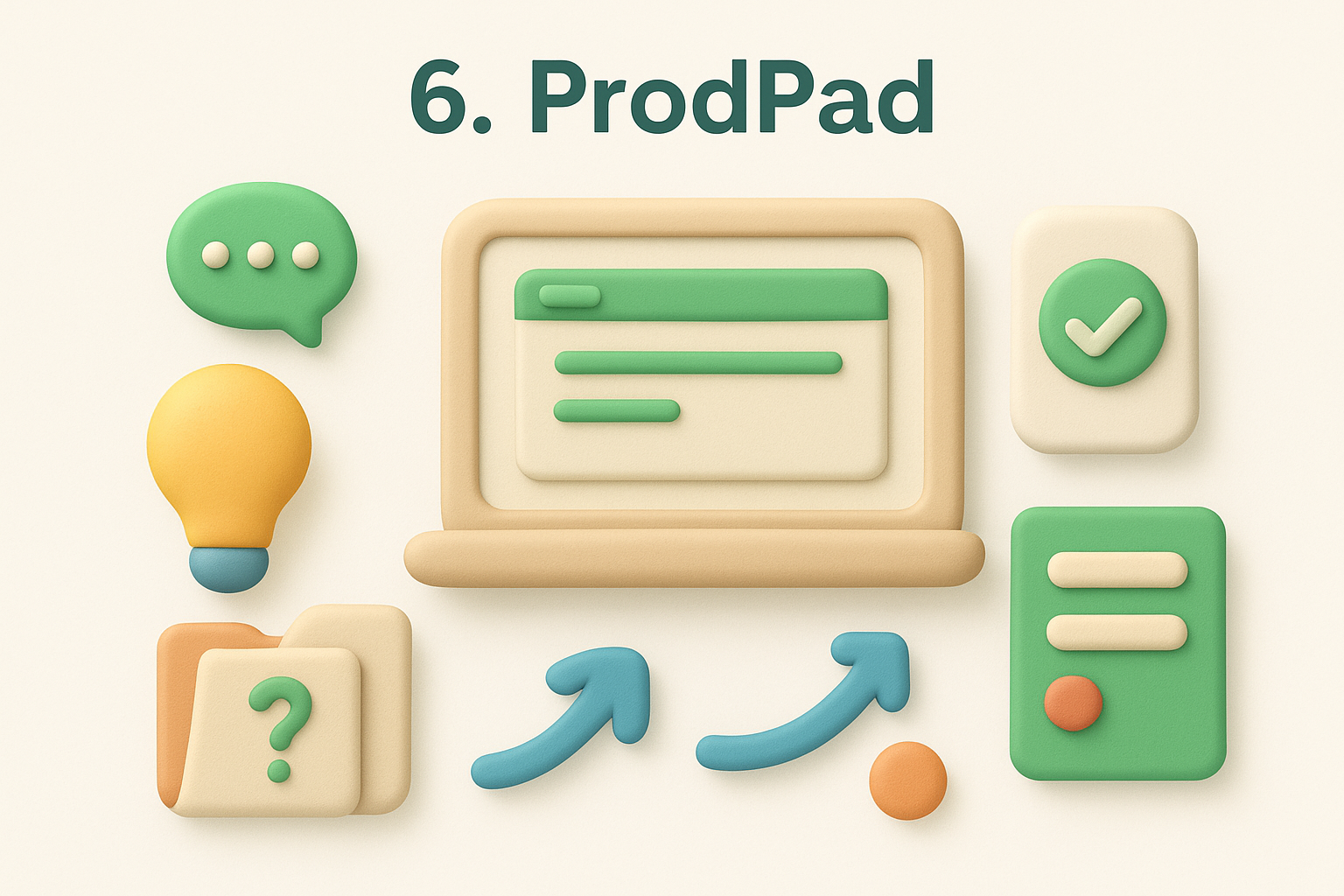
Feedback and ideas land in a central inbox, where ProdPad's AI groups similar submissions and suggests which customer problem they map to before you ever commit to a solution. You then work ideas through a lightweight discovery stage, testing assumptions and validating demand, before promoting anything to the roadmap. Once it's roadmap-ready, ProdPad's AI handles roadmap prioritization by scoring items against your chosen criteria and helping you sequence releases without manually rebuilding timelines every sprint.
Skipping straight from idea to roadmap slot is how teams end up building things nobody asked for.
ProdPad runs a per-user pricing model with plans that scale by feature access rather than by number of tracked ideas, which keeps costs more predictable than usage-based competitors. The entry tier covers core roadmapping and feedback collection, while AI-assisted grouping and advanced discovery tools sit in higher plans. A free trial lets you test the discovery workflow before deciding whether it fits how your team already works.
ProdPad suits product teams that take discovery seriously and don't want a tool that jumps straight from feedback to roadmap without a validation step in between. It works well for teams tired of building features that flop because nobody tested the assumption first. Teams that just want a fast public roadmap and portal without the extra discovery layer may find it slower to set up than simpler tools.
Craft.io built its name on flexible roadmapping for teams that want structure without locking themselves into someone else's opinion of how a roadmap should look. It brands itself as a full product management platform, but the roadmap and prioritization pieces are what most teams come for, and its AI layer is aimed squarely at cutting the busywork out of turning raw requests into a ranked, shareable plan.
Requests come in through a feedback module or get imported from support and sales tools, and Craft.io's AI scans that input to suggest tags, flag duplicates, and draft short summaries so you're not reading the same complaint five times in five different phrasings. From there, you score items using a feature prioritization framework like RICE or a custom formula, and Craft.io generates roadmap views (timeline, Kanban, or a simple list) that update automatically as priorities shift. Objectives sit alongside the roadmap, so each initiative links back to the goal it's meant to support.
An AI layer earns its place only when it removes a manual step you'd otherwise repeat every week.
Craft.io prices per user across a handful of tiers, with AI features and advanced integrations reserved for higher plans rather than included at the entry level. Costs land somewhere between lightweight tools and full enterprise suites, so smaller teams should check whether the tier that includes AI actually fits their budget before assuming it's bundled in. A trial period is available, though you'll likely need a sales conversation to see full pricing.
Teams that want a structured roadmap workflow with room to customize objectives, frameworks, and views will get the most from Craft.io. It suits mid-size product teams that have outgrown a basic spreadsheet but don't need the full weight of Aha! or Productboard. Smaller teams focused mainly on public feedback collection may find its objective-tracking layer more than they need.
Zeda.io pitches itself as an AI-native product management platform built around the idea that customer insight should drive every roadmap decision, not just inform it after the fact. Unlike other software for managing product feedback that bolts AI onto an existing workflow, Zeda.io was built after AI became mainstream, so its insight-to-roadmap pipeline feels more automated from the start than most competitors on this list.
Requests, call transcripts, support tickets, and survey responses all funnel into Zeda.io, where its AI engine reads through that raw text and pulls out recurring themes without you tagging anything manually. Signals get scored against a prioritization framework you configure, and once an item clears the bar, Zeda.io drafts a first-pass product requirements document (PRD) for it, saving your team the blank-page problem that usually slows down planning meetings. From there, roadmap items sync to views you can share internally or with customers, and the AI keeps re-scoring as new feedback rolls in.
A roadmap tool that only sorts feedback still leaves you writing every spec by hand.
Zeda.io prices per maker seat (the people actively managing the roadmap) rather than charging for every viewer, which keeps costs down for teams with a small core product group and a wider audience of stakeholders. Plans scale from a starter tier with core roadmap and feedback tools up through higher tiers that unlock deeper AI summarization and PRD generation. A free trial is available, though enterprise pricing requires a sales call.
Early-to-mid-stage product teams drowning in qualitative feedback from calls and support channels will get the most value here, especially if writing specs is a real bottleneck for your team. Larger organizations that need extensive governance controls or multi-product portfolio views may find Zeda.io's feature set still catching up to more established platforms.
Roadmunk built its reputation as a straightforward visual roadmapping tool, and Tempo's acquisition folded it into a broader portfolio and project management suite aimed at teams already using Tempo's Jira-based planning tools. It's less about deep AI-driven discovery and more about turning prioritized data into roadmap visuals that don't require a design pass every time something changes. If you're comparing a product roadmap ai tool mainly on how clean the output looks to executives, Roadmunk earns its spot for that reason alone.
You import feedback, ideas, or existing backlog items, then score them using built-in prioritization containers like value-vs-effort or a custom weighted formula. Roadmunk's AI assistance leans toward drafting item descriptions and suggesting priority placement based on the criteria you've set, rather than deep theme extraction from call transcripts. Once scored, items flow into drag-and-drop visual roadmaps you can create and share by swapping between timeline, swimlane, or Kanban layouts, and since it's now part of Tempo, roadmap data can sync with Tempo's capacity planning and portfolio tools for teams already tracking resourcing there.
A roadmap that looks polished but doesn't reflect real prioritization data is just a nicer-looking guess.
Roadmunk prices per user across a handful of tiers, with basic roadmapping available at the entry level and deeper Tempo portfolio integrations reserved for higher plans. It sits in the mid-range compared to full product management suites, though pricing gets less predictable once you start bundling it with other Tempo products. A free trial is available for testing the core roadmap builder before committing.
Roadmunk suits teams already running on Tempo or Jira who want visually clean roadmaps without adopting a heavier discovery or feedback platform. It works well for portfolio managers who need roadmap output tied to resourcing data. Teams whose main need is a public feedback portal will find Roadmunk thinner on that front than tools built around customer intake from the start.
BuildBetter.ai takes a different starting point than most tools on this list: instead of beginning with a feedback portal, it begins with your customer calls. It's built for teams that already run dozens of user interviews and sales calls a month, one of the harder ways to collect product feedback, but never have time to turn those recordings into anything actionable. As a product roadmap ai tool, it earns its place here by automating the part everyone dreads, turning hours of transcripts into structured, prioritized roadmap input.
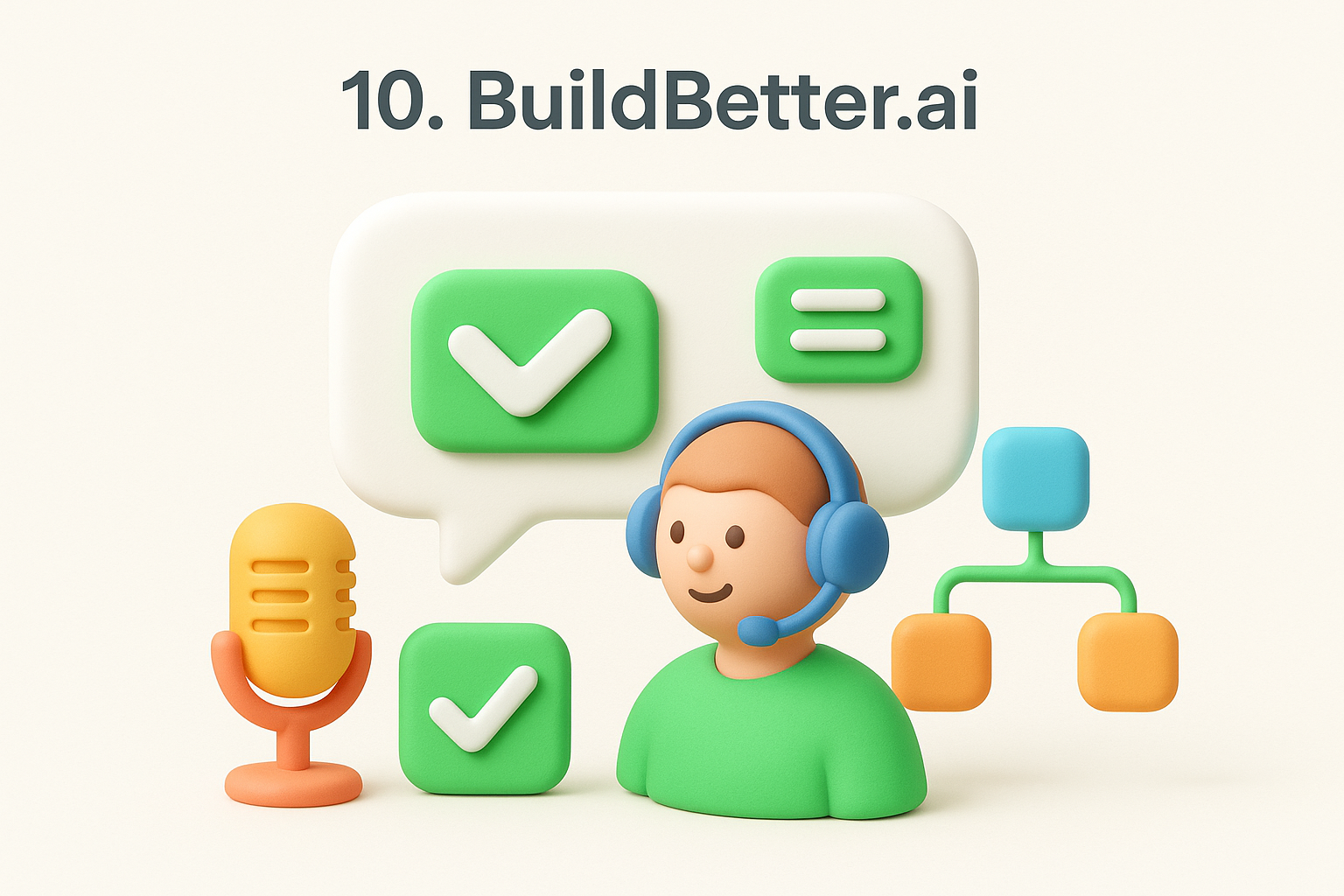
You connect BuildBetter.ai to your call recording tool (Zoom, Gong, or similar), and its AI transcribes and analyzes every conversation, tagging feature requests, pain points, and objections as they come up. Those tagged moments get clustered into recurring themes automatically, so instead of scrolling through forty calls, you see "onboarding confusion" flagged twelve times with direct clips attached as evidence. From there, themes convert into roadmap items you can score and sequence, with each item still linked back to the original customer quote for context when a stakeholder asks "why are we building this?"
The best roadmap evidence isn't a spreadsheet score, it's the customer's own words attached to the request.
BuildBetter.ai prices based on usage, largely tied to call volume and number of seats, which makes it more expensive as your interview and sales call cadence grows. It sits closer to specialized research tooling than a flat-rate roadmap app, so budget for it like an insights tool rather than a lightweight feedback widget. A demo is typically required to get exact numbers, since pricing depends heavily on your call volume.
BuildBetter.ai suits research-heavy product teams running frequent customer calls who need those conversations turned into roadmap evidence without manual note-taking. It's less useful if most of your feedback arrives as text through a portal rather than live calls, where a dedicated feedback tool will serve you better.
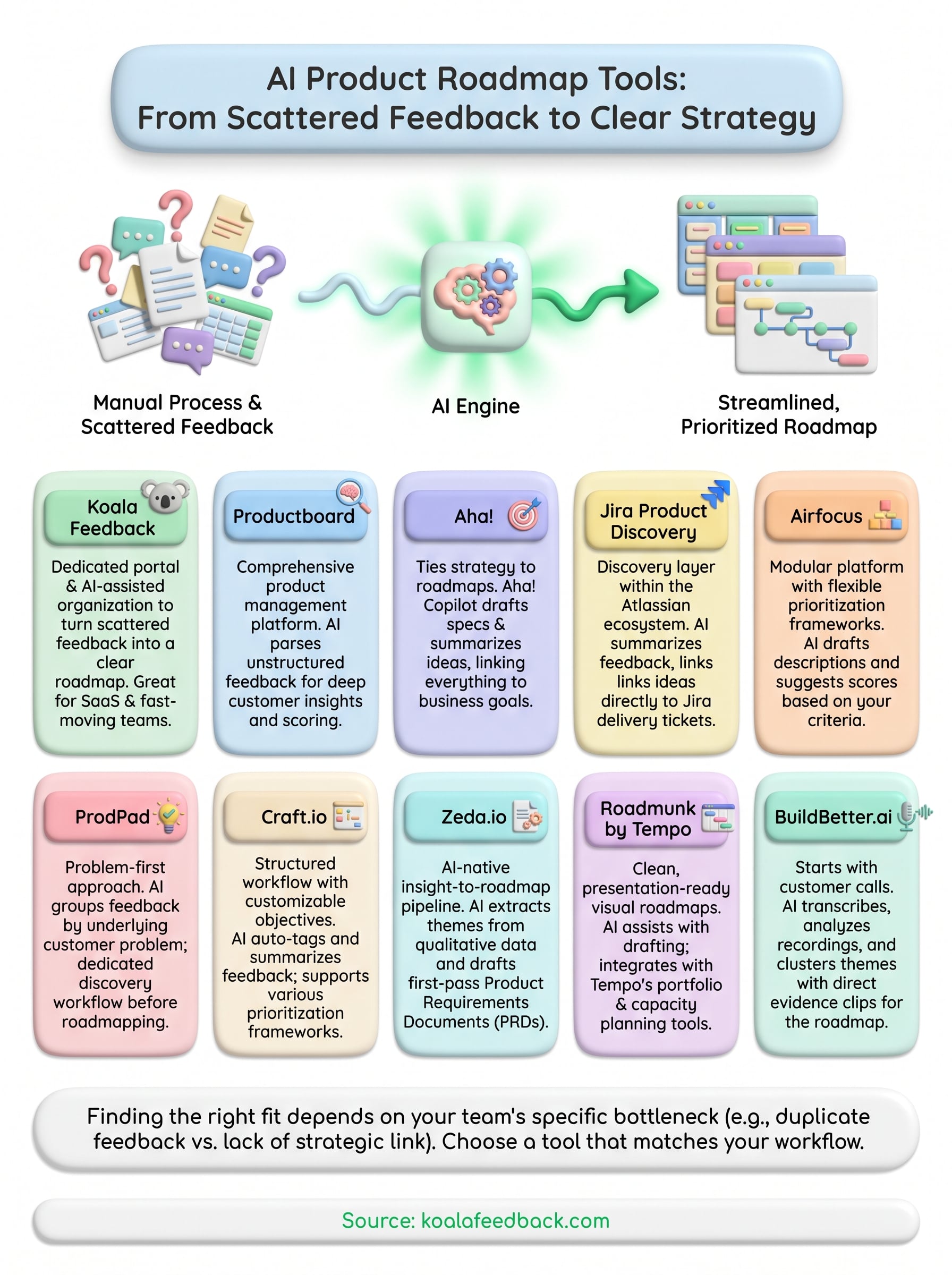
Most of these tools solve the same core problem in different orders. Some start with your customer calls, some start with strategy documents, and some start with a public feedback portal. The right product roadmap ai tool depends on where your bottleneck actually is: if it's duplicate feedback drowning your backlog, you need strong deduplication and voting. If it's translating scattered requests into something stakeholders trust, you need a clean public roadmap more than another scoring framework.
Going in circles between spreadsheets, sales calls, and Slack threads costs you real weeks every quarter. Pick a tool that matches your actual workflow, not the one with the longest feature list. For most product teams that want feedback collection, AI-assisted prioritization, and a roadmap customers can actually see, Koala Feedback covers that whole loop without the enterprise setup tax. Start collecting and prioritizing user feedback in one portal on a free trial and run it against your real backlog before you commit to anything heavier.

Start today and have your feedback portal up and running in minutes.