An agile product strategy defines how your product will evolve and succeed, but keeps you flexible enough to respond when priorities shift. Unlike traditional plans that lock you into fixed timelines and features, this approach lets you adapt based on real user needs and changing market conditions. You build your roadmap knowing it will change, and that's the point. You make decisions with the information you have now, then adjust as you learn more about what actually works.
This article shows you how to build and execute a flexible product roadmap that works with agile development principles. You'll learn the core components of a responsive strategy, practical steps to create one for your team, and how to keep stakeholders aligned when your priorities shift. Whether you're starting fresh or reworking an existing plan, you'll find actionable guidance to make your product strategy more adaptable and effective.
An agile product strategy is a high-level plan that guides your product's direction while embracing change as a fundamental part of the process. You set clear goals and vision for where your product needs to go, but you build in the flexibility to adjust your path based on what you learn from users, market shifts, and competitive changes. This strategy defines your product's value proposition, target users, and key objectives, but it leaves room for tactical decisions to evolve as new information emerges.
Your agile product strategy starts with defining your product vision and the problems you're solving for specific users. You identify your target market, understand their pain points, and articulate how your product creates value better than alternatives. These foundational elements stay relatively stable, giving your team a north star to work toward even when specific features and timelines change.
The strategy also includes measurable outcomes that tell you whether you're making progress. You focus on metrics like user engagement, retention, or revenue growth rather than just counting shipped features. These outcomes help you make informed decisions about what to prioritize next. When you tie your roadmap to results instead of outputs, you can shift direction without losing sight of what matters.
A strong agile product strategy balances stability in vision with flexibility in execution.
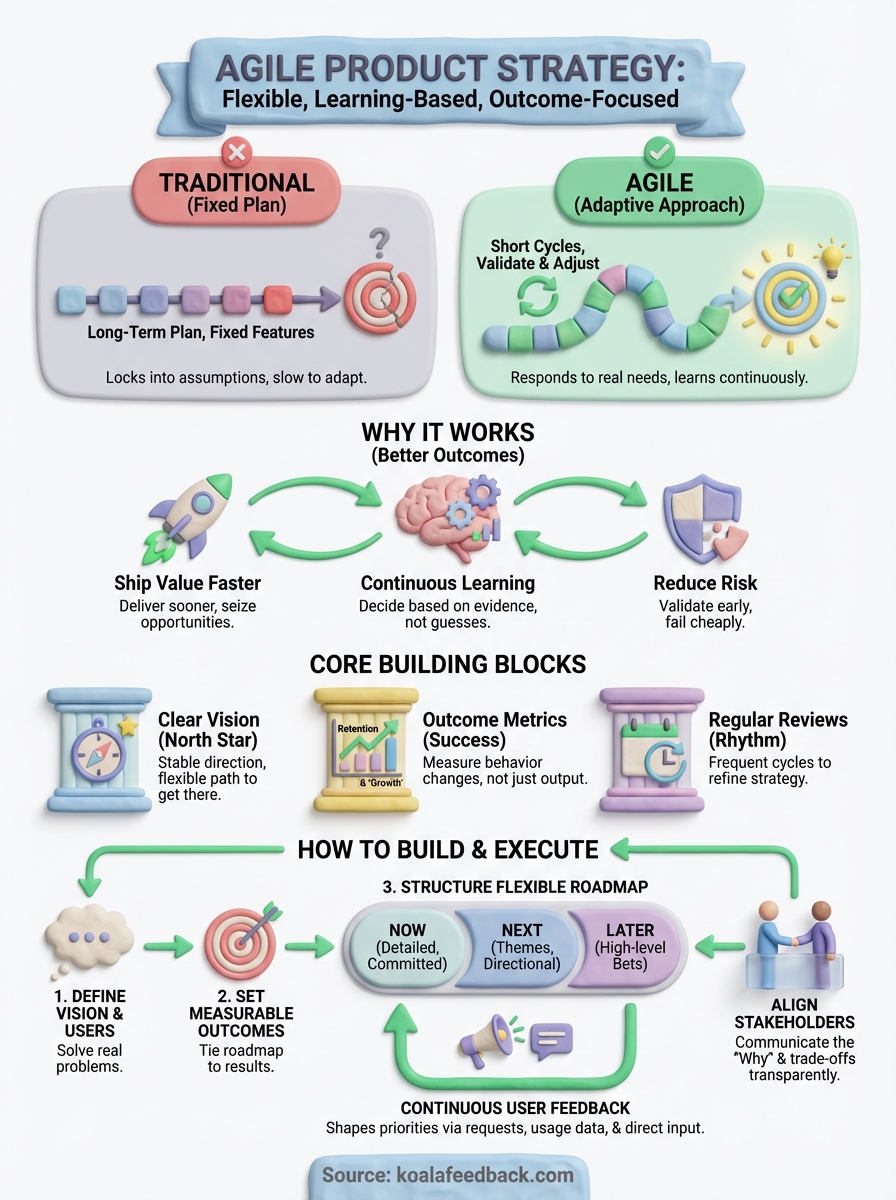
Traditional product strategies often lock you into detailed long-term plans with fixed deliverables and rigid timelines. You spend months planning every feature, then spend years executing that plan regardless of what you learn along the way. This approach assumes you can predict the future accurately, which rarely happens in dynamic markets.
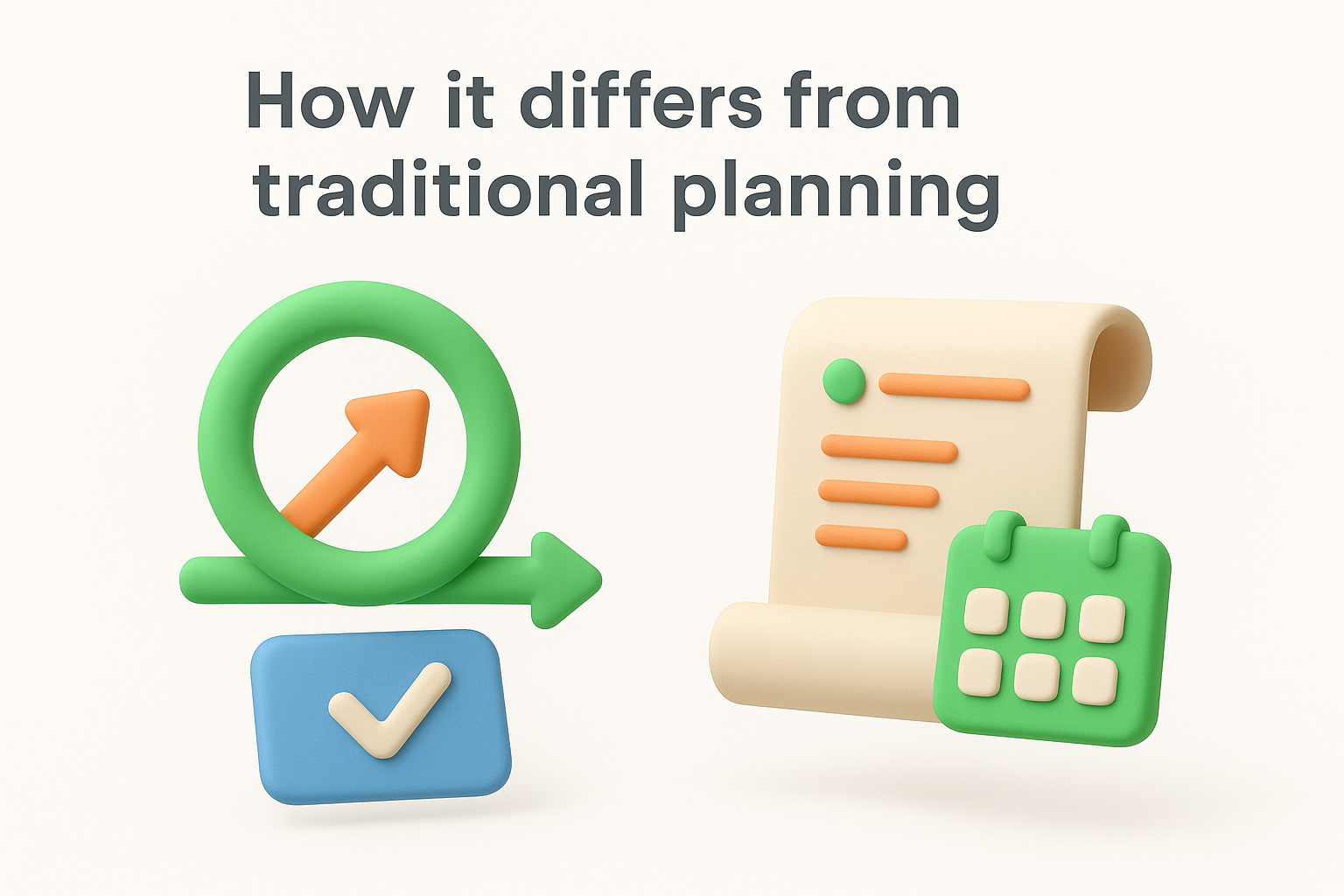
Your agile product strategy works differently. You make decisions in shorter cycles and validate assumptions quickly with real users before committing significant resources. Instead of a five-year roadmap with every feature mapped out, you maintain a clear vision but keep your near-term plans detailed and your long-term plans directional. This lets you respond to competitive threats, incorporate user feedback, and capitalize on unexpected opportunities without derailing your entire strategy.
The planning process itself reflects this flexibility. You regularly revisit and refine your strategy based on what your team learns from shipping features, analyzing data, and talking to users. You don't treat your strategy as a static document that gets updated annually. Instead, you build in review cycles that let you adjust course when market conditions change or when your assumptions prove wrong. This continuous refinement keeps your product relevant and your team focused on the most valuable work.
Your agile product strategy delivers better results because it reduces the gap between what you build and what users actually need. Traditional approaches force you to commit resources months in advance based on assumptions that often prove wrong. By the time you ship, market conditions have shifted or you discover users want something different. An agile approach lets you validate assumptions quickly with real users, then double down on what works and abandon what doesn't before wasting significant time and money.
When you work in shorter cycles, you deliver working features to users sooner instead of waiting months for a perfect release. This speed gives you a competitive advantage because you can respond to market opportunities while competitors are still planning. Each release also becomes a learning opportunity where you gather data on what resonates with users and what falls flat. You make your next decision based on evidence rather than guesswork, compounding the quality of your product choices over time.
Faster feedback loops turn your product development into a systematic learning process.
Your team stays focused on outcomes that matter because you regularly assess whether your current work moves key metrics. You stop building features that seemed important six months ago but no longer align with where your market is heading or what your data shows. This continuous course correction prevents you from investing heavily in the wrong direction and keeps your limited resources focused on high-impact work.
Breaking your product vision into smaller testable pieces lets you identify problems early when they're cheap to fix. Instead of building an entire feature set only to discover users don't care, you release minimum viable versions and measure actual adoption. This incremental approach means you fail faster and cheaper on ideas that won't work, freeing up capacity to pursue better opportunities. Your product evolves based on real-world validation rather than internal opinions or assumptions about user behavior.
Your agile product strategy needs specific building blocks that work together to keep your team moving forward while staying adaptable. These components create a framework for decision-making that balances the stability your team needs with the flexibility your market demands. Understanding how these pieces fit together helps you build a strategy that guides rather than restricts your product development.
You anchor your strategy with a product vision that defines the ultimate problem you're solving and the value you create for users. This vision stays consistent over time, giving your team direction even when tactics change. Your vision statement should be specific enough to guide decisions but broad enough to accommodate different paths to achieving it. When team members question whether a feature fits, they can evaluate it against this north star.
Your execution plans work differently. You maintain detailed plans for the next quarter with specific features and outcomes, but your plans beyond that stay high-level and directional. This lets you commit resources to near-term work while preserving the option to pivot based on learning. You don't lock yourself into building features twelve months out that might not matter when the time comes.
Your strategy defines success metrics tied to user behavior and business results rather than shipped features. You track metrics like activation rates, customer retention, or revenue per user that tell you whether your product actually solves problems. These measurements help you evaluate trade-offs between competing priorities and make objective decisions about what to build next.
Metrics focused on outcomes instead of outputs keep your team aligned on what actually matters.
You schedule recurring reviews of your strategy and roadmap to incorporate new information. These sessions might happen monthly or quarterly depending on how fast your market moves. Your team examines what you learned from recent releases, analyzes user feedback, reviews competitive changes, and adjusts priorities accordingly. This rhythm ensures your strategy evolves with reality rather than becoming outdated documentation that nobody follows.
Building your agile product strategy requires a structured approach that starts with clarity on fundamentals and builds in the flexibility to adapt. You don't need complex frameworks or lengthy planning documents. Instead, you focus on defining what matters most, creating systems for regular evaluation, and establishing how your team will make decisions when priorities shift. The process takes you from high-level vision to actionable roadmap while keeping options open for adjustments based on what you learn.
You begin by articulating a clear product vision that describes the problem you solve and the value you create. This vision should be specific enough to guide decisions but not so narrow that it restricts how you achieve your goals. Write it down in one or two sentences that anyone on your team can understand and repeat. Your vision becomes the reference point for evaluating whether new opportunities align with your core purpose.
Next, you define your target users with enough specificity to make meaningful product decisions. You identify their core problems, how they currently solve them, and why your approach works better. This understanding helps you prioritize features that address real pain points rather than theoretical improvements. The more clearly you understand who you serve, the easier it becomes to say no to work that doesn't fit.
Your strategy needs concrete metrics that tell you whether you're making progress toward your vision. You choose measurements that reflect user behavior and business results, not just activity metrics like features shipped or story points completed. Examples include activation rates, retention percentages, revenue growth, or customer satisfaction scores. These outcomes guide your roadmap decisions and help you evaluate whether recent releases moved you closer to your goals.
Measuring outcomes instead of outputs keeps your team focused on creating actual value.
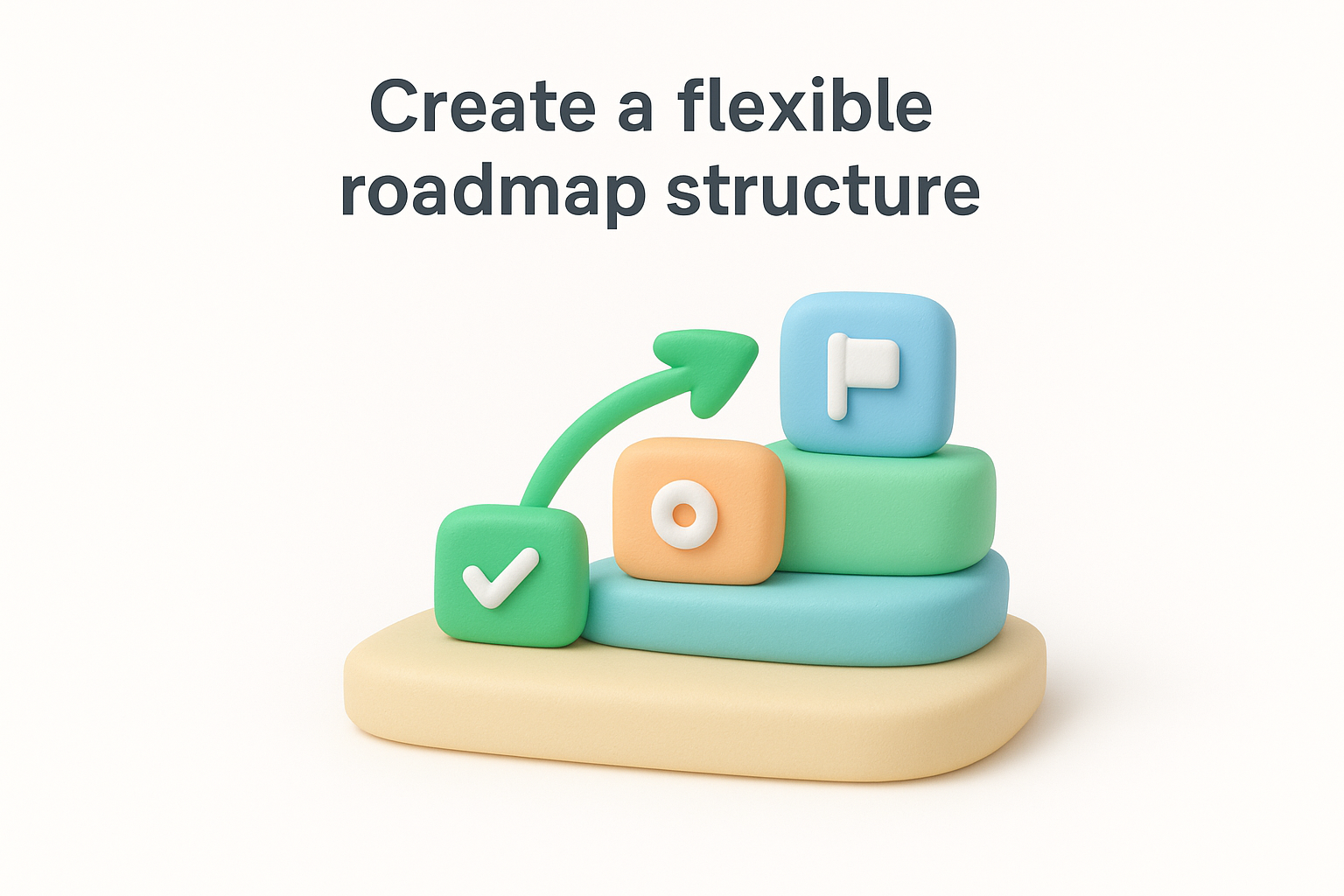
You organize your roadmap into time horizons with different levels of detail. Your current quarter gets specific feature commitments with clear outcomes. The next quarter stays directional with themes and objectives but without locked features. Everything beyond that remains high-level strategic bets that you'll refine as you learn more. This structure lets you commit to near-term work while preserving flexibility for future priorities based on market changes or user feedback.
Your agile product strategy depends on direct input from users to guide what you build next. Feedback tells you whether your assumptions about user needs match reality and helps you identify which features deliver actual value versus which ones seemed important in planning sessions. You collect this input through multiple channels including support conversations, usage analytics, feature requests, and direct user interviews. This ongoing dialogue between your team and users creates the information flow that makes your strategy responsive rather than speculative.
User feedback directly influences which features move up or down your priority list. When multiple users request the same capability or struggle with the same workflow, you gather evidence that a specific problem needs solving. Your team reviews this feedback during regular planning cycles and weighs it against your strategic objectives and current metrics. You don't build every requested feature, but you use patterns in feedback to validate whether your planned work addresses real problems users face.
Real usage data shows you what users actually do versus what they say they want. You track which features get adopted after launch and which ones sit unused. This behavioral data helps you double down on capabilities that drive engagement and reconsider features that don't gain traction. Your roadmap stays grounded in observed user behavior rather than theoretical value propositions.
Systematic feedback collection transforms subjective opinions into actionable product intelligence.
You establish consistent processes for capturing and organizing user input so it doesn't get lost in scattered conversations. Your team uses a centralized system where feedback gets logged, categorized, and linked to specific product areas. This structure lets you identify trends across many conversations and measure how often particular issues surface. When prioritization discussions happen, you reference this collected feedback to make informed decisions about what matters most to users.
Closing the feedback loop matters as much as collecting it. You communicate back to users when you ship features they requested or explain why certain suggestions don't fit your strategy. This transparency builds trust and encourages users to keep sharing their perspective on what your product needs next.
Getting stakeholders comfortable with a roadmap that changes requires transparent communication about why flexibility matters and how decisions get made. Your executives, sales team, and customers often expect firm commitments about what ships when, which conflicts with the adaptive nature of an agile product strategy. You bridge this gap by establishing clear frameworks for how priorities shift and keeping everyone informed about the reasoning behind changes. This alignment lets you maintain the flexibility your strategy needs while building trust that you're making thoughtful decisions rather than changing direction randomly.
You educate stakeholders upfront that your roadmap reflects current priorities based on available information, not immutable promises about the future. Your communication emphasizes that changes happen because you learn what works and what doesn't, not because of poor planning. This framing helps stakeholders understand that adjusting course demonstrates good product management rather than inconsistency or lack of direction.
Regular updates keep everyone aware of how priorities evolve and why. You share what you learned from recent releases, new data that emerged, or market shifts that influenced your decisions. When you explain the reasoning behind roadmap changes, stakeholders see the logic and evidence driving your choices rather than feeling blindsided by unexpected pivots.
Consistent communication about the "why" behind changes builds stakeholder confidence in your process.
You make your prioritization criteria visible so stakeholders understand how you evaluate competing requests. Your framework might include factors like strategic alignment, user impact, resource requirements, and revenue potential. When someone questions why their request isn't on the roadmap, you reference this framework to show how you made the decision objectively rather than dismissing their input arbitrarily.
Your stakeholder communication also addresses trade-offs explicitly. You explain that building one feature means delaying another, helping people understand the opportunity cost of different choices. This transparency invites stakeholders into the decision-making process and reduces friction when you need to shift priorities based on new information or changing circumstances.
Your agile product strategy becomes real when you start applying these principles to your actual product decisions. You don't need perfect systems or complete buy-in from every stakeholder to begin. Start with shorter planning cycles, establish clear metrics that measure user outcomes, and create regular touchpoints to review what you're learning. Each iteration makes your strategy more responsive and your product more aligned with what users actually need. The teams that succeed with agile strategies focus on taking action rather than perfecting their process before they start.
Capturing and organizing user feedback forms the foundation of any responsive strategy. Koala Feedback helps you centralize feature requests, prioritize based on user demand, and communicate your evolving roadmap transparently. Your team gets structured input from real users while stakeholders see the clear rationale behind priority changes. This visibility keeps everyone aligned even when your roadmap adapts to new information, turning feedback into the fuel that drives your agile approach forward.

Start today and have your feedback portal up and running in minutes.