You spend hours crafting the perfect survey questions, then lose half your respondents in the first ten seconds because the intro reads like legal fine print. A weak customer satisfaction survey introduction kills response rates before anyone even sees your questions, and most teams treat it as an afterthought instead of the sales pitch it actually is.
Writing one that works isn't complicated once you know the formula: state why you're asking, tell people how long it takes, and make clear what happens with their answers. The same rules apply whether you're sending a quick NPS check-in or a full customer feedback survey introduction meant to gather detailed product input, and they hold across every survey type you might send. Get those three pieces right and completion rates jump, because respondents know exactly what they're signing up for.
This guide walks through exactly how to write an introduction that gets clicks instead of bounces, with real examples you can adapt today. If you're already collecting feedback through a tool like Koala Feedback, these same principles carry over directly into how you frame requests on your feedback portal, so users feel just as motivated to share ideas there as they would in a survey.
Most people decide within the first few seconds whether to keep reading a survey or close the tab. Your customer satisfaction survey introduction is the only thing standing between your questions and an abandoned browser window, and it either earns enough trust for someone to invest their time or it doesn't. Treat it less like a formality and more like a landing page: its only job is convincing a stranger that finishing this survey is worth two minutes of their day.
Numbers back this up. Teams running feedback programs consistently see completion rates fall off a cliff when the opening lines don't answer three basic questions: who's asking, how long it takes, and what happens with the answers, which is why designing a survey people finish starts before question one. Respondents who can't find that information in the first two sentences assume the worst, that this is a data-harvesting exercise dressed up as customer care, and they bail before question one. Completion rates aren't just a vanity metric here either. Every abandoned survey is a data point you'll never get back, and if your sample skews toward people who happen to have extra patience that day, your results stop representing your actual customer base.
A survey introduction isn't a disclaimer, it's the pitch that earns you the right to ask questions at all.
Consider the difference between two openers a SaaS company might send after a support ticket closes:
The first reads like a legal notice. The second sounds like a person talking. Recipients respond to the second one at meaningfully higher rates because it does three things the first one skips: it sets a time expectation, names a specific purpose, and uses language a human would actually say out loud. This isn't about being cute. It's about removing every reason a busy person has to hesitate.
However polished your product is, respondents remember how your last survey treated them. If a previous customer feedback survey introduction buried the purpose in vague corporate language or never mentioned how long it would take, your next survey inherits that skepticism before anyone reads a word. Conversely, a track record of short, honest, well-framed intros trains your audience to open your emails and click through without hesitation, because they've learned you respect their time. This is why the introduction deserves the same editing attention as your subject lines and the questions you actually ask. Skipping it isn't neutral, it's actively working against every other part of your feedback program, from the incentive you're offering to the insights you're hoping to collect. Getting it right, on the other hand, pays off every time you send the next request.
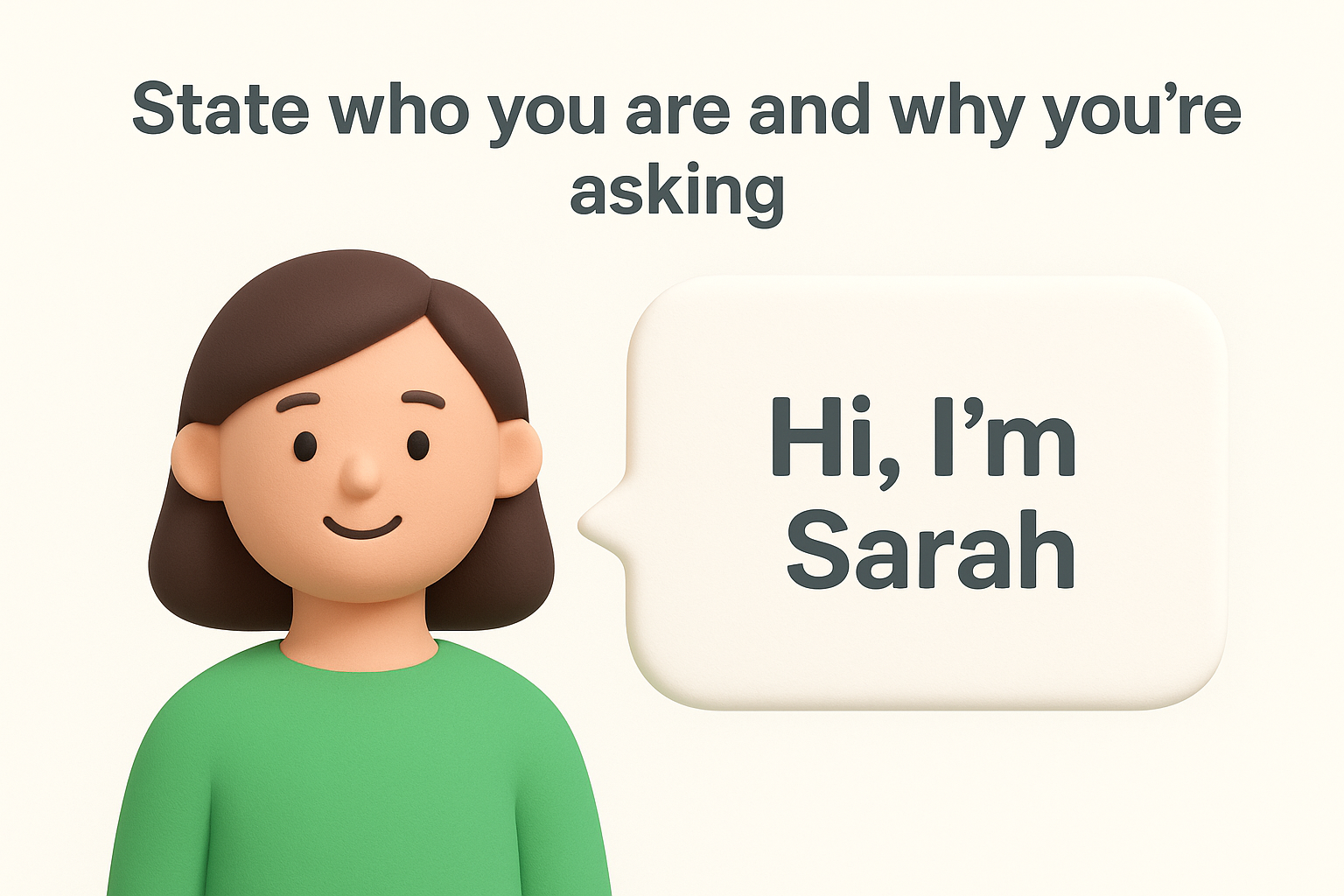
Open with a name, not a company logo. Respondents trust a customer satisfaction survey introduction more when it comes from a person or a specific team rather than an anonymous "we," because a name signals accountability. If you're the product manager who reads every response, say so. "Hi, I'm Sarah from the product team" does more work in five words than an entire paragraph of corporate throat-clearing, because it tells the reader a real human is on the other end of this request.
After you've named yourself, name the reason immediately. Vague purposes like "we value your feedback" tell the reader nothing about what you'll actually do with their answers. Specific purposes work because they let the respondent judge, in one sentence, whether this survey applies to them and whether their input will matter. Compare these two openers:
Nobody fills out a survey to be helpful in the abstract. They fill it out when they believe their specific answer changes a specific outcome.
However close your relationship with the respondent, match your framing to it. A first-time buyer doesn't need the same context as a customer who's used your product for two years, so adjust accordingly:
| Relationship stage | What to state | Example line |
|---|---|---|
| First-time user | Who you are, why you're asking now | "Hi, I'm from the Koala Feedback team. You just submitted your first idea, and we'd love to know how that felt." |
| Repeat customer | What's changed since last time | "We shipped three of the features you voted for. Tell us if they hit the mark." |
| Churned customer | Why their input still matters | "You canceled last month. Your honest feedback helps us fix what drove that decision." |
Without that context, even a well-designed customer feedback survey introduction reads as generic mass email, and generic mass email gets deleted. If you're already running an open feedback portal like the one Koala Feedback provides, you can borrow this same habit: label who's asking and why right on the submission form, so users feel the same clarity before they type a single word.
Respondents don't decide to answer your survey in the abstract, they decide once they know what it costs them. A customer satisfaction survey introduction that skips the time commitment forces people to guess, and guessing favors the guess that says "this could take forever," which means they close the tab. The same goes for privacy: if someone can't tell whether their name gets attached to a critical comment, they'll either lie or leave the field blank. Handle both up front and you remove the two biggest reasons people abandon a survey before question one.
Every survey platform, including the one built into your Koala Feedback portal, shows you the actual median completion time once you've collected a handful of responses. Use that number instead of a round guess. Saying "this takes 90 seconds" when your own data shows three minutes will show up in your abandonment rate, and it'll cost you trust on the next survey too.
People don't abandon short surveys, they abandon surveys where they didn't know how long the survey actually was.
Once time is settled, privacy is the next question in a respondent's head, even if they never type it out. Spell out whether responses stay anonymous, whether a name gets attached to comments your team might quote later, and who inside your company actually reads the results. A single sentence usually covers it: "Your answers stay anonymous unless you leave your email for a follow-up." That line alone answers the unspoken worry and lets people speak honestly instead of hedging every answer to avoid consequences.
Companies handling any personal data should also make sure this language matches their actual practices, since privacy claims in a survey intro carry the same weight as claims in a privacy policy. The Federal Trade Commission's guidance on business data practices is a useful reference if you're unsure how specific your disclosure needs to be. Getting this step right doesn't just protect you legally, it also signals to respondents that you've thought about their experience past the moment they click submit, which is exactly the kind of customer trust you're trying to build before Step 3.
Once someone knows who's asking, how long it takes, and where their data goes, tone decides whether they actually start typing. A customer satisfaction survey introduction written in stiff corporate language signals a form to fill out, not a conversation to join. Swap "Your feedback is important to us" for something a colleague might actually say, like "We want to fix what's annoying you, tell us straight." That shift alone changes how much effort people put into their answers, because tone signals whether you're actually going to read the response or just file it.
Read your draft out loud before you send it. If it sounds like something you'd never say to a customer on a call, rewrite it. Short sentences, contractions, and a little humor when it fits your brand all lower the perceived cost of responding. This matters just as much in a customer feedback survey introduction attached to a support ticket as it does in a quarterly NPS email, since both compete with a dozen other messages in the same inbox, and the same voice rules apply to feedback request email templates of any kind.
People answer surveys that sound like a person wrote them, not a legal department.
Incentives work, but only when they're proportional to the effort you're requesting. Overpromising a reward for a two-minute survey feels like a trick, and underpromising for a fifteen-minute one feels insulting.
| Survey length | Reasonable incentive | Example line |
|---|---|---|
| Under 2 minutes | None needed, just gratitude | "Thanks for the 90 seconds, it genuinely helps." |
| 3-5 minutes | Small discount or entry into a draw | "Finish this and you're entered to win a $50 credit." |
| 10+ minutes | Direct reward tied to effort | "Complete this and we'll extend your trial by two weeks." |
Matching the incentive to the length keeps the offer believable instead of gimmicky. If you run an open feedback portal alongside your surveys, the same principle applies there too: framing a request to vote or comment as a way to directly shape the public roadmap motivates participation far better than a generic "tell us what you think" ever will.
Seeing the formula in action beats reading about it in the abstract, so here are four customer satisfaction survey templates you can adapt for different moments in the customer relationship. Each one follows the same structure from the steps above: name, reason, time, privacy, and a tone that sounds like a person wrote it. Swap in your own details and send.
First impressions matter most right after checkout, when the experience is still fresh. This customer satisfaction survey introduction works because it names a specific product moment instead of a generic thank-you.
Hi, I'm Jordan from the product team.
You bought [Product] two days ago, and we want to know if it's working the way you expected.
This takes about 90 seconds, 5 questions, and your answers stay anonymous unless you leave your email.
Support interactions carry emotional weight, so the intro needs to feel like a genuine check-in rather than a compliance form. Notice how this version references the actual event that triggered the survey.
Hi, I'm Priya, and I manage support quality here.
Your ticket closed yesterday. Did we actually fix the problem?
2 minutes, 4 questions, and only I read the raw responses.
The best survey intros read like a text from a coworker, not a memo from legal.
Repeat surveys risk feeling routine, so this customer feedback survey introduction leans on showing what changed since the last one, which keeps long-time customers engaged instead of numb to another request.
Hi, it's the Koala Feedback team again.
Since you last answered, we shipped three features you voted for.
One quick question: how likely are you to recommend us now? Takes 30 seconds.
Even outside a formal survey, the same principles apply. A feedback portal that opens with a clear, human prompt collects more detailed submissions than one that just shows an empty text box.
Got an idea for us? Tell us what's missing and we'll add it to the roadmap for others to vote on.
Takes about a minute, and your name shows up next to your idea unless you choose to post anonymously.
Each example answers the same three questions in under three sentences. That brevity is the point, not a shortcut.
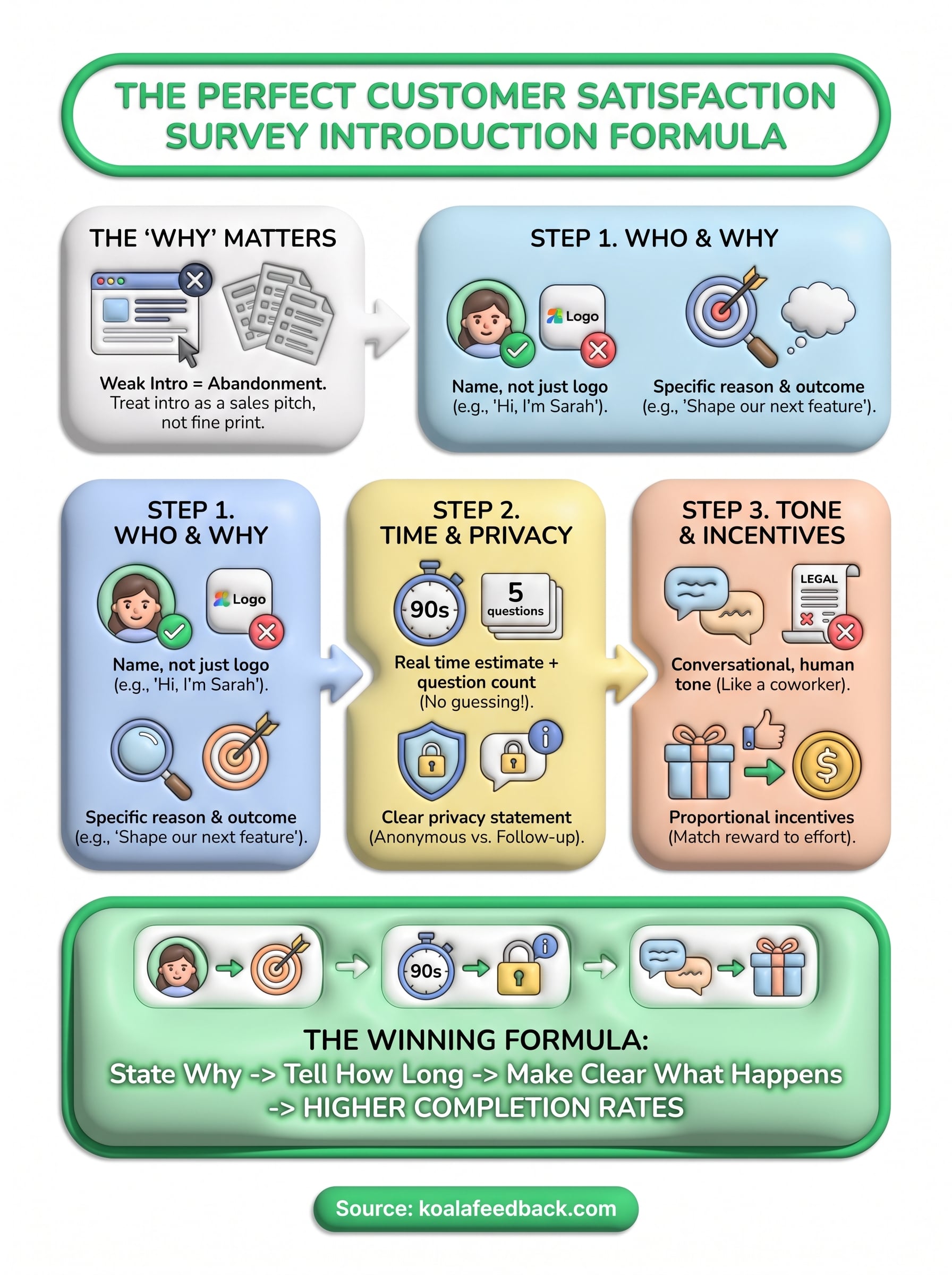
Getting a strong reply starts before your first question ever loads. A customer satisfaction survey introduction that names who's asking, states the time cost, and explains where the answers go will out-perform a longer, better-designed survey with a weak opener every time. The formula doesn't change based on channel: a support ticket follow-up, a quarterly NPS email, and a customer feedback survey introduction on a portal submission form all succeed or fail on the same three details.
Start small. Rewrite one existing survey intro using the templates above, send it to your next batch of respondents, and compare completion rates against your last campaign. You'll see the difference within a week.
If you want that same clarity built into how customers submit ideas and vote on what gets built next, see how to set up a customer feedback portal with Koala Feedback that asks the right questions from the first click.

Start today and have your feedback portal up and running in minutes.