Agile has become the default approach for software teams shipping products that actually solve user problems. But knowing you want to "be Agile" and understanding the actual agile development process steps are two different things. Without a clear picture of how each phase connects, teams end up with standups that go nowhere and sprints that miss the mark.
The Agile methodology breaks work into iterative cycles where feedback drives every decision. Each step, from initial planning to deployment, creates opportunities to course-correct based on what users actually need. This is where tools like Koala Feedback fit into the workflow: they give product teams a structured way to capture and prioritize user input between sprints, so you're building features people asked for instead of guessing.
This guide walks through each stage of the Agile development life cycle, from concept through release. You'll see how the phases connect, what happens in each one, and how continuous feedback keeps the whole process moving toward software that delivers real value. Whether you're adopting Agile for the first time or tightening up an existing process, this breakdown gives you the end-to-end view you need.
Agile development shifts how teams build software by treating every project as a series of short, focused work cycles instead of one long march toward a distant release date. You don't spend months writing specifications before writing code. Instead, you start building working features within weeks, test them with real users, and adjust based on what you learn. This approach keeps your team responsive to feedback and prevents you from investing months in features users never wanted.
The agile development process steps center on delivering incremental value rather than waiting for perfection. Your team breaks down large projects into smaller pieces that users can actually test and respond to. Each iteration produces something tangible, which means you get feedback when it still matters, not after you've already committed six months to the wrong direction.
Traditional waterfall projects try to define everything upfront and build it all before showing users anything. Agile flips this by organizing work into sprints, typically two-week cycles where your team commits to completing a specific set of features. At the end of each sprint, you have working software that stakeholders can review and users can test.
This iterative model means you're constantly validating assumptions instead of betting everything on one big launch. If a feature doesn't solve the problem you expected, you find out in two weeks, not two quarters. Your roadmap stays flexible because you're making decisions based on real usage data rather than upfront guesses about what users might need six months from now.
When you deliver working software every two weeks, you create concrete checkpoints where teams can pivot based on what's actually working instead of what looked good in the planning phase.
Agile values functional code over perfect documentation. This doesn't mean you skip documentation entirely, but you prioritize getting features into users' hands over writing exhaustive spec documents that become outdated the moment requirements change. Your team writes just enough documentation to keep development moving and focuses energy on building features users can interact with.
Documentation in Agile serves the team and the product, not bureaucracy. You maintain technical notes that help new developers onboard and user-facing guides that explain how features work. Everything else takes a back seat to shipping working software that solves real problems.
Agile treats users as active participants in development, not passive recipients of finished products. You involve stakeholders in sprint planning to decide what gets built next. You run demos at the end of each sprint to show progress and gather reactions. This constant collaboration keeps your team aligned with actual user needs instead of building in isolation.
Your product owner acts as the voice of the customer, translating feedback into prioritized work items. When users request features or report problems, those inputs flow directly into your backlog and influence what your team tackles in upcoming sprints. This feedback loop prevents you from spending weeks on features nobody uses because you're checking in with users every step of the way.
Teams adopt Agile because traditional development methods leave them shipping features users don't want or discovering critical problems after it's too expensive to fix them. Agile solves this by creating regular checkpoints where you validate direction before investing months in the wrong solution. You ship working software frequently, get real feedback, and adjust course while changes still come cheap.
The agile development process steps give your team a framework for managing uncertainty instead of pretending you can predict everything upfront. When requirements change halfway through a project, which they always do, Agile treats that as expected rather than catastrophic. Your process builds in the flexibility to respond without derailing your entire timeline.
Agile gets usable features into production quickly instead of waiting for a complete product. You release the core functionality first, gather user reactions, then add improvements based on what actually matters to them. This approach means users start getting value in weeks, not quarters.
Your team prioritizes the highest-value features for each sprint, so if the project gets cut short or priorities shift, you've already delivered the most important pieces. Traditional methods risk spending months on foundational work before building anything users can interact with, which leaves you with nothing to show if timelines compress.
Every sprint creates a natural decision point where you evaluate progress and adjust direction. You catch misunderstandings about requirements early because stakeholders see working software every two weeks and can correct course immediately. This frequent validation prevents the scenario where you build an entire system based on a flawed assumption discovered only at launch.
Agile turns big bets into small experiments by letting you test assumptions with real users before committing to large-scale implementation.
Feedback becomes your risk management tool. When users tell you a feature misses the mark or a workflow feels clunky, you learn this after investing two weeks, not six months. Your team pivots based on evidence instead of defending decisions made months ago with incomplete information.
The agile development process steps transform raw product ideas into shipped features through a repeatable cycle that keeps your team aligned with user needs. You start with a concept, break it into manageable pieces, build and test those pieces in short sprints, then deploy working software while gathering feedback for the next round. Each phase feeds directly into the next, creating a continuous loop where learning from one release shapes what you build in the following sprint.
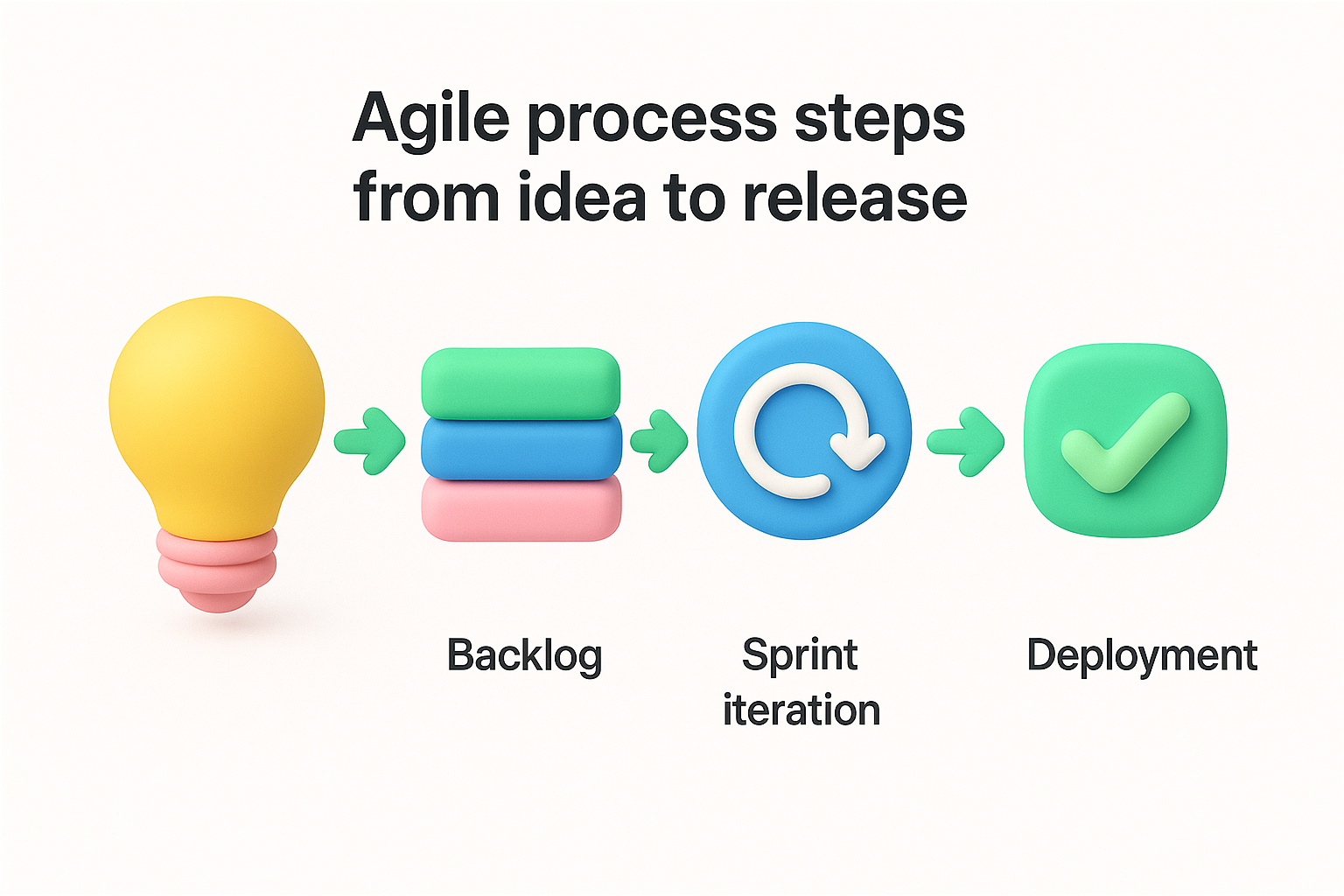
Your product journey begins when someone identifies a user problem worth solving. The product owner translates this concept into user stories that describe what users need and why they need it. These stories populate your backlog, a prioritized list of features and improvements waiting to be built.
Backlog refinement happens continuously as your team breaks down large ideas into smaller, sprint-sized work items. You estimate the effort each story requires and reorder items based on business value and technical dependencies. This preparation ensures your team always has ready-to-build work when sprint planning starts.
Sprint planning kicks off each cycle by having your team commit to specific backlog items they can complete within the sprint timeframe. Developers pull stories into progress, write code, and collaborate with testers to verify everything works as expected. Daily standups keep everyone synchronized on progress and roadblocks.
Your team transforms backlog items into tested, deployable code within each sprint, creating regular opportunities to validate direction with real software instead of theoretical plans.
Testing happens throughout the sprint rather than at the end. Your QA process verifies that new features work correctly and existing functionality remains unbroken. This continuous validation catches problems while they're still fresh and cheap to fix.
Each sprint ends with a demo where stakeholders see working features in action. They provide immediate feedback that influences what your team prioritizes next. Your retrospective meeting examines what went well and what needs adjustment in your process.
Deployment moves tested features into production where real users can access them. Your team monitors performance and user reactions, collecting data that feeds back into backlog prioritization. This cycle repeats continuously, with each iteration building on lessons learned from the previous one.
The agile development process steps rely on clear roles, regular meetings, and shared documentation to keep your team moving in the same direction. You need specific people accountable for specific outcomes, structured moments where the team synchronizes, and artifacts that capture decisions and progress. These three elements create the operational framework that transforms Agile principles into daily practice.
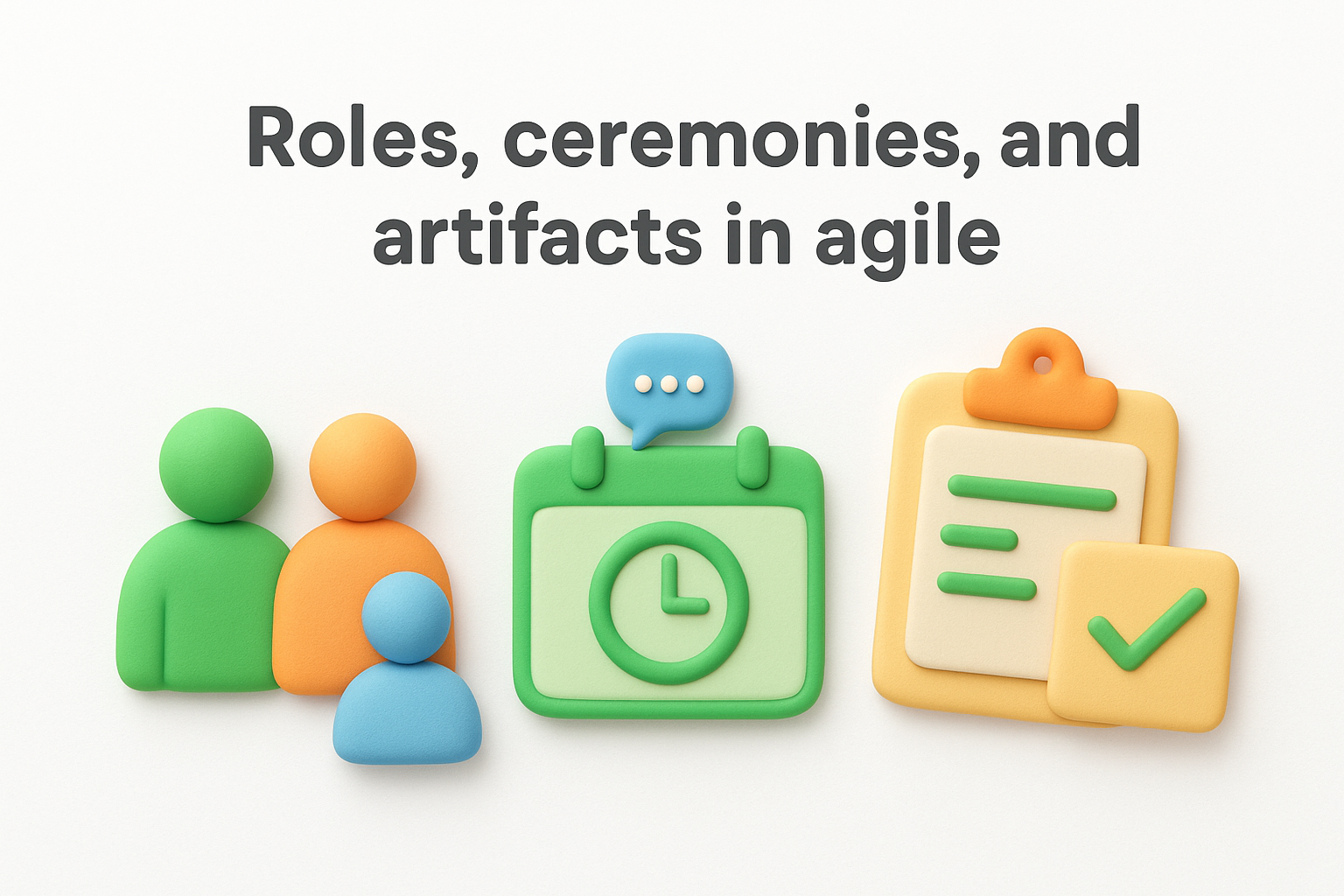
Your Agile team functions around three distinct roles. The product owner maintains the backlog and decides what gets built based on business value and user needs. They serve as the single point of contact for stakeholders and translate strategic goals into actionable work items for the development team.
The scrum master removes obstacles that slow your team down and protects developers from distractions during sprints. They facilitate ceremonies and coach the team on Agile practices without acting as a traditional project manager. Your development team includes everyone who builds, tests, and deploys the product. They self-organize around sprint commitments and determine how to accomplish the work the product owner prioritizes.
Daily standups give your team 15-minute check-ins where each person shares what they completed yesterday, what they're tackling today, and any blockers they face. These brief meetings surface problems early and keep everyone aware of progress across the sprint.
Sprint planning happens at the start of each cycle, where your team commits to specific backlog items they can deliver. Sprint reviews demonstrate completed work to stakeholders and gather feedback. Retrospectives close each sprint by examining what worked and what needs improvement in your team's process.
Regular ceremonies transform collaboration from sporadic interruptions into predictable touchpoints where your team makes decisions together and stays aligned on priorities.
The product backlog serves as your single source of truth for all planned work, prioritized by the product owner based on value and dependencies. Your sprint backlog contains the specific items your team committed to completing in the current sprint, including tasks broken down from user stories.
The increment represents all completed, tested features from the current sprint plus everything delivered in previous sprints. This artifact defines what "done" means for your product and ensures everyone shares the same understanding of releasable functionality.
Even teams following the agile development process steps methodically still stumble when they mistake process compliance for actual improvement. Your sprint ceremonies become checkbox exercises that waste time instead of driving better decisions. Metrics get tracked without anyone acting on them. You need to understand where teams typically fail and how to use data-driven insights to strengthen your process over time.
Your team falls into trouble when you overload sprints with more work than developers can realistically complete. This creates a pattern of missed commitments and erodes trust in your planning process. Sprint planning becomes guesswork instead of informed estimation based on past performance.
Another common failure happens when product owners don't keep the backlog refined and prioritized. Developers waste time in planning meetings debating unclear requirements instead of committing to well-defined work. Your sprints lose focus because nobody decided what actually matters most before the cycle started.
Velocity tracks how many story points your team completes per sprint, giving you a baseline for realistic planning. You measure velocity across multiple sprints to identify trends rather than reacting to single-sprint fluctuations. This metric helps you commit to achievable goals instead of consistently overcommitting.
Track your sprint completion rate to identify patterns where your team routinely finishes less than 80% of committed work, which signals estimation problems or scope creep during sprints.
Cycle time measures how long work items spend in progress before reaching done. Shorter cycle times indicate your team moves work efficiently through your workflow. Lead time captures the full journey from backlog creation to deployment, revealing bottlenecks in your end-to-end delivery process.
Retrospectives give your team dedicated time to examine what's working and what's broken. You identify specific actions to try in the next sprint rather than having vague discussions about feelings. These improvements compound over time as you eliminate friction points and refine your workflow based on actual experience.
Your team experiments with process changes in small increments, measures the impact, and keeps what works. This approach treats your development process as iteratively improvable just like your product, using sprint-over-sprint data to validate whether changes actually help.
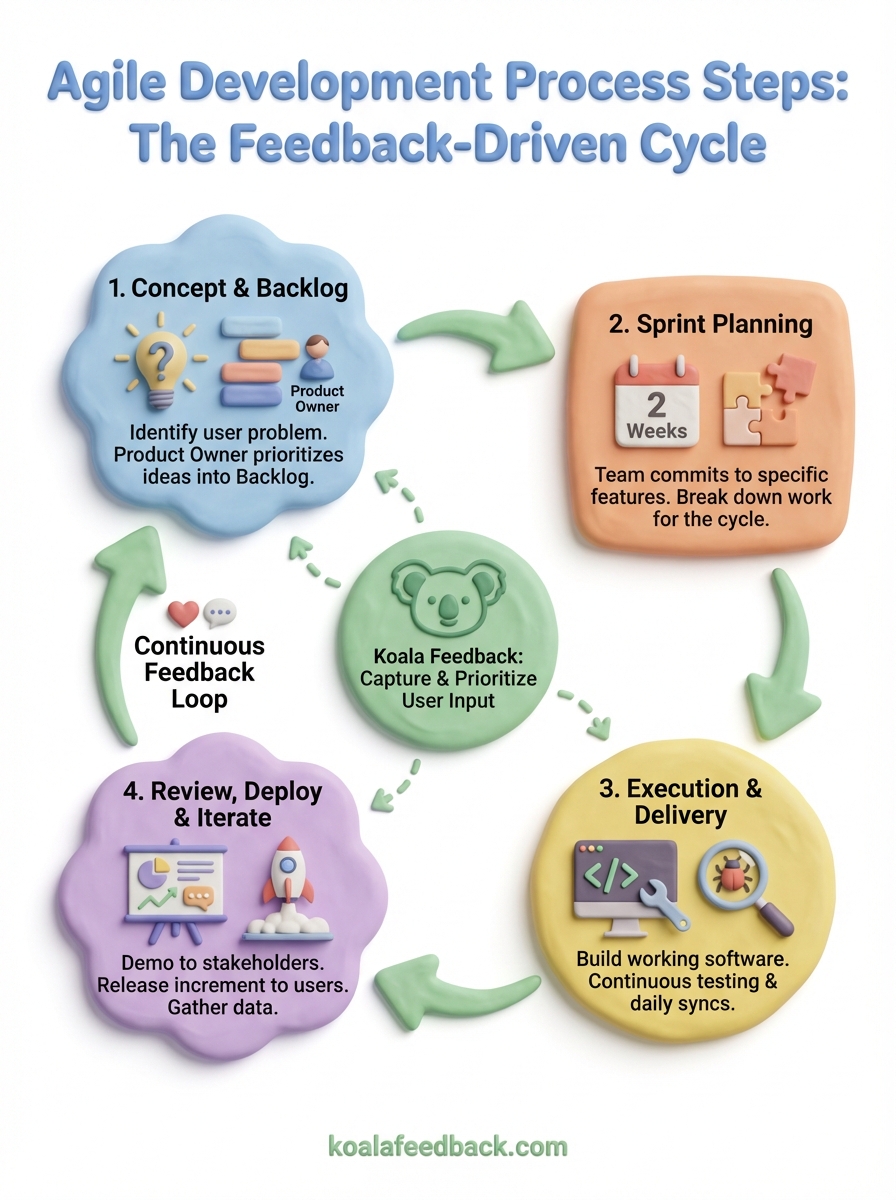
You now understand the agile development process steps from concept through deployment and how each phase builds on feedback from the previous cycle. Your team can use these steps to deliver working software faster, reduce risk through validation loops, and maintain alignment with what users actually need. The framework gives you structure without forcing rigid adherence to predetermined plans that ignore changing requirements.
Implementing Agile successfully requires capturing user feedback systematically between sprints so your product owner has reliable data for backlog prioritization. Koala Feedback centralizes feature requests from users, lets them vote on priorities, and gives your team a clear signal about what matters most. This visibility prevents your backlog from becoming a dumping ground for random ideas and ensures each sprint tackles features users explicitly requested rather than what stakeholders guessed might work.

Start today and have your feedback portal up and running in minutes.