The agile scrum framework is a way for teams to break work into small chunks and deliver results every few weeks. Instead of spending months planning everything upfront, Scrum teams work in short cycles called sprints. Each sprint produces something tangible you can test and improve. This approach helps you adapt quickly to feedback, catch problems early, and build what users actually need. Scrum defines specific roles, regular meetings, and visual tools that keep everyone aligned on what matters most.
This guide walks you through everything you need to get started with Scrum. You'll learn why this framework matters for product teams, how to distinguish Agile from Scrum, and what roles your team needs. We'll cover the key ceremonies that structure each sprint, the artifacts that make work visible, and a practical example showing Scrum applied to a SaaS product. By the end, you'll understand how to use Scrum to transform scattered feedback into a clear roadmap that drives your product forward.
The agile scrum framework matters because it solves the biggest problem in product development: building the wrong thing. Traditional approaches force you to commit to a full plan upfront, then spend months building before you see results. By the time you launch, user needs have changed or you discover your assumptions were wrong. Scrum flips this model by giving you working software every two to four weeks, so you can validate ideas early and adjust course without wasting time or money.
Scrum helps you ship features in days or weeks instead of months. Each sprint produces a potentially shippable increment, which means you can release value to users faster and start gathering real-world feedback immediately. This rapid cycle reduces your risk because you catch problems when they're still small and cheap to fix. You're never more than a few weeks away from course-correcting based on what you learn.
Daily standups and sprint planning keep your team synchronized on priorities. Everyone knows what others are working on, where blockers exist, and what's coming next. This transparency eliminates confusion about who's responsible for what and prevents duplicate work. When your designer, developer, and product manager all understand the sprint goal, they can make faster decisions without constant meetings or long email threads.
The agile scrum framework builds quality into every sprint through continuous testing and review. You're not waiting until the end of a project to discover bugs or usability issues. Sprint reviews let you demo working features to stakeholders and gather feedback while changes are still easy to make. Retrospectives help your team identify process improvements that make each sprint better than the last.
"Scrum's iterative approach means you can fail fast, learn quickly, and deliver what users actually need instead of what you guessed they might want."
This constant feedback loop helps you build products that solve real problems instead of hypothetical ones.
Starting with the agile scrum framework requires clear preparation and a focused approach. You don't need perfect conditions or an entire organization-wide rollout to begin. Pick one project or product where you can test the framework with a small team and learn from the experience. This focused start lets you build momentum, prove value, and refine your approach before scaling to other teams or initiatives.
Your first Scrum project should have clear deliverables and meaningful impact without being mission-critical. Look for work that can be broken into features users will actually notice and use. A new product module, a website redesign, or a customer-facing app update all work well because they produce visible results every sprint. Avoid backend infrastructure projects or vague initiatives that won't demonstrate value quickly to stakeholders.
The ideal first project runs for two to three months minimum, giving your team enough sprints to find their rhythm. You need time to make mistakes, adjust your process, and see real improvement. Single-sprint experiments rarely show you the full benefits of Scrum because teams are still learning the mechanics.
Your Scrum team needs three to nine people who can work together daily. Include everyone required to take an idea from concept to working software: developers, designers, testers, and anyone else whose skills are essential. This cross-functional setup eliminates handoffs and waiting that slow traditional projects down. Everyone collaborates throughout the sprint instead of working in isolated phases.
"The best Scrum teams sit together, communicate constantly, and share responsibility for delivering the sprint goal."
Assign a product owner who understands user needs and can make priority decisions quickly. Find a Scrum master who will facilitate meetings and remove obstacles without micromanaging the team's work.
Define your sprint length between one and four weeks, with two weeks being most common for teams starting out. Shorter sprints force faster feedback but require more planning overhead. Longer sprints give you breathing room but delay learning. Your choice depends on how quickly requirements change and how often you can realistically deliver working software.
Schedule your core ceremonies at consistent times: sprint planning at the start, daily standups every morning, sprint review near the end, and retrospective after the review. Block these times on everyone's calendar now so they become routine. Pick a simple tool to track your work, whether that's a physical board with sticky notes or a digital system. The tool matters less than making work visible to everyone on the team.
Understanding the relationship between Agile and Scrum clears up confusion that trips up most beginners. Agile is a philosophy that describes values and principles for building software, while Scrum is a specific framework that gives you concrete practices to follow. Think of Agile as the mindset and Scrum as the playbook. You can be Agile without using Scrum, but when you use the agile scrum framework, you're applying one popular way to live out Agile principles in your daily work.
Agile represents a set of values captured in the Agile Manifesto, written in 2001 by software developers frustrated with traditional approaches. The manifesto prioritizes individuals and interactions over processes and tools, working software over comprehensive documentation, customer collaboration over contract negotiation, and responding to change over following a plan. These values don't tell you what to do on Monday morning. They guide how you think about building products.
The Agile philosophy emphasizes continuous delivery of value, close collaboration with customers, and embracing change instead of fighting it. You focus on short feedback loops and iterative improvement rather than trying to predict everything upfront. This mindset applies beyond software development to marketing, operations, or any work where requirements evolve and speed matters.
"Agile tells you why to work differently, but Scrum tells you exactly how to organize your team, structure your time, and deliver results."
Scrum translates Agile values into practical structures you can implement tomorrow. It defines three roles (product owner, Scrum master, development team), five events (sprint planning, daily standup, sprint review, sprint retrospective, and the sprint itself), and three artifacts (product backlog, sprint backlog, increment). These elements create a repeatable rhythm that teams can follow without inventing their own process from scratch.
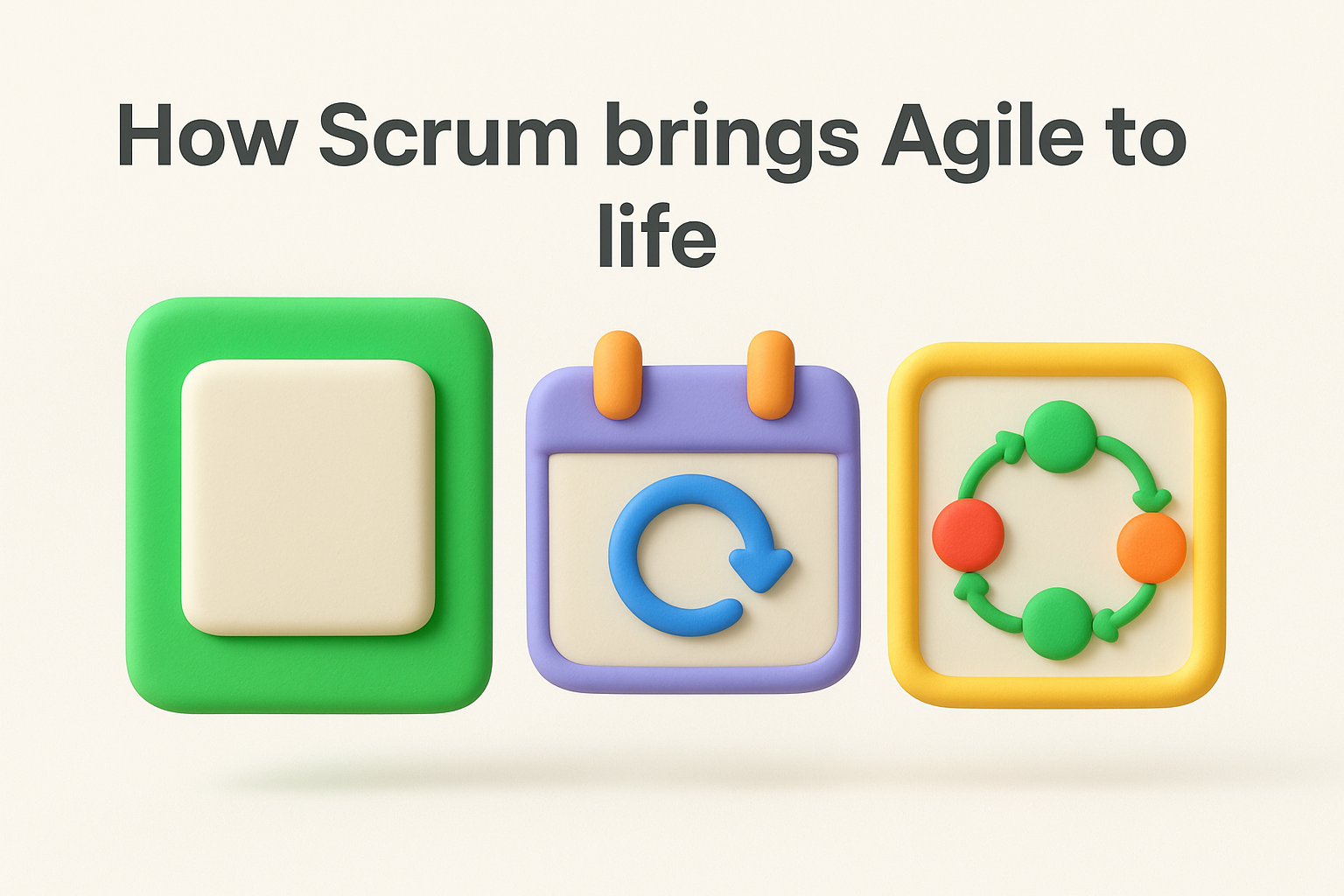
The framework provides just enough structure to keep teams aligned while leaving room for flexibility. You get clear accountability through defined roles, predictable planning through time-boxed sprints, and transparency through visible artifacts. Scrum doesn't prescribe how to write code or design interfaces, but it establishes how your team collaborates, makes decisions, and measures progress toward Agile principles.
The agile scrum framework defines three distinct roles that work together to deliver value every sprint. Each role carries specific responsibilities that eliminate confusion about who makes decisions, who removes obstacles, and who builds the product. You don't need managers, project coordinators, or business analysts in the traditional sense. These three roles cover everything your team needs to plan work, execute effectively, and deliver results that matter to users.
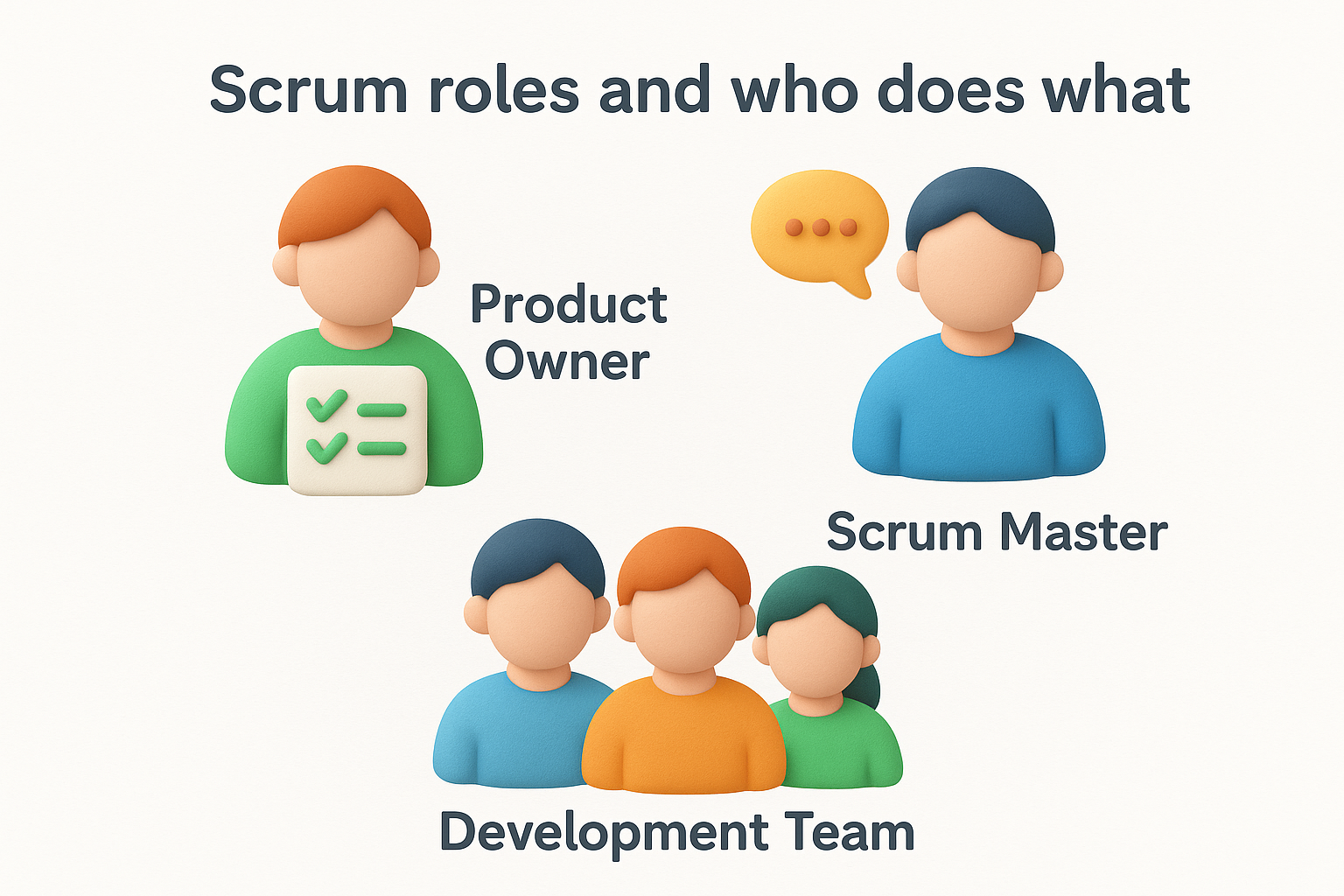
The product owner acts as the voice of the customer and makes all decisions about what the team builds. This person maintains the product backlog, which is a prioritized list of features and fixes the team could work on. They decide what goes into each sprint based on business value, user needs, and strategic goals. Your product owner answers questions about requirements, accepts or rejects completed work, and ensures the team focuses on delivering maximum value with minimum waste.
This role requires someone who understands both the business and the users deeply enough to make tough priority calls. Your product owner must be available to the team daily, not someone who shows up once a week for status meetings. They clarify details, adjust priorities when new information arrives, and shield the team from conflicting demands that would destroy focus. Only one person can fill this role because split authority leads to conflicting priorities and team confusion.
The Scrum master serves the team by facilitating ceremonies and removing obstacles that slow progress. This person doesn't manage the team or assign tasks. Instead, they ensure everyone follows the Scrum process, coach team members on Agile practices, and protect the team from interruptions. Your Scrum master schedules sprint planning, runs daily standups, and facilitates retrospectives where the team reflects on how to improve.
"The best Scrum masters see their job as creating an environment where the team can do their best work, not telling people what to do."
They track down answers when the team gets blocked, negotiate with other departments for resources, and help resolve conflicts that emerge during collaboration.
The development team includes everyone needed to turn ideas into working software. This typically means developers, designers, testers, and any other specialists required to complete features without depending on people outside the team. Your team should have three to nine members who work together daily and share collective responsibility for sprint success. Nobody has special titles or ranks within the development team.
These individuals are self-organizing, which means they decide among themselves how to accomplish the work in each sprint. Your team commits to a sprint goal during planning and figures out the best way to achieve it. They collaborate constantly, help each other overcome obstacles, and own the quality of everything they deliver. The development team pulls work from the product backlog based on priority and their capacity to complete it within the sprint.
The agile scrum framework structures work through five recurring events that create a predictable rhythm for your team. Each event serves a specific purpose in planning work, coordinating progress, gathering feedback, and improving your process. These ceremonies happen within a sprint, which is a time-boxed period where your team transforms backlog items into working software. Understanding what happens in each event helps you run effective sprints that deliver value consistently.
Sprint planning kicks off each sprint by bringing your entire team together to decide what you'll accomplish over the next iteration. Your product owner presents the highest-priority items from the product backlog, explaining why they matter and what success looks like. The development team discusses each item, asks clarifying questions, and breaks large features into specific tasks they can complete within the sprint. Together, you define a sprint goal that captures the overall objective and commit to a realistic amount of work based on your team's velocity from previous sprints.
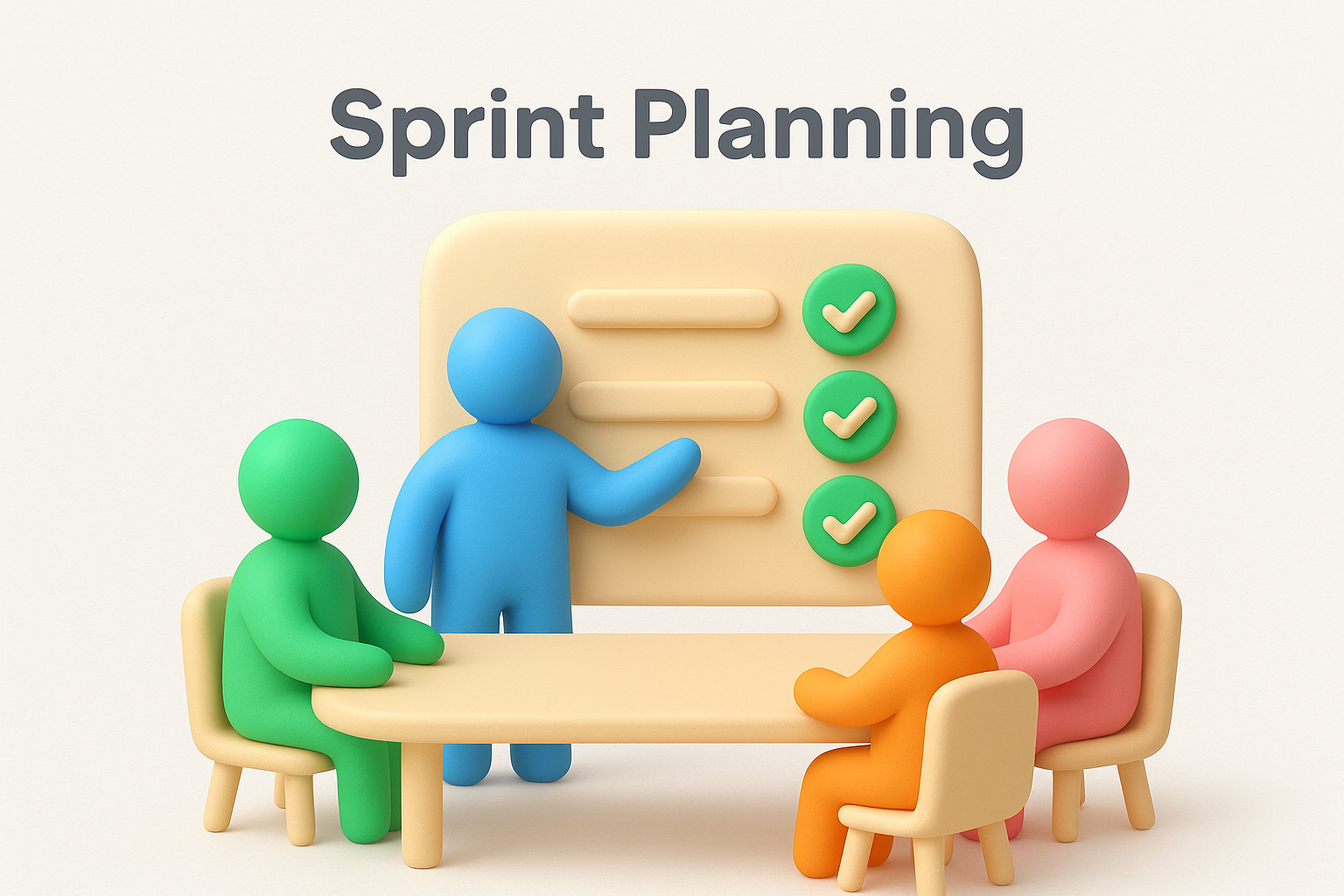
This meeting typically lasts two hours for every week in your sprint, so a two-week sprint gets four hours of planning time. You walk out of this session with a clear sprint backlog that everyone understands and believes they can deliver. Your team owns this commitment, which means nobody can add work to the sprint without the team's agreement.
Your daily standup provides a quick sync point where the team coordinates for the next 24 hours. This 15-minute meeting happens at the same time every day, with everyone standing to keep the discussion focused and brief. Each team member shares what they completed yesterday, what they plan to work on today, and any obstacles blocking their progress. You're not giving status reports to a manager but rather helping teammates understand where collaboration might be needed.
"The daily standup keeps problems from festering for days by surfacing blockers when they're fresh and easier to resolve."
Your Scrum master notes impediments and works to remove them outside the standup, keeping the meeting short and valuable.
The sprint review happens at the end of each sprint to demonstrate completed work to stakeholders and gather their feedback. Your team shows working features, not slides or promises about what you'll build next. Stakeholders can interact with the software, ask questions, and share their reactions. This hands-on demonstration sparks conversations about what to build next based on what you've learned. Your product owner takes this feedback and updates the product backlog priorities accordingly.
This ceremony helps you validate that you're building the right things before investing more time. You adjust your direction based on real reactions to working software rather than theoretical requirements.
Your retrospective closes each sprint by giving the team protected time to reflect on how they worked together. You discuss what went well, what frustrated people, and what changes would improve the next sprint. The conversation covers tools, processes, communication patterns, and anything else that affects how you collaborate. Your team identifies one or two specific improvements to try in the upcoming sprint rather than creating a long list nobody will remember.
These improvements compound over time, making each sprint more effective than the last. You might adjust your definition of done, change how you estimate work, or eliminate wasteful meetings that don't add value.
The agile scrum framework relies on three key artifacts that make your team's work transparent to everyone involved. These artifacts show what you're building, what you're working on right now, and what you've completed. Transparency eliminates surprises and helps your team make better decisions because everyone can see the same information at any time. Each artifact serves a specific purpose in keeping your product development visible and trackable without requiring constant status meetings or lengthy reports.
Your product backlog contains every feature, fix, and improvement you might build for your product. This living document constantly evolves as you learn more about user needs and business priorities. Your product owner maintains this list, ordering items from most valuable at the top to least valuable at the bottom. The team doesn't work on everything at once but rather pulls the highest-priority items into each sprint based on capacity and dependencies.
Each backlog item describes what users need and why it matters, not how to build it. Your team adds technical details during sprint planning when you break items into specific tasks. Well-maintained backlogs help you see months of potential work at a glance, making it easier to spot patterns, identify gaps, and plan releases that deliver cohesive value to users.
The sprint backlog shows exactly what your team committed to deliver during the current sprint. This subset pulled from the product backlog includes all the features you selected during sprint planning plus the tasks required to complete them. Your team owns this artifact and updates it daily as work progresses. Anyone can look at your sprint backlog and see which tasks are done, in progress, or waiting to start.
"Sprint backlogs transform vague plans into concrete tasks that team members can pick up and finish within days, not weeks."
This visibility helps you spot problems early when someone gets stuck or a task takes longer than expected.
Your increment represents all the work you've completed that meets your definition of done. This includes everything finished in the current sprint plus all completed work from previous sprints. The increment must be in a usable state regardless of whether your product owner decides to release it. You're building working software, not documentation or prototypes that might work someday.
Each sprint produces a new increment that adds value on top of what already exists. Your definition of done specifies the quality standards every increment must meet, which might include passing tests, completing documentation, or getting security approval. This artifact proves you're making real progress rather than accumulating half-finished work that delivers no value until some distant completion date.
Seeing the agile scrum framework applied to a real scenario makes the concepts concrete and easier to grasp. Imagine you're building a customer feedback management tool similar to Koala Feedback. Your product helps businesses collect feature requests, prioritize them, and share roadmaps with users. You have a small team of five people: a product owner who understands customer needs, a Scrum master who keeps the process running smoothly, two developers, and one designer. Your sprints run for two weeks, giving you enough time to complete meaningful features while maintaining fast feedback cycles.
Your product owner creates an initial backlog based on conversations with early customers who signed up for your beta. The top priorities include building a feedback submission form, creating a voting system so users can upvote requests, and displaying a public roadmap page. These items sit at the top of your product backlog because they deliver the core value users need to start using your product. Lower priority items include email notifications, custom branding options, and advanced filtering features that you'll tackle later once the foundation exists.
During your first sprint planning session, the team examines the feedback submission form and breaks it into specific tasks: design the form interface, build the backend API endpoint, create the database schema, write validation logic, and add tests. Your team estimates they can complete this entire feature plus start on the voting system within the two-week sprint.
Your daily standups keep everyone coordinated as developers build the submission form while your designer creates mockups for the voting interface. By day eight, users can submit feedback through a working form that saves to your database. Your team spends the remaining days adding the voting system, allowing users to click an upvote button on any feedback item. The sprint review demonstrates these two functional features to stakeholders, who immediately suggest adding vote counts to help users see popular requests at a glance.
"This rapid delivery lets you validate your core assumptions about what users need before investing months building features nobody wants."
Your retrospective identifies that better communication between the designer and developers would prevent last-minute changes, so you agree to hold quick design reviews mid-sprint. Sprint two focuses on displaying the public roadmap, pulling in the vote counts feature stakeholders requested, and fixing bugs users reported during beta testing. This iterative approach means you're constantly delivering value while incorporating real feedback from people using your product daily.
Feedback from users becomes most valuable when you transform scattered requests into a prioritized roadmap that guides your team's work. The agile scrum framework provides the structure you need to collect feedback systematically, decide what to build next, and communicate your plans transparently. Your product backlog becomes the bridge between what users ask for and what your team actually delivers. Instead of letting feature requests pile up in email threads or spreadsheets, you channel everything into a single source of truth that your product owner maintains and your team executes against each sprint.
Your product owner acts as the central collection point for all user feedback, whether it comes from support tickets, user interviews, sales conversations, or direct feature requests. They translate each piece of feedback into backlog items that describe what users need and why it matters. This consolidation prevents duplicate efforts and reveals patterns when multiple users request similar capabilities. You avoid building features that only one vocal customer wants while missing broader needs that many users share quietly.
Organizing feedback by theme helps you see opportunities for larger improvements rather than building one-off solutions. Group related requests together so you can address multiple needs with a single well-designed feature. This thematic organization also makes it easier to explain your roadmap because you're focusing on user problems rather than random feature lists.
Sprint planning transforms your organized feedback into concrete delivery commitments. Your product owner brings the highest-priority backlog items based on business value, user impact, technical dependencies, and strategic goals. The team discusses each item, estimates effort, and commits to what they can realistically complete. This regular prioritization cycle ensures you're always working on what matters most right now rather than following an outdated plan created months ago.
"Sprint planning forces hard choices about what not to build, which is just as important as deciding what to build next."
You can't do everything at once, so prioritization helps you deliver value incrementally while keeping users informed about what's coming.
Your roadmap shows users which feedback you're acting on and when they can expect results. Share your sprint plans and completed increments publicly so users see their requests moving from idea to in-progress to done. This transparency builds trust because people understand you're listening and making decisions based on real data rather than arbitrary preferences. Tools that display your roadmap alongside user feedback create natural accountability and help manage expectations about timing and scope.
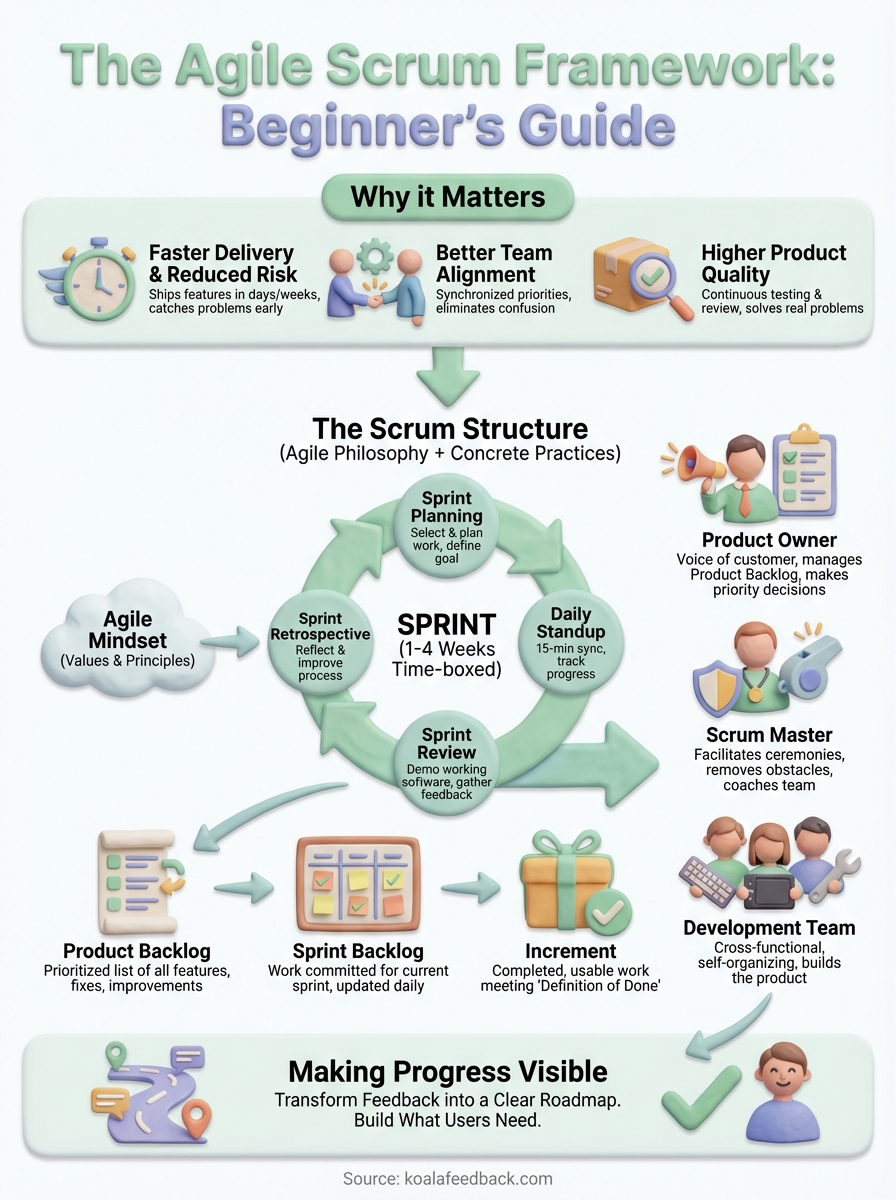
The agile scrum framework gives you a proven structure for building products that users actually need. You've learned how sprints create predictable delivery cycles, how three roles keep your team focused, and how artifacts make progress visible to everyone involved. These elements work together to help you respond quickly to feedback instead of following rigid plans that become outdated before you finish building.
Starting with Scrum requires choosing one project, assembling a cross-functional team, and committing to the ceremonies that structure your work. Your first few sprints will feel awkward as you learn the rhythm, but the framework becomes natural when you see how fast you can turn ideas into working software.
Transform how you manage feedback and build your roadmap with Koala Feedback, a platform designed to help you collect user requests, prioritize what matters, and share your progress transparently. Your users want to see that you're listening, and Scrum gives you the process to act on what they tell you.

Start today and have your feedback portal up and running in minutes.