Communication with stakeholders is the planned exchange of information between you and the people who affect or are affected by your project, product, or organization. It runs both ways. You share updates, decisions, and risks, and they send back questions, concerns, and feedback. Done well, everyone knows what is happening, why it is happening, and what you need from them.
The meaning is simple, but the practice is where teams slip. Updates go out only when something breaks, the wrong people get the wrong detail, and feedback disappears into an inbox. This article covers why stakeholder communication matters, how to build a strategy for it, the main types and methods, worked examples, and the skills behind it.
We build Koala Feedback for product teams, and customers are one of the stakeholder groups those teams talk to most. So some examples lean toward product work. The principles apply to any project, in any department.
Stakeholder communication matters because many projects stall from misaligned people, not from bad plans. It keeps everyone working from the same facts and gives you early warning when something goes wrong.
Regular updates show stakeholders you have nothing to hide. A sponsor who gets a short update every two weeks will not be shocked by a delay in month three. Predictable updates build trust, and trust is what you spend when you need a deadline moved or a budget approved.
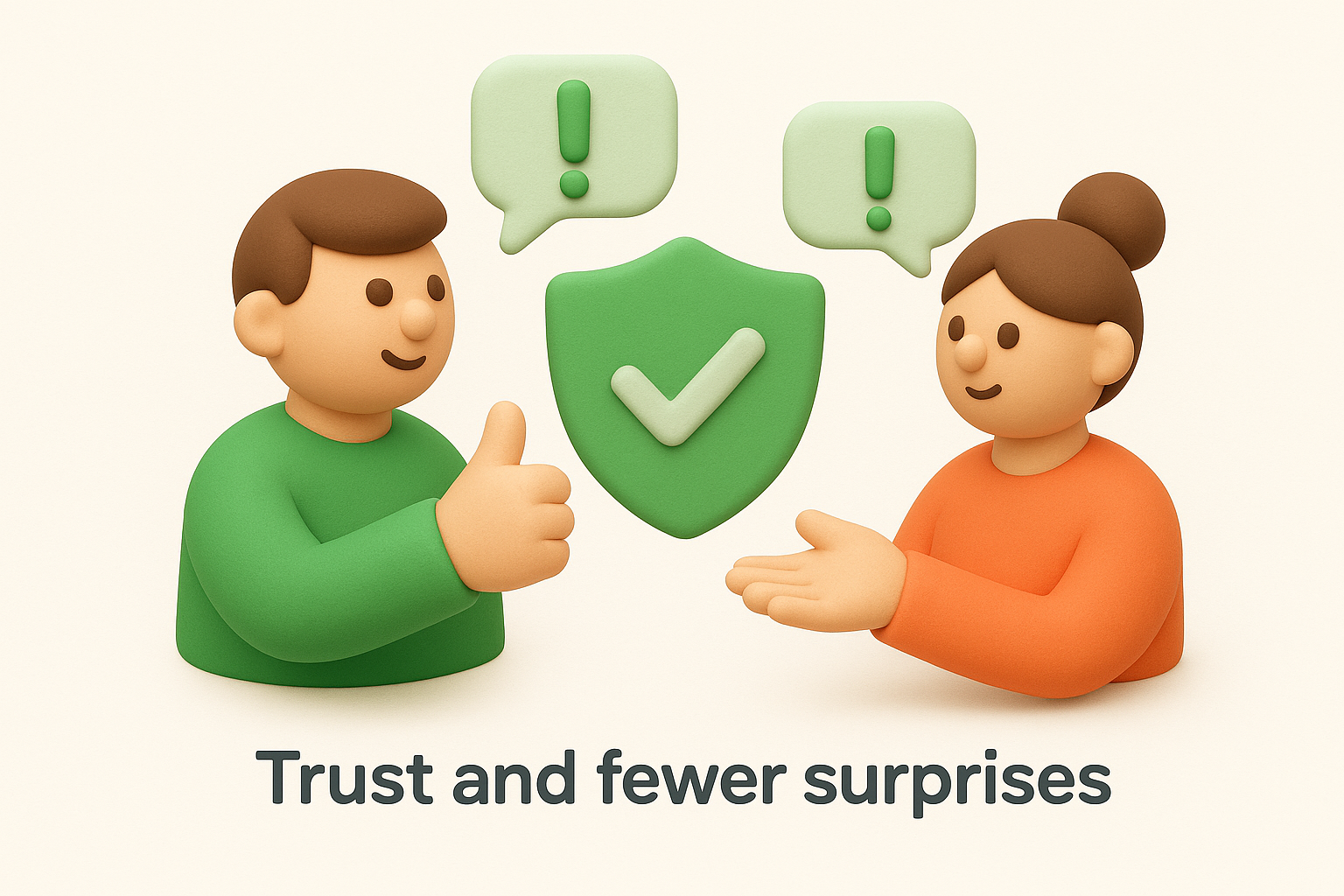
Silence does the opposite. When people hear nothing, they assume the worst and fill the gap with rumors. Surprises erode confidence faster than bad news does, because bad news delivered early still looks like control.
Two-way communication surfaces what you cannot see from your seat. A customer, a support lead, or an engineer may know about a roadblock months before it reaches your timeline. Early input improves decisions, especially when you ask before the plan is locked.
It also sets accountability on both sides. When you state who owns what and by when, everyone knows their commitments. Poor communication usually shows up as:
Stakeholders forgive bad news. They rarely forgive hearing it last.
Effective stakeholder communication starts with a written plan that says who needs what, through which channel, how often, and from whom. You do not need a heavy document. One page is enough if you keep it current.
Use this sequence for any communication strategy for stakeholder engagement:
Revisit the plan at every milestone. Stakeholders change as projects move, and a group that was passive in planning may become critical at launch.
Lead every update with what changed and what you need from the reader. Tailor the detail to the audience: executives get outcome, risk, and the decision required, while delivery teams get specifics. A good test is whether the reader could act on your message without a follow-up question.
Then close the loop. Tell people what you did with their feedback, even when the answer is no. Stakeholders who see their input change a decision keep giving it. Those who never hear back stop.
Pick a channel, keep a cadence, and report back on every piece of feedback.
You can sort stakeholder communication by audience (internal or external), by direction (one-way or two-way), and by formality. Each type calls for different methods.
Internal stakeholder communication reaches people inside the organization: executives, project teams, and other departments. Internal methods favor speed and detail, such as team chat, stand-ups, and shared documents. External stakeholders include customers, partners, investors, regulators, and the local community. External communication needs more polish and consistency, because the audience has less context and your words represent the organization.
Engagement is the wider term. Communication is the exchange of information. Stakeholder engagement and communication overlap, but engagement also covers involving people in decisions and building the relationship over time.
Formal methods, such as reports and scheduled reviews, create a record. Informal ones, such as a quick call, build rapport and speed. One-way methods inform. Two-way methods collect input. Most plans need a mix.
| Method | Best for | Typical cadence | Direction |
|---|---|---|---|
| Email update | Regular status for broad groups | Weekly to monthly | One-way, replies possible |
| Team chat (Slack, Teams) | Internal teams, quick questions | Daily or as needed | Two-way |
| Meetings and workshops | Kickoffs, decisions, sensitive topics | At milestones | Two-way |
| One-page report or dashboard | Executives and sponsors | Monthly or per milestone | One-way |
| Surveys and feedback portals | Input from many people | Ongoing or per release | Two-way |
| Public roadmap or newsletter | Customers and community | Per release or monthly | One-way with feedback |
| Phone call or 1:1 | Key individuals, escalations | As needed | Two-way |
Use one-way channels to inform and two-way channels to decide.
A concrete plan shows how the pieces fit. The two examples below cover an internal-heavy plan and an external customer channel.
Imagine a SaaS team shipping a new reporting feature over eight weeks. Their plan fits in one table:
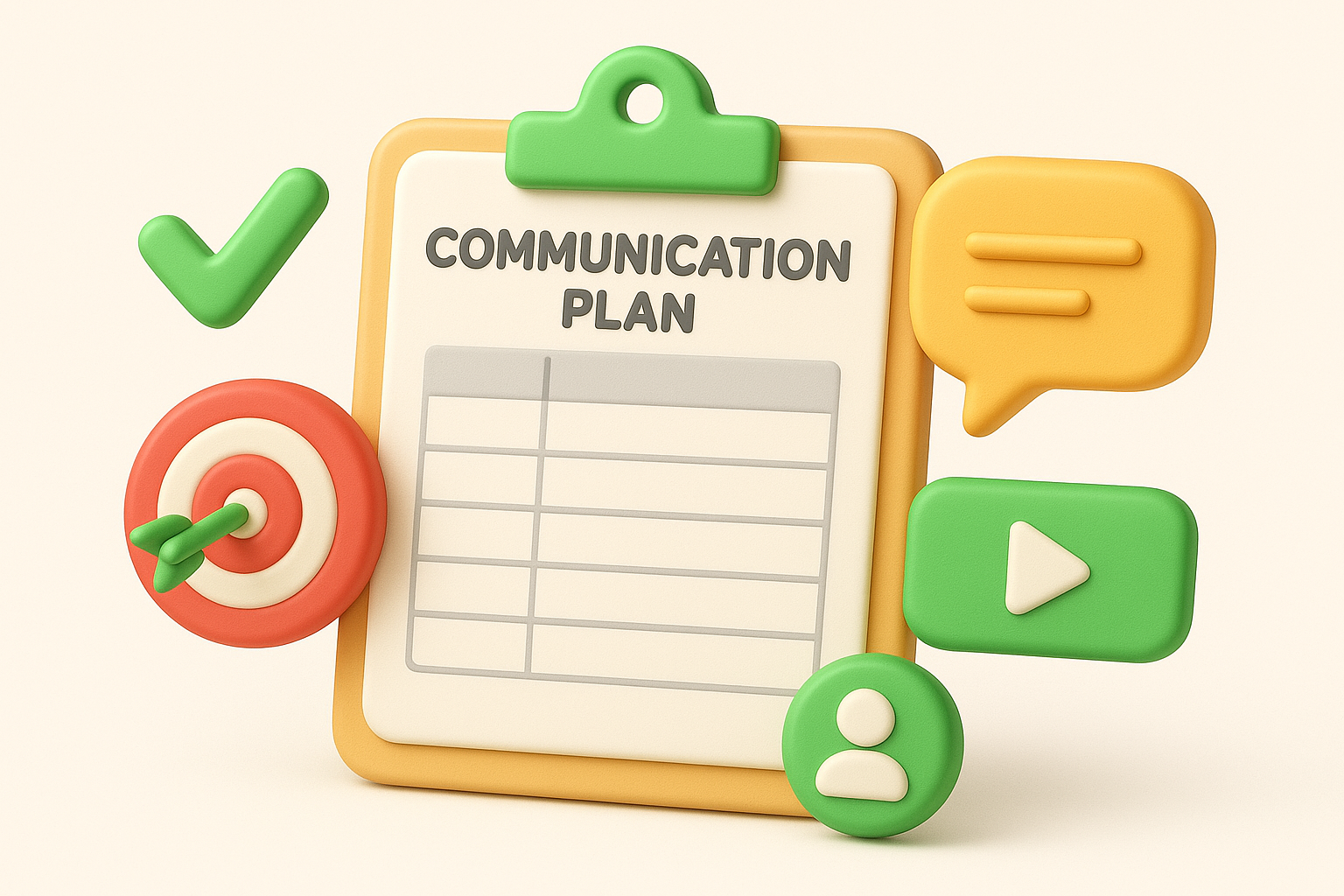
| Stakeholder | Needs | Channel | Cadence | Owner |
|---|---|---|---|---|
| Executive sponsor | Progress, risk, budget, decisions | One-page summary | Every two weeks | Project lead |
| Engineering team | Scope, priorities, changes | Team chat and stand-up | Daily | Product manager |
| Customer support | What ships, what to tell users | Email release notes | Before each release | Product manager |
| Customers | What is planned, how to influence it | Public roadmap and feedback portal | On each status change | Product team |
Over eight weeks, the sponsor gets four summaries, support gets a note before each release, and engineering never waits on a decision. Each group gets only what it needs, and each update has an owner.
Customers are the stakeholders teams most often neglect. A public roadmap lets you show what is planned, in progress, and done, while a feedback portal lets customers submit ideas, vote, and comment. Clear statuses set expectations without a single email.
Koala Feedback is built for this workflow. You collect and categorize feedback, organize it into boards, and publish a roadmap with customizable statuses under your own domain. Portals can be live within minutes, and signing up is free.
The core stakeholder communication skills are listening, clarity, and follow-through. Technique matters less than the habit of checking whether your message landed.
Active listening comes first. Ask what a stakeholder worries about before you present your plan, and repeat their concern back in your own words. Plain language comes second. Replace jargon and acronyms with the specific fact: "launch moves from March 4 to March 18," not "timeline slippage."
Empathy and consistency round out the set. Know what pressure the other person is under, and then deliver on the cadence you promised.
The best stakeholder communicators check that the message landed, not just that it was sent.
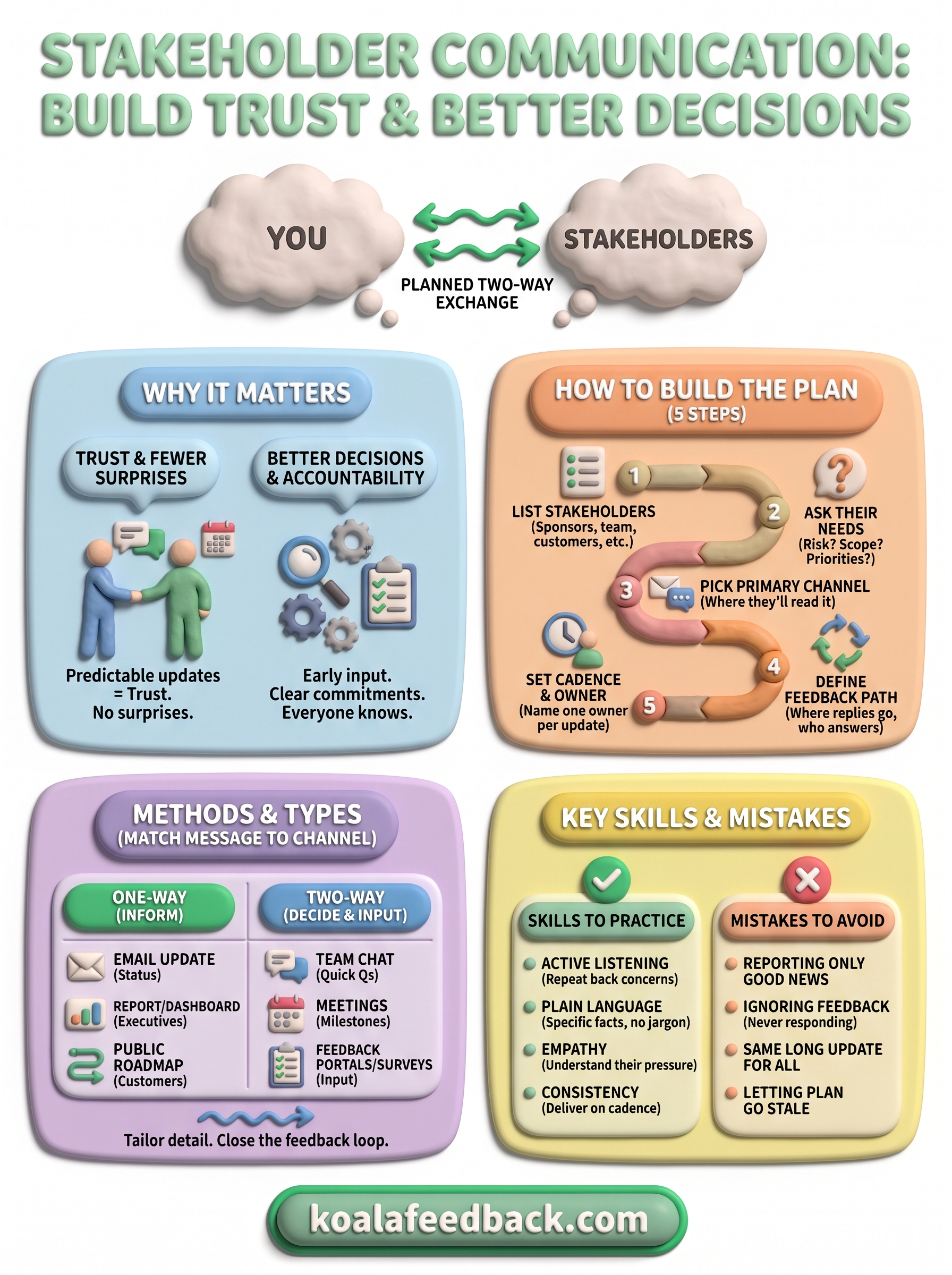
Stakeholder communication is a planned, two-way exchange that builds trust, sharpens decisions, and keeps surprises small. The method is simple: know who your stakeholders are, learn what each needs, choose a channel and cadence, and report back on what you hear.
Start small. Pick the one group you talk to least, write down what they need and how often, and stick to that rhythm for a month. If customers are that group, Koala Feedback gives you a feedback portal and public roadmap to keep them informed without extra meetings.

Start today and have your feedback portal up and running in minutes.