You built the product. People signed up. Then they left, sometimes within minutes. That gap between "new user" and "active user" is exactly where SaaS onboarding either saves or kills growth. It's the process of guiding someone from their first login to the moment they experience real value, and most companies get it wrong by overcomplicating it or skipping it entirely.
Strong onboarding reduces churn, shortens time-to-value, and turns trial users into paying customers. Weak onboarding? It buries features, confuses new users, and sends them straight to a competitor. The difference often comes down to structure, knowing what to show, when to show it, and how to listen to the people using your product along the way.
That last part is where tools like Koala Feedback fit in. Collecting user feedback during and after onboarding gives you a direct line into what's working and what's causing friction. Instead of guessing why users drop off, you can ask them and act on what they tell you.
This guide breaks down SaaS onboarding stage by stage, what it is, why it matters, best practices backed by real examples, and a checklist you can start using right away.
Most SaaS businesses lose the majority of trial users before those users ever reach a second session. If you've ever wondered what is SaaS onboarding supposed to actually accomplish, the answer is straightforward: it's the bridge between signup and sustained use. Every day a new user spends confused is a day closer to cancellation, and the data backs that up. Research consistently shows that users who don't reach a clear moment of value within their first few sessions rarely return. That makes onboarding one of the highest-leverage investments you can make in your product.
Poor onboarding is expensive in ways that aren't always obvious at first. On the surface, you see churn numbers climbing and free-to-paid conversion rates stalling. Dig deeper and you'll also find inflated support costs, because confused users create tickets instead of finding value. Every support request that a clearer onboarding flow could have prevented is money your team spends fixing a problem that never had to exist.
Users who experience friction in their first week are significantly more likely to churn within 30 days, regardless of how strong the product actually is.
Beyond the direct financial hit, poor onboarding creates a trust problem. When users can't figure out your product quickly, they don't blame themselves. They blame you. A frustrating first experience sticks, and it shapes every interaction they have with your brand going forward. Word-of-mouth, reviews, and referrals all suffer when new users hit walls instead of wins.
Retention is the engine of SaaS growth, and onboarding is what fuels it. Users who complete a structured onboarding flow activate faster, reach value sooner, and stay longer. That directly impacts your monthly recurring revenue and reduces your cost of acquiring the next customer, because retained users refer others.
Strong onboarding also creates the conditions for expansion revenue. When users understand your product deeply from day one, they're far more likely to explore advanced features, upgrade their plan, or bring in teammates. The onboarding experience isn't just about keeping users. It positions them to grow with you, turning casual signups into power users who advocate for your product internally.
Most teams treat onboarding as a one-way street: you push information, users absorb it. But the most effective onboarding processes run in both directions. They collect signals from users about where they're getting stuck, what they expected but didn't find, and which features matter most to them. That information gives you something guesswork never can.
Gathering structured feedback during and after onboarding gives your product team the data it needs to make real improvements. When users can submit ideas, vote on features, and flag friction points directly, your onboarding flow becomes a continuous improvement loop. You stop guessing why people drop off and start addressing the actual problems they're telling you about.
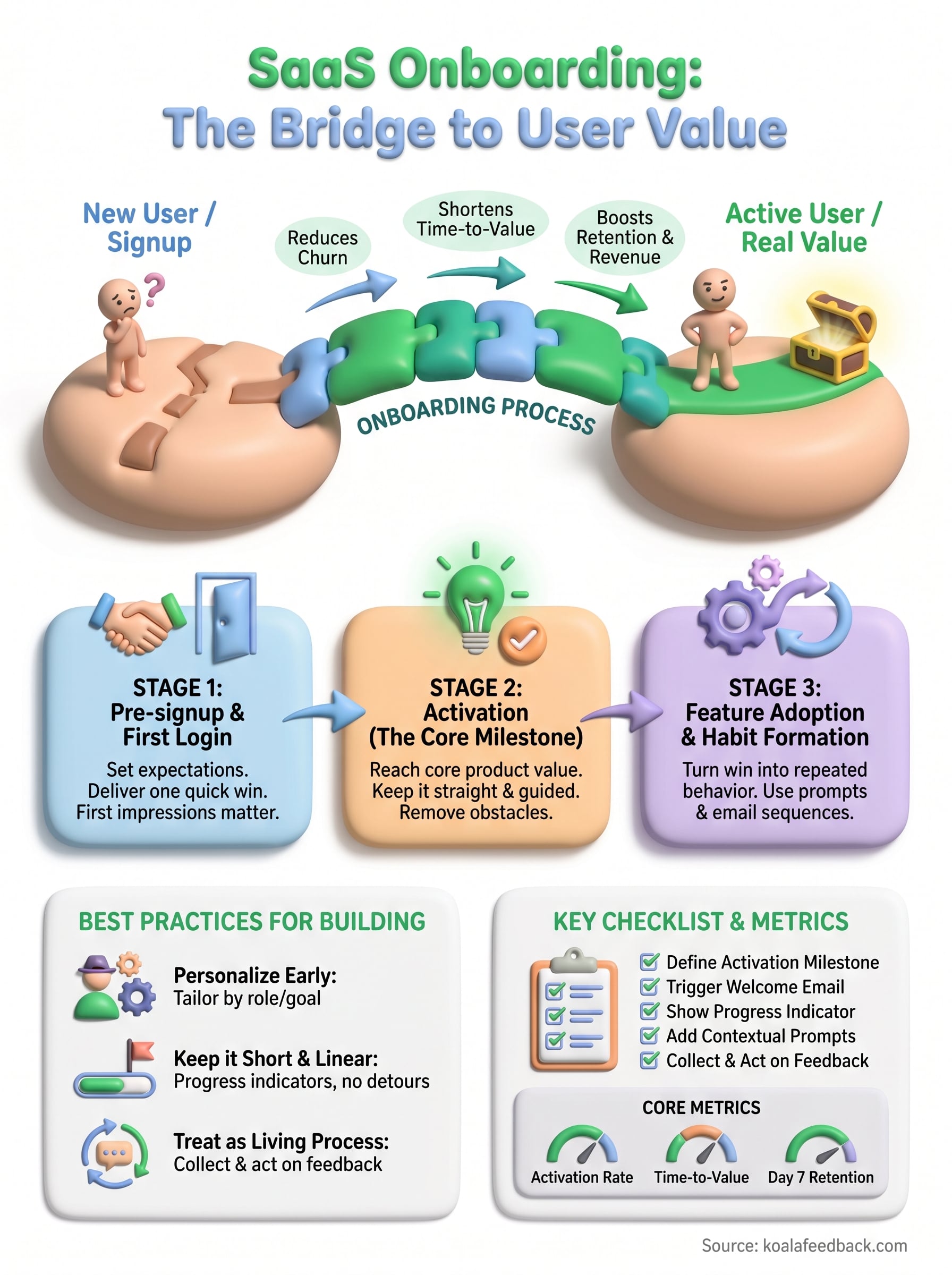
Understanding what is SaaS onboarding means recognizing that it's not a single event but a progression. Users move through distinct stages, and each one requires a different approach from your team. Skipping a stage or rushing through it creates gaps that push users toward dropping off, often before they've seen what your product can actually do.
The onboarding process starts before a user even creates an account. Your landing page, pricing page, and sign-up flow all set expectations that carry directly into the product experience. If users arrive at their first login expecting one thing and find another, you've already created friction before they've touched your core features.
First impressions in SaaS are rarely recoverable. Users who feel misled at sign-up almost never give the product a second chance.
During that first login, your job is simple: get the user one meaningful win as fast as possible. That might be completing a setup step, connecting an integration, or seeing a sample output. The faster you deliver value, the more likely they are to stay and explore further.
Activation is the moment a user reaches the core value your product promises. Every onboarding flow should be built around a clear activation milestone, whether that's publishing a first post, running a first report, or inviting a teammate. This milestone varies by product, but it must be specific and measurable so your team can track it.
Getting your users to activation requires removing obstacles, not adding steps. Guided tours, progress checklists, and contextual prompts all help users reach that milestone without feeling overwhelmed. Your goal is a straight line from signup to the moment the product becomes genuinely useful to them.
After activation, the focus shifts to turning a one-time win into a repeated behavior. Users who log in once and never return haven't adopted your product; they've sampled it. Real adoption happens when users return regularly and build their workflow around what you've built.
Email sequences, in-app prompts, and targeted usage tips reinforce the habits that turn new users into long-term customers. This stage is also where collecting structured feedback becomes especially valuable, because your users now have enough experience to tell you exactly what's working and what's holding them back.
Building a SaaS onboarding process that works starts with clarity, not complexity. Before you design a single tooltip or write a welcome email, you need to know what success looks like for your users and what actions lead them there. Treating onboarding as a collection of random touchpoints will scatter your users' attention. A structured process ties every step to a specific outcome, so users move forward instead of wandering.
Your activation milestone is the single most important thing to nail before you build anything else. Every onboarding step you create should point toward this moment, where the user first experiences the real value your product delivers. For a project management tool, that might be creating and assigning a first task. For a feedback platform, it might be receiving the first piece of submitted user input.
Getting this milestone wrong is the most common reason onboarding flows fail: teams optimize for the wrong moment and miss the one that actually drives retention.
Validate your activation milestone with data by identifying which actions correlate most strongly with long-term retention. Users who complete those actions stay. Users who skip them almost always churn.
Once you know your activation milestone, map out every step a new user needs to take to get there from their first login. Keep the path short. Every unnecessary step is an exit opportunity, and most users will take it. Write out the exact sequence: account setup, any required configuration, the first meaningful action, and the confirmation that it worked.
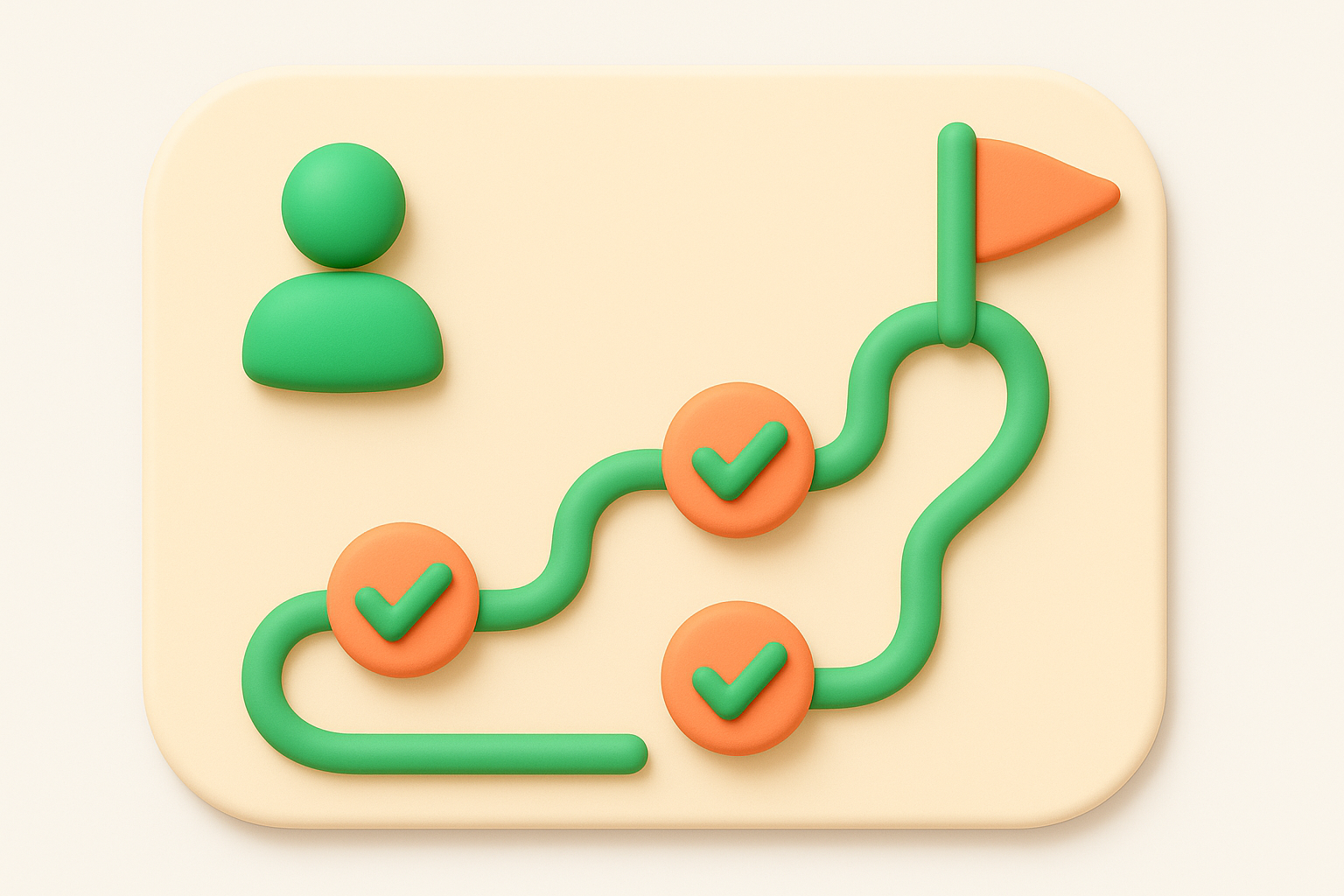
Remove anything that doesn't contribute directly to reaching that milestone. Onboarding is not the place to introduce every feature. Save advanced functionality for after users have hit their first win.
Understanding what is SaaS onboarding at a deeper level means recognizing that it's a living process, not a one-time build. Set up a way to collect user feedback from the very beginning, whether through in-app prompts, short surveys, or a dedicated feedback portal. The signals you gather in those first sessions reveal exactly where your process breaks down, so you can fix it before more users churn.
Act on that feedback in regular cycles so your onboarding improves continuously rather than sitting static while user needs change around it.
Understanding what is SaaS onboarding is one thing; executing it well is another. The difference between onboarding that converts and onboarding that confuses usually comes down to a few consistent principles. Following these practices won't guarantee perfect retention, but ignoring them almost certainly guarantees friction that costs you users before they've seen what your product can do.
New users arrive with different goals, experience levels, and use cases. Treating them all the same is one of the fastest ways to lose the ones your product is best suited for. A simple onboarding survey at signup, asking what they want to accomplish or what role they hold, lets you tailor the flow so users see the features most relevant to them first.
Personalized onboarding reduces early churn because users reach value faster when the path is built around their specific goal rather than a one-size-fits-all sequence.
Segmenting your users early also makes your email sequences and in-app prompts far more effective, because you can send the right message at the right moment rather than blasting everyone with the same generic content.
Every extra step in your onboarding flow is a potential exit point. Your goal is to get users to their activation milestone in as few steps as possible, with no detours, optional tours, or feature showcases that interrupt the path to value. If a step doesn't directly contribute to that first win, cut it or move it to a later stage.
Progress indicators help users see how close they are to finishing setup, which reduces the likelihood they abandon mid-flow. Showing someone they're 60% done is often enough to keep them going when they'd otherwise close the tab.
Your first onboarding flow won't be your best one. The teams who build the strongest onboarding experiences treat it as an ongoing project, running regular reviews, analyzing drop-off points, and collecting user feedback to identify exactly where people get stuck. One round of improvements rarely resolves everything.
Building a structured feedback channel into your onboarding gives you a continuous stream of data to work with, so each iteration reflects what real users are actually telling you rather than what your team internally assumes.
When you're building or refining your onboarding flow, a clear checklist prevents you from skipping steps that quietly push users toward the exit. Knowing what is SaaS onboarding supposed to accomplish at each stage gives you a specific framework to check your work against, rather than relying on intuition. Running through this checklist before you launch a new flow and whenever you audit an existing one helps you catch gaps before they show up as churn.
Every item below connects directly to moving users toward activation and building the repeated behaviors that drive long-term retention. Treat this as a starting point and adapt it based on your product, your users, and what your feedback data tells you.
Tracking the right numbers separates teams that systematically improve their onboarding from those that repeatedly address the same problems without ever resolving them. Without clear metrics, every decision is a guess.
Time-to-value is the single most predictive metric for long-term retention: users who reach their first meaningful outcome quickly are far more likely to return and eventually upgrade.
The table below outlines the core metrics your team should monitor from the moment a user signs up through the end of their first week:
| Metric | What it measures |
|---|---|
| Activation rate | % of new users who reach your activation milestone |
| Time-to-value | How long it takes to reach the first meaningful outcome |
| Day 7 retention | % of users who return within the first week |
| Onboarding completion rate | % of users who finish the full onboarding flow |
| Support ticket volume | Volume of help tickets generated during onboarding |
You now have a complete picture of what is SaaS onboarding and how to build a process that moves users from signup to real, sustained value. The framework is clear: define your activation milestone, build a short linear path toward it, and treat the process as something you continuously improve rather than a project you finish once. The biggest mistake most teams make is treating onboarding as a launch task instead of an ongoing system.
Start with one area. Pick the metric that looks weakest, whether that's activation rate, Day 7 retention, or onboarding completion rate, and trace the drop-off back to a specific step. Fix that step, measure the result, and repeat. Every improvement compounds.
Building a feedback loop into your process is one of the highest-leverage moves you can make. Koala Feedback gives your users a direct way to flag friction, vote on what matters, and help your team prioritize what to fix next.

Start today and have your feedback portal up and running in minutes.