A product roadmap definition might sound straightforward, but the concept carries more weight than most teams realize. It's not just a timeline of features, it's a strategic document that aligns your entire organization around what you're building, why you're building it, and when it ships.
Without a clear roadmap, product teams end up chasing scattered requests, building features nobody asked for, and struggling to communicate progress to stakeholders and users. With one, you get shared direction and better decisions at every stage of development. That's exactly why tools like Koala Feedback exist: to help you collect and prioritize the user feedback that should be driving your roadmap in the first place.
This article breaks down what a product roadmap actually is, the different types you can use, and how to build one that works. You'll find practical examples, key components to include, and guidance on choosing the right format for your team. Whether you're creating your first roadmap or rethinking an existing one, this is a complete reference to get it right.
A product roadmap is a strategic plan that communicates the direction of your product over time. It connects your product vision to the concrete work your team will do to get there, making that direction visible to everyone who needs to understand what's happening and why. The document acts as a shared reference point, not just an internal planning tool.
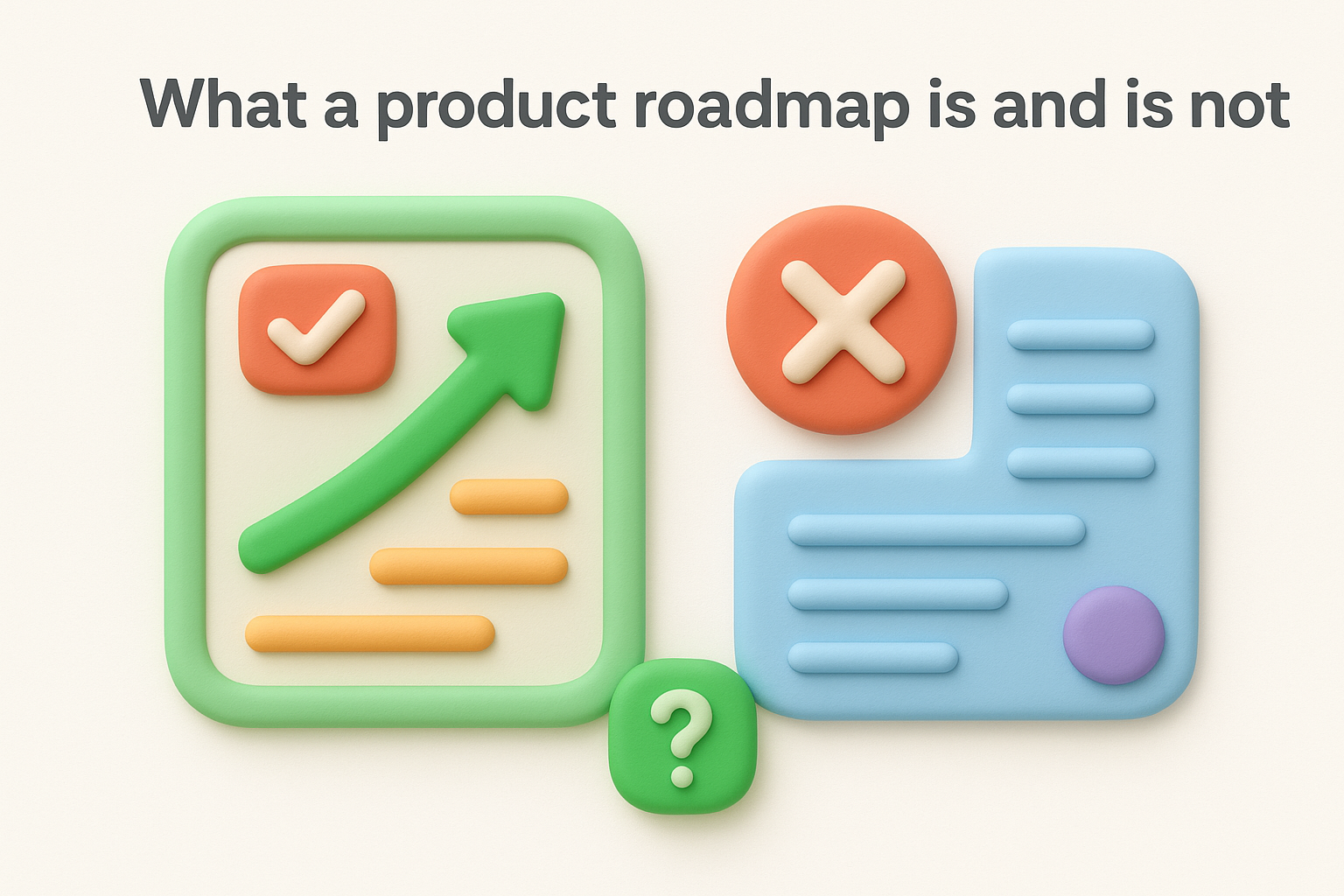
The clearest product roadmap definition is this: a living document that shows what you're building, why it matters, and roughly when it will happen. It's not just for developers. Product managers use it to align priorities, executives use it to track progress, and sales teams use it to set accurate expectations with customers. A roadmap gives your entire organization a single source of truth so that decisions don't get made in isolation or based on outdated assumptions.
A roadmap's primary job is to communicate strategy, not just schedule work.
Roadmaps typically organize work around themes or goals rather than an exhaustive list of every individual task. For example, instead of listing fifty line items, you might group related work under a goal like "Improve onboarding for new users." This keeps the roadmap readable and focused on outcomes that actually matter to your business. When built with real user feedback, your roadmap reflects what customers genuinely want, not just what your team assumes they need. That distinction separates roadmaps that guide good decisions from ones that generate busy work.
Many teams confuse a product roadmap with other planning tools, and that confusion creates serious problems downstream. A roadmap is not a sprint backlog. A backlog tracks every granular task your team needs to complete, while a roadmap operates at a higher strategic level. Combining them turns your roadmap into a cluttered list that nobody outside your immediate team wants to read or can make sense of.
Your roadmap is also not a binding contract with your users or stakeholders. New information arrives constantly: user feedback shifts, market conditions change, and technical discoveries rewrite your assumptions. Treating your roadmap as fixed means you stop responding to reality, which is one of the fastest ways to ship the wrong product. The best teams treat it as a directional commitment that gets revisited and updated as they learn more.
Here's a quick comparison to make the distinction concrete:
| Tool | Purpose | Level of detail |
|---|---|---|
| Product roadmap | Communicates strategy and direction | High-level themes and goals |
| Sprint backlog | Tracks tasks for the current sprint | Granular tasks and user stories |
| Project plan | Manages timelines and resources | Milestones and dependencies |
Finally, a roadmap is not a wish list. Every item on your roadmap should connect to a strategic goal or a validated user need. Adding features because a single customer requested them once, or because a competitor launched something similar, fills your roadmap with noise. Focused roadmaps built around evidence, whether from user interviews, feedback portals, or usage data, are the ones that consistently move your product in the right direction and keep your team working on what actually matters.
A clear roadmap does more than organize your work. It gives every person connected to your product, from engineers to executives to customers, a shared understanding of where you're headed and why. Without that shared understanding, teams waste time on misaligned work, and stakeholders lose confidence in your direction. Getting the product roadmap definition right and acting on it consistently is one of the most impactful decisions a product team can make.
When different teams operate from different assumptions about product direction, you get duplicated effort, conflicting priorities, and a lot of frustration. A roadmap resolves that conflict before it starts by giving your engineers, designers, marketers, and sales teams a common reference point. Everyone can see what's coming, what's in progress, and what isn't on the table yet.
When your whole team reads from the same roadmap, you stop having the same alignment meeting over and over again.
Alignment also reduces the cost of context-switching. When your team knows what the next priority is and why, they don't spend cycles debating what to work on next. That clarity compounds over time, leading to faster delivery and stronger work.
Not every feature request deserves a spot on your roadmap, and a roadmap forces you to make deliberate trade-offs rather than reactive ones. When you evaluate requests against your strategic goals, you build based on evidence instead of whoever spoke loudest in the last meeting.
Collecting structured feedback from users makes this easier. When you have voting data, comments, and recurring themes from your users, you can make prioritization calls backed by actual demand rather than gut feeling. The result is a roadmap that reflects what your users genuinely need, not just what your team assumes they want.
Sharing your roadmap, even a high-level version, builds trust with the people who depend on your product. Users who can see what's planned feel heard and invested in your product's success. Stakeholders who understand your direction are far less likely to question every individual decision you make.
Transparency also creates accountability. When your plans are visible, your team has a natural incentive to follow through. That accountability keeps your roadmap from becoming a document that gets created once and never looked at again.
Not all roadmaps look the same, and choosing the wrong format can undermine even the best product strategy. The product roadmap definition shifts slightly depending on which type you use, but the core purpose stays consistent: communicate direction clearly to the right audience. Your choice depends on how much certainty you have about timelines, who you're communicating with, and where your product is in its lifecycle.
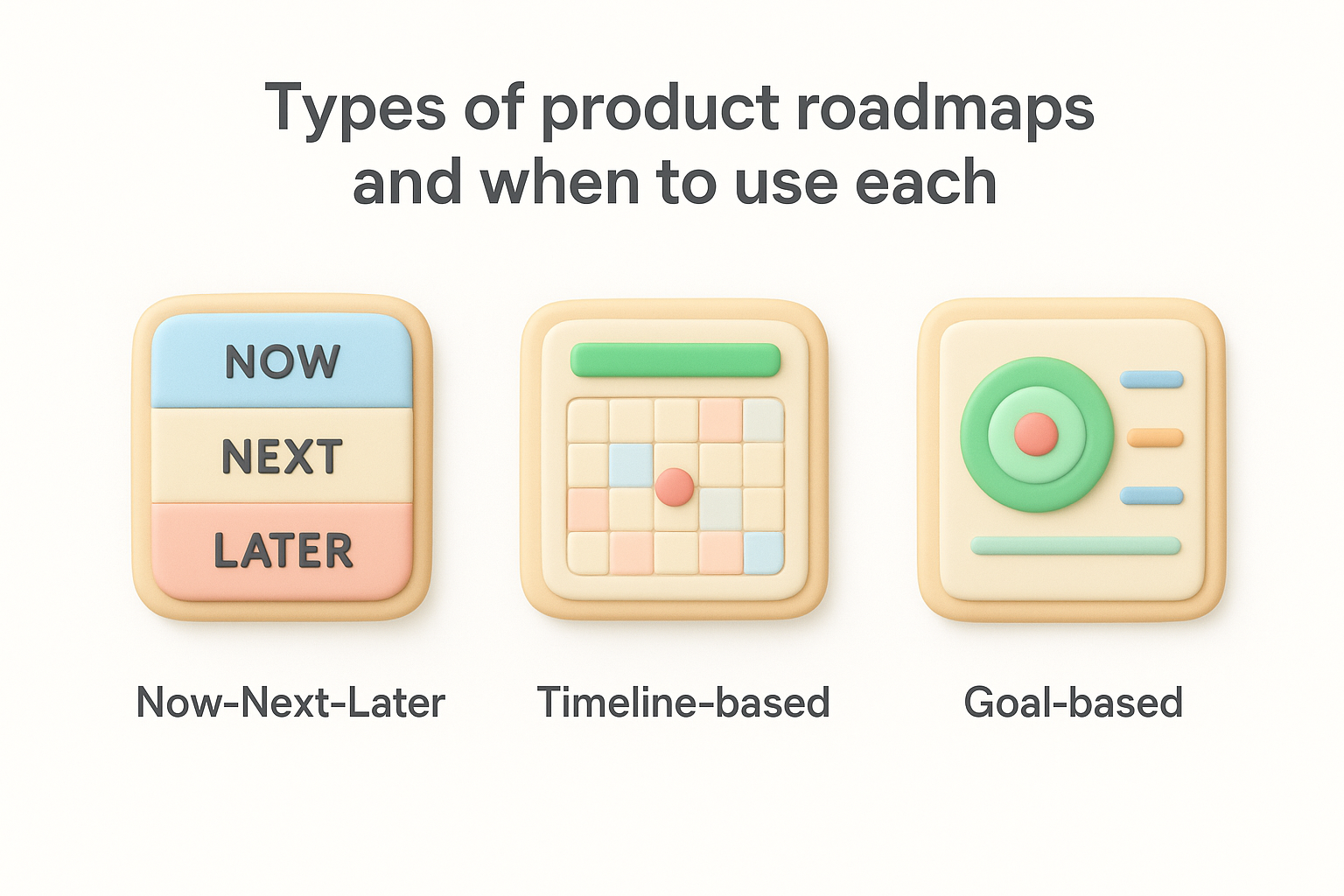
The Now-Next-Later roadmap organizes work into three priority buckets instead of locking everything to fixed dates. "Now" covers what your team is actively building, "Next" covers what follows your current priorities, and "Later" holds ideas that have value but aren't yet scheduled. This format works best when your timelines shift frequently, which is the reality for most early-stage or fast-moving product teams that need flexibility without sacrificing direction.
If your team spends more time updating dates than shipping features, a Now-Next-Later format will serve you better than a calendar view.
A timeline-based roadmap plots features and milestones on a calendar view, typically organized by quarters or months. This format gives stakeholders a concrete picture of when to expect specific deliverables, making it the preferred choice for enterprise sales teams, executives, and customers who plan their own operations around your releases. The trade-off is that when plans change, the roadmap needs an update quickly, or you risk losing stakeholder confidence.
A goal-based roadmap organizes work around measurable outcomes rather than a list of features. Instead of listing "add dark mode," you anchor each initiative to a result like "reduce churn among power users by 20%." This keeps your team focused on what the work is meant to achieve, not just what gets shipped. Goal-based roadmaps pair well with OKR frameworks because the roadmap directly reflects your objectives rather than sitting separate from them.
Here's a quick comparison to help you pick the right fit:
| Type | Best for | Key trade-off |
|---|---|---|
| Now-Next-Later | Fast-moving or early-stage teams | Less useful for stakeholders who need dates |
| Timeline-based | Enterprise and sales-driven organizations | Requires frequent updates when plans shift |
| Goal-based | Outcome-focused teams using OKRs | Harder to communicate to non-technical audiences |
Knowing the product roadmap definition is one thing; knowing what actually belongs inside one is where teams often get stuck. A well-built roadmap includes enough detail to communicate direction clearly without collapsing into a task list. Getting the right elements in place separates a roadmap that guides real decisions from one that confuses the people reading it.
Every roadmap should open with a clear statement of what you're trying to achieve and why. This gives every initiative a reason to exist beyond "someone requested it." When your team understands the goals driving your decisions, they can evaluate trade-offs on their own instead of escalating every question back to you.
Without goals anchoring your roadmap, every feature request looks equally important.
Strategic context is what keeps your roadmap honest and prevents it from filling up with work that doesn't push your product forward. Two or three clearly stated goals at the top of your roadmap are enough to anchor everything below them.
Rather than listing every individual task, your roadmap should organize work into meaningful themes or initiatives that connect directly to your goals. Grouping related work under a theme like "Improve new user activation" keeps your roadmap readable and keeps your team focused on outcomes rather than output.
Each initiative should map to a specific goal so the link between your work and your direction stays visible. A useful initiative entry typically includes:
Your roadmap needs some form of sequencing so your audience understands when to expect each initiative. Whether you use quarters, specific dates, or a Now-Next-Later structure depends on your roadmap type and your audience's expectations.
Leaving items with no time signal creates confusion and erodes stakeholder confidence. Pick a sequencing format that matches how much certainty you actually have, then apply it consistently across every initiative on your roadmap.
Each initiative should carry a current status and a named owner. Status tells stakeholders whether work is planned, in progress, or complete at a glance. Common statuses to include: Planned, In Progress, In Review, and Complete.
Ownership removes ambiguity about who is responsible for each initiative, which makes follow-up conversations faster and prevents work from stalling between teams.
Building a product roadmap from scratch feels daunting until you break it into a clear, repeatable sequence. The core product roadmap definition points you in the right direction: connect your product vision to concrete, prioritized work that your team can actually execute. What follows is a practical sequence that applies whether you're building your first roadmap or rebuilding one that has stopped working for your team.
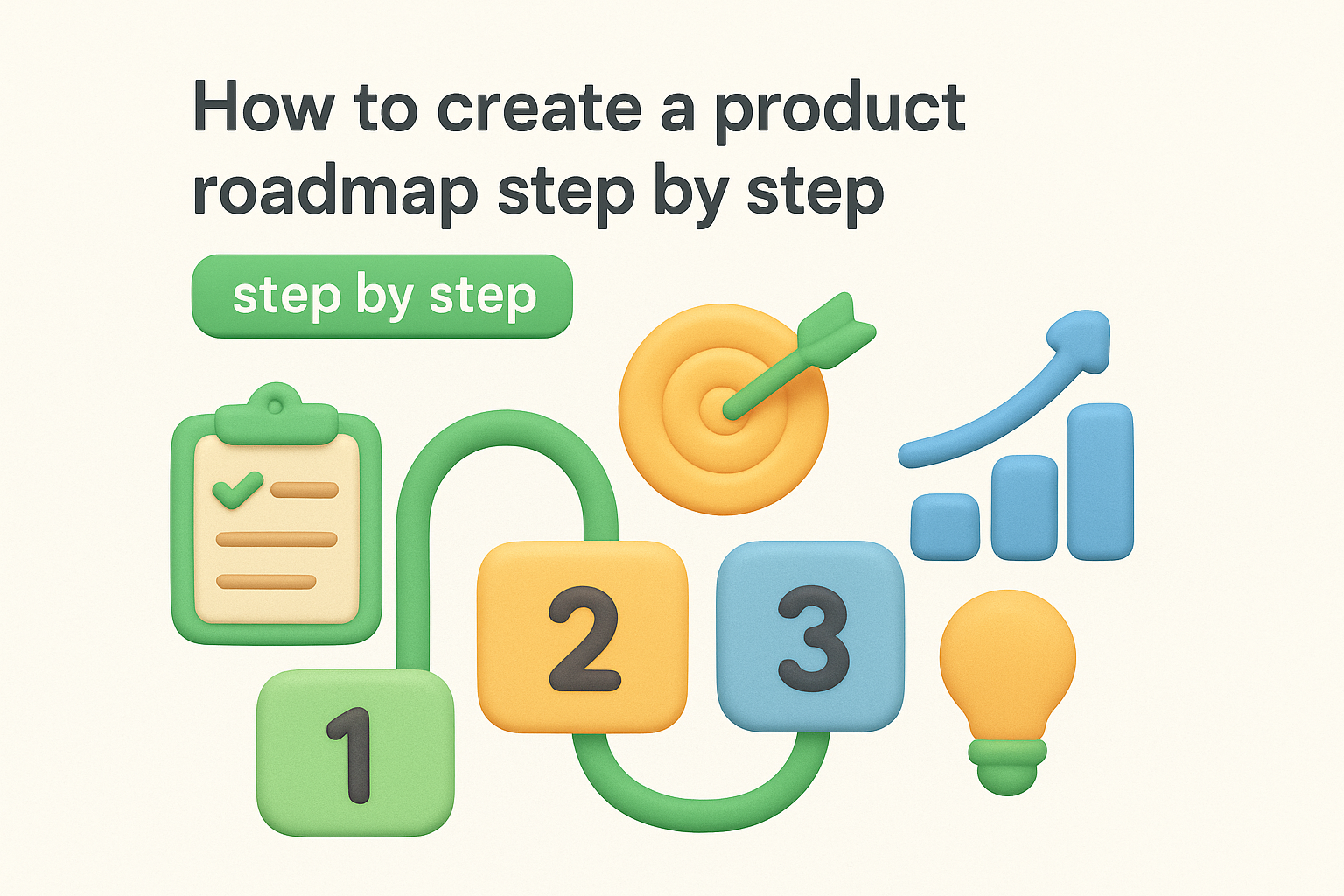
Before you add a single feature, write down two or three strategic goals your roadmap needs to serve. These goals should come from your company's direction, not from a running request list. Ask yourself what business outcomes matter most right now and what user problems you're uniquely positioned to solve. Goals give every item on your roadmap a reason to exist beyond "someone asked for it."
Without clear goals at the start, your roadmap becomes a wish list with dates attached.
Your roadmap should reflect what users actually need, not what your team assumes they need. Gather input from multiple sources: support tickets, customer interviews, and a structured feedback portal where users can submit and vote on ideas. Once you have that data, sort requests by the combination of user demand, strategic fit, and implementation effort. This keeps your prioritization decisions grounded in evidence rather than whoever spoke loudest in the last meeting.
Pick the roadmap type that fits your team's situation, using the comparison table in the previous section as a guide. Then group your prioritized initiatives into themes that tie directly to your goals. Assign each initiative a status, an owner, and a time horizon. Keep descriptions short and outcome-focused. Your roadmap should be readable in under five minutes by someone outside your immediate product team.
Before you publish or present your roadmap, run it past at least one stakeholder from outside your product team, whether that's someone from sales, customer success, or engineering leadership. Ask whether the direction is clear and the priorities make sense from their perspective. A quick external review surfaces gaps and misalignments before they create problems that are much harder to fix after the roadmap is already in circulation.
Sharing your roadmap with the right people and keeping it accurate over time is what turns it from a planning exercise into a tool that drives real decisions. A roadmap nobody sees or trusts is no better than no roadmap at all, which is why distribution and maintenance deserve just as much attention as the initial build.
Not every audience needs the same level of detail. Internal teams like engineering and design benefit from seeing initiatives with owners, statuses, and rough timelines. External audiences like users and customers need a simpler, higher-level view that focuses on direction rather than granular delivery schedules. Sharing one version with everyone typically leaves technical stakeholders under-informed and non-technical audiences confused.
Consider maintaining two versions of your roadmap: one for internal alignment and one for public-facing communication. Many product teams publish a public roadmap page to give users visibility into what's coming without exposing internal priorities or sensitive timing. This approach keeps both audiences informed without creating friction between them.
Your roadmap loses credibility fast if the statuses and priorities it shows no longer reflect reality.
Stale information is one of the most common reasons roadmaps stop getting used. Set a fixed review cadence, whether that's monthly or quarterly, and treat it as a non-negotiable part of your product process. During each review, update statuses, move completed items, and adjust upcoming priorities based on new user feedback or strategic shifts. Consistent updates signal to your team and stakeholders that this document is worth trusting.
When priorities shift or timelines change, explaining why matters as much as announcing what changed. Users and stakeholders who understand your reasoning are far more likely to accept changes than those who receive a surprise update with no context. A short note accompanying each significant shift, whether through an email update or a comment on your public roadmap, keeps trust intact even when plans evolve.
Bringing every update back to the product roadmap definition you started with helps your team stay grounded: it's a communication tool, not a contract. Treat each revision as an opportunity to reinforce your strategic direction and show your audience that you're responding to what you're learning.
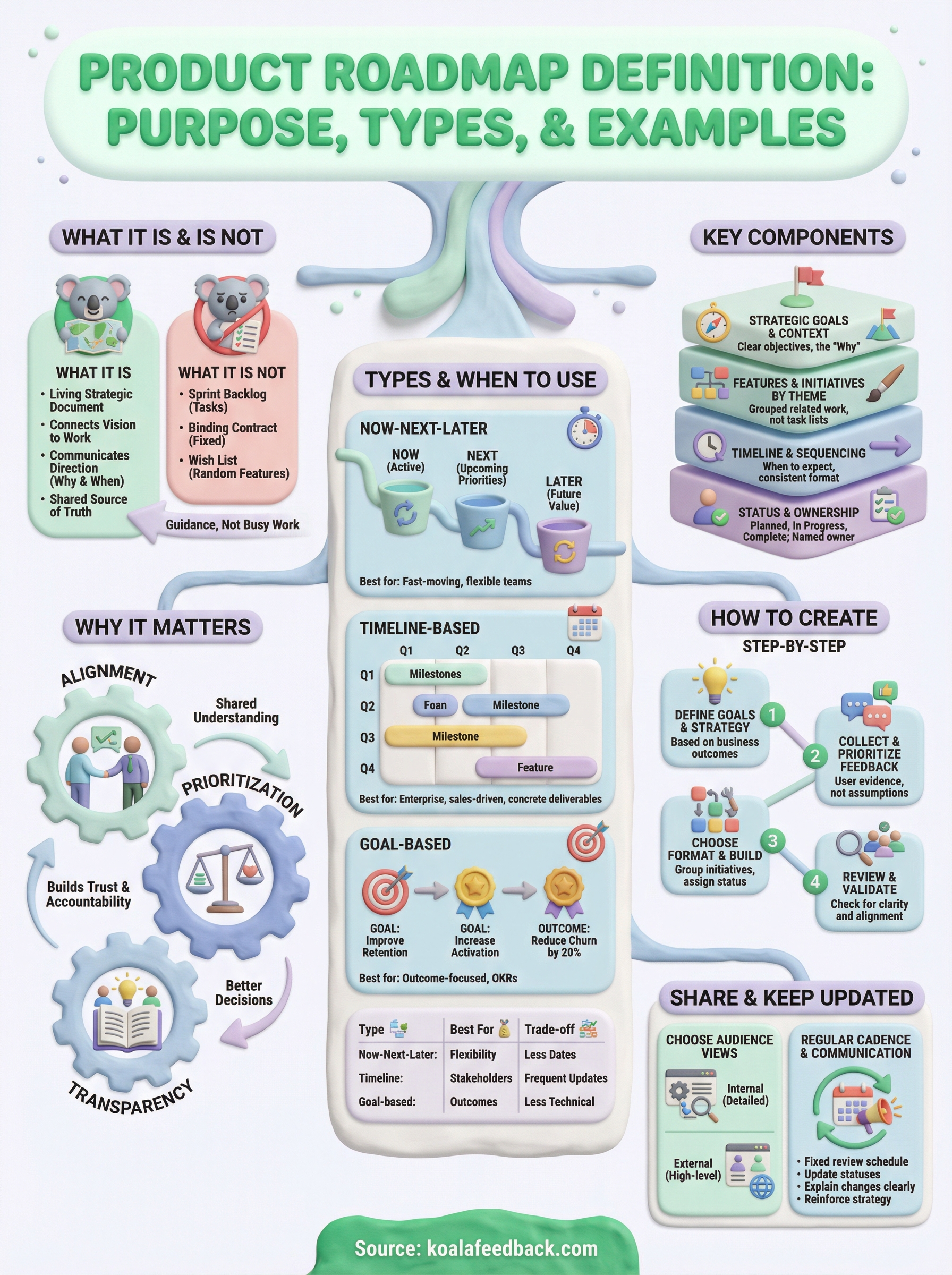
You now have a complete product roadmap definition and everything you need to build one that actually works for your team. A strong roadmap connects your strategic goals to real user needs, picks the right format for your audience, and stays accurate through regular updates and clear communication. That foundation gives your team direction and your users a reason to trust you.
The missing piece for most teams is reliable user feedback to drive prioritization decisions. Without it, your roadmap reflects assumptions rather than evidence, and you end up building features that miss the mark. Giving your users a structured way to submit ideas, vote on requests, and see what you're working on closes that gap entirely. Start collecting and prioritizing user feedback with Koala Feedback so your next roadmap is built on what your users actually need, not guesswork.

Start today and have your feedback portal up and running in minutes.