Most startups don't fail because they lack ideas, they fail because they build the wrong things. A product roadmap for startups solves that problem by giving your team a clear plan for what to build, when, and why. But here's the catch: the traditional, rigid roadmaps built for enterprise companies will slow you down. Startups need something more flexible.
This guide walks you through how to create a startup-friendly roadmap from scratch, including frameworks like "Now, Next, Later," prioritization strategies, and how to keep your roadmap aligned with what users actually want. We built Koala Feedback to help startups collect and prioritize user feedback, so we've seen firsthand what separates roadmaps that drive real progress from ones that collect dust in a Google Doc.
Whether you're prepping for an investor meeting or trying to get your dev team on the same page, you'll walk away with a clear, repeatable process for roadmap planning. Let's get into it.
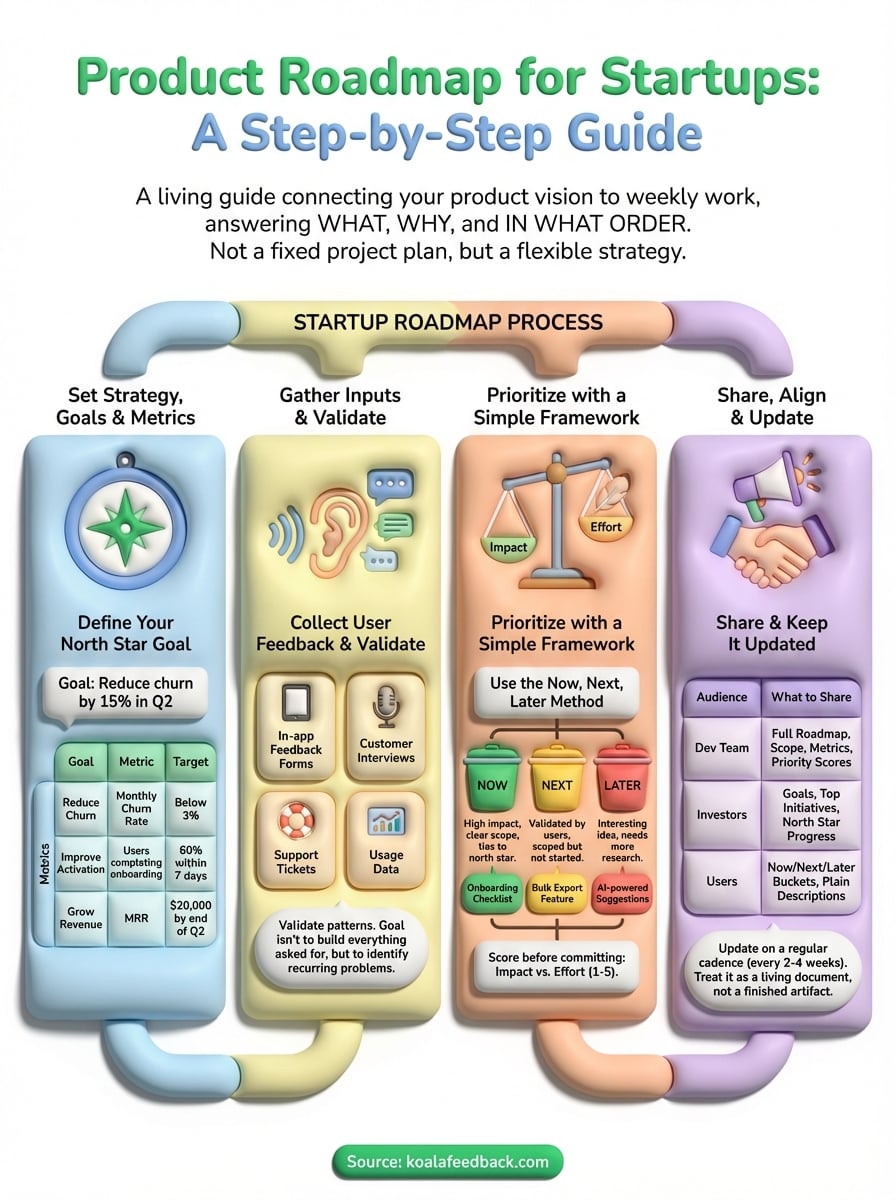
A product roadmap for startups is a strategic document that shows what you're building, why, and in what order. It's not a project plan with locked-in release dates. Think of it as a living guide that connects your product vision to the actual work your team does each week. Without one, you end up reacting to every feature request that comes in and shipping things that don't move the needle for your business.
A roadmap isn't a commitment to fixed dates, it's a shared understanding of direction that you update as you learn more about your users and market.
Enterprise roadmaps often span 12 to 18 months with feature specs locked by quarter and layers of stakeholder approval. Startups can't operate that way. Your market shifts fast, your team is lean, and spending three months on the wrong feature is a serious setback. A startup roadmap uses a shorter planning horizon, typically 3 months for immediate work, and a looser, outcome-based view beyond that, so you can adapt quickly when new customer data shows up.
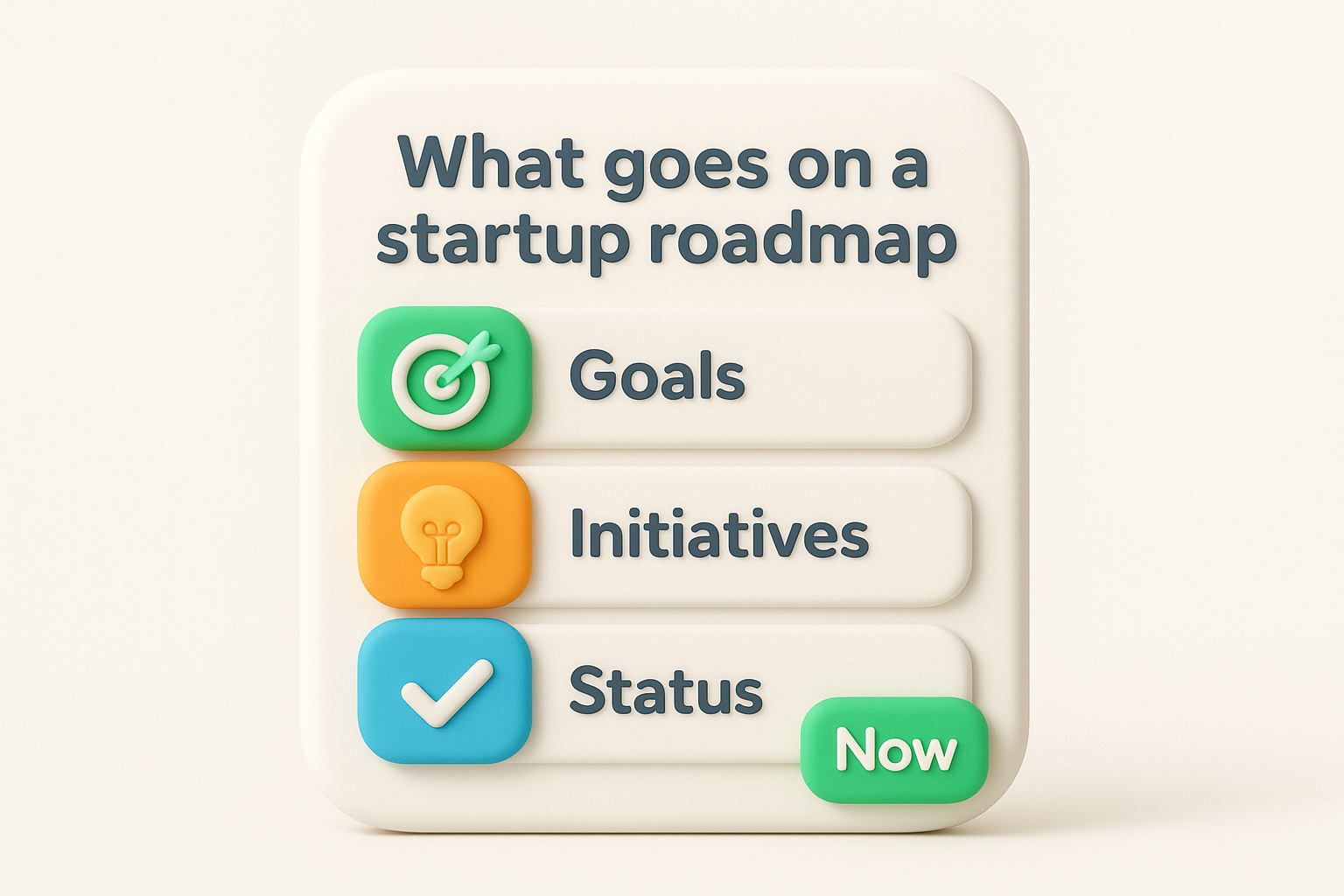
Most startup roadmaps include three core layers. Here's a simple template you can copy into a spreadsheet or shared doc to get started:
| Layer | What it includes | Example |
|---|---|---|
| Goals | Business outcome you're targeting | Reduce churn by 15% in Q2 |
| Initiatives | Features or improvements that drive the goal | Onboarding redesign, in-app tooltips |
| Status | Now / Next / Later bucket | Now |
You don't need an expensive tool to use this structure. A shared spreadsheet or Kanban board works perfectly well at the early stage. What matters is that your roadmap reflects actual user priorities, not whoever spoke up loudest in the last team meeting. That distinction is what separates roadmaps that drive real progress from ones that just look good in a slide deck.
Before you add a single feature to your product roadmap for startups, you need to know what you're trying to achieve. Without a clear goal anchoring the roadmap, every feature request looks equally important, and you end up shipping things that don't move your business forward.
Your north star goal is the single business outcome your product needs to hit right now. For an early-stage startup, that might be reaching 100 paying customers or hitting a specific monthly recurring revenue target. Keep it to one goal per planning cycle. Once you have it, write it at the top of your roadmap so every initiative on the list connects back to it.
Your roadmap should answer one question first: what does success look like in the next 90 days?
A goal without a success metric is just a wish. Attach a specific number to every goal so you can tell whether the work you shipped actually moved the needle. Here's a simple format to follow:
| Goal | Metric | Target |
|---|---|---|
| Reduce churn | Monthly churn rate | Below 3% |
| Improve activation | Users completing onboarding | 60% within 7 days |
| Grow revenue | MRR | $20,000 by end of Q2 |
Pick one or two metrics per goal, not five. Too many metrics split your team's focus and make it harder to prioritize clearly.
Your roadmap is only as good as the input behind it. Before you decide what to build next, you need real data from real users, not assumptions from internal team discussions. This step is where you gather that data and filter out the noise.
You have several reliable channels to pull from. Customer interviews give you the richest qualitative signal, but they take time. Use a feedback portal to capture ongoing requests at scale without scheduling a call with every user. Here are the main sources to combine:
Collecting feedback is only half the job. You also need to validate patterns before adding anything to your product roadmap for startups. If three users request the same feature in a week, that's a signal worth investigating. If one user requests it once, it probably isn't a priority yet.
The goal isn't to build everything users ask for; it's to identify the problems that keep coming up and solve those well.
Run a quick gut-check: does this request connect to your north star goal from Step 1? If not, log it for later rather than letting it clutter your active planning.
Once you have validated feedback in hand, the next challenge is deciding what goes first. Most teams stall here because they try to weigh too many factors at once. For a product roadmap for startups, a lightweight prioritization framework saves you from that paralysis and keeps decisions grounded in impact rather than opinion.
The "Now, Next, Later" framework works because it forces trade-offs without requiring perfect information.
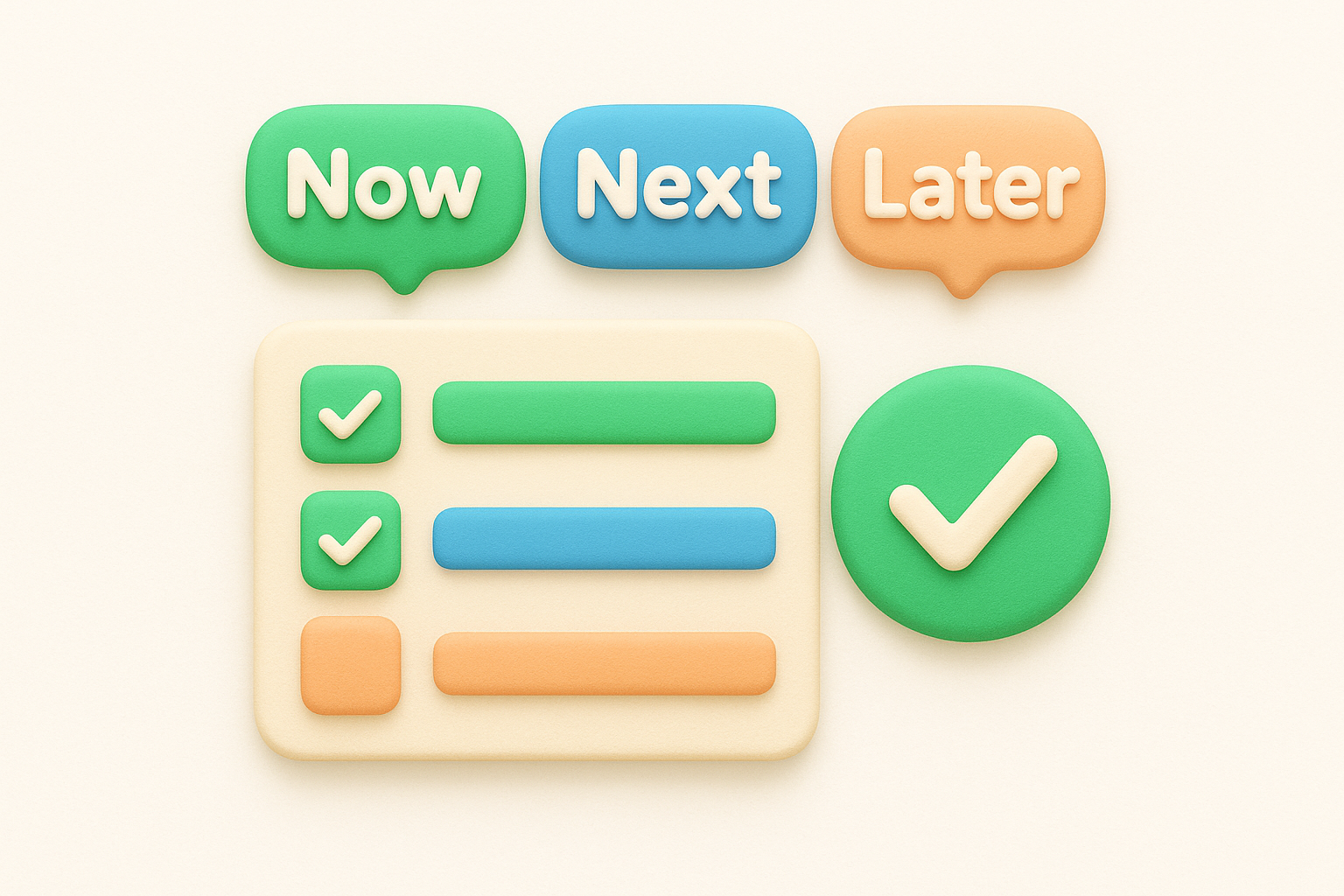
"Now, Next, Later" organizes your roadmap into three time-based buckets without locking you into specific release dates. "Now" holds the work your team is actively building this sprint or quarter. "Next" contains initiatives that are validated and roughly scoped but not yet started. "Later" captures ideas that matter but need more research before you commit resources.
Here is a simple template you can paste into any spreadsheet:
| Bucket | Criteria | Example |
|---|---|---|
| Now | High impact, clear scope, ties to north star goal | Onboarding checklist |
| Next | Validated by users, scoped but not started | Bulk export feature |
| Later | Interesting idea, needs more research | AI-powered suggestions |
Before moving anything from "Next" to "Now," run a quick impact vs. effort score on each item. Rate impact from 1 to 5 based on how directly it hits your north star metric. Rate effort from 1 to 5 based on estimated build time. Features with high impact and low effort move up first.
A product roadmap for startups only works if the right people can see it. Keeping your roadmap locked in a private doc defeats the purpose. Share it with your team, and share a version with your users too. Transparency builds trust on both sides.
A roadmap you share publicly holds you accountable and gives users a reason to stay engaged with your product.
Your internal team needs full visibility, including context on why each item is in its bucket. Your users need a lighter version that shows direction without exposing competitive details. Use a public roadmap view for users and a detailed internal board for your team. Here is a simple breakdown of what to share with each audience:
| Audience | What to share |
|---|---|
| Dev team | Full roadmap with scope, metrics, and priority scores |
| Investors | Goals, top initiatives, and north star metric progress |
| Users | Now, Next, Later buckets with plain-language descriptions |
Set a fixed review date every two to four weeks to move items between buckets, retire completed work, and add newly validated requests. Treat it like a short team meeting with a clear agenda: what shipped, what moved, and what changed based on new user feedback. Skipping these reviews lets your roadmap go stale fast, and a stale roadmap stops guiding decisions.
Building a product roadmap for startups isn't a one-time exercise. Every step in this guide, from setting your north star goal to running biweekly reviews, only works if you treat your roadmap as a living document rather than a finished artifact. Startups that stay ahead don't have perfect roadmaps; they have consistent habits around updating, sharing, and questioning what they've built.
Start simple. Pick one goal, drop your top features into a "Now, Next, Later" board, and share it with your team this week. Collecting real user feedback is the fastest way to stop guessing and start building things people actually want. The more you ground your roadmap in validated user input, the easier prioritization becomes over time.
Koala Feedback gives you a dedicated place to capture feature requests, let users vote on priorities, and share your public roadmap, so your next planning cycle starts with real data, not assumptions.

Start today and have your feedback portal up and running in minutes.