Every new innovation product you admire started with someone noticing a problem others had learned to live with. That is why browsing examples works. You see how a team spotted a gap, and you start spotting your own.
This list gives you 10 recent products that show what innovation looks like in practice. Each one is solving a real problem in a new way, whether through better hardware, smarter software, or a simpler experience. You will also see the pattern behind them. A good product innovation idea rarely comes from a brainstorm alone. It comes from listening to what people struggle with and asking for.
For each example, we break down what the product does, why it stands out, and the lesson you can borrow. At Koala Feedback, we help product teams collect and prioritize user requests, so we pay close attention to how user feedback shapes great products. Use these examples as a starting point, then test your own ideas against what your users actually say they need.
Koala Feedback is a SaaS platform that turns scattered user requests into a clear product plan. The innovation is not a gadget. It is a change in process, where customers help decide what gets built and can see the result.
Most teams hear feedback everywhere. Support tickets, sales calls, Slack threads, and emails all hold requests, and nobody sees the full picture. The loudest voice often wins.
Koala Feedback pulls those requests into one place and shows how many people want each thing. Prioritization becomes a matter of evidence instead of opinion. The public roadmap also answers the "is this planned?" question before it ever reaches your support inbox.
Product managers, SaaS founders, and development teams get the most from it, from startups to established companies. It fits you if you ship regularly and want structured user input without building internal tooling.
Small teams gain a lot too. A portal on your own domain, with your colors and logo, looks established from day one, and you skip the spreadsheet phase entirely.
Innovation does not have to mean a new device. You can innovate in how decisions get made. Making your users' voice visible builds trust and engagement, and it keeps people invested in what you ship next.
The strongest product innovation idea is often one your users have already told you about.
Try this today: review last quarter's requests and count the duplicates. The ideas that keep repeating are your best candidates for the next new innovation product, and they come with built-in proof of demand.
Continuous glucose monitors (CGMs) are small sensors worn on the upper arm that track blood sugar around the clock and send readings to your phone. For years you needed a prescription to get one. In March 2024 the FDA cleared the first over-the-counter CGM, Dexcom's Stelo, and Abbott's Lingo followed. The sensor technology already existed. The innovation is access, because removing the prescription gate turned a medical device into a consumer product.
Finger-stick tests give you one number at one moment. Adults with prediabetes or mild type 2 diabetes, and anyone curious about their metabolism, had no easy way to see how food, sleep, and exercise affect glucose. Now you can watch the full trend and adjust habits without waiting for a doctor's visit.
These devices target adults who do not use insulin. That includes people managing type 2 diabetes through diet, people with prediabetes, and health-focused users and athletes who want data. They are not a replacement for prescription systems if you need insulin dosing decisions.
Sometimes a new innovation product is existing technology with a better distribution model. Look at your own product and ask what holds it back. If the answer is price, approval, or setup friction instead of capability, that gap may be your next product innovation idea.
Removing a barrier to access can be a bigger innovation than inventing new technology.
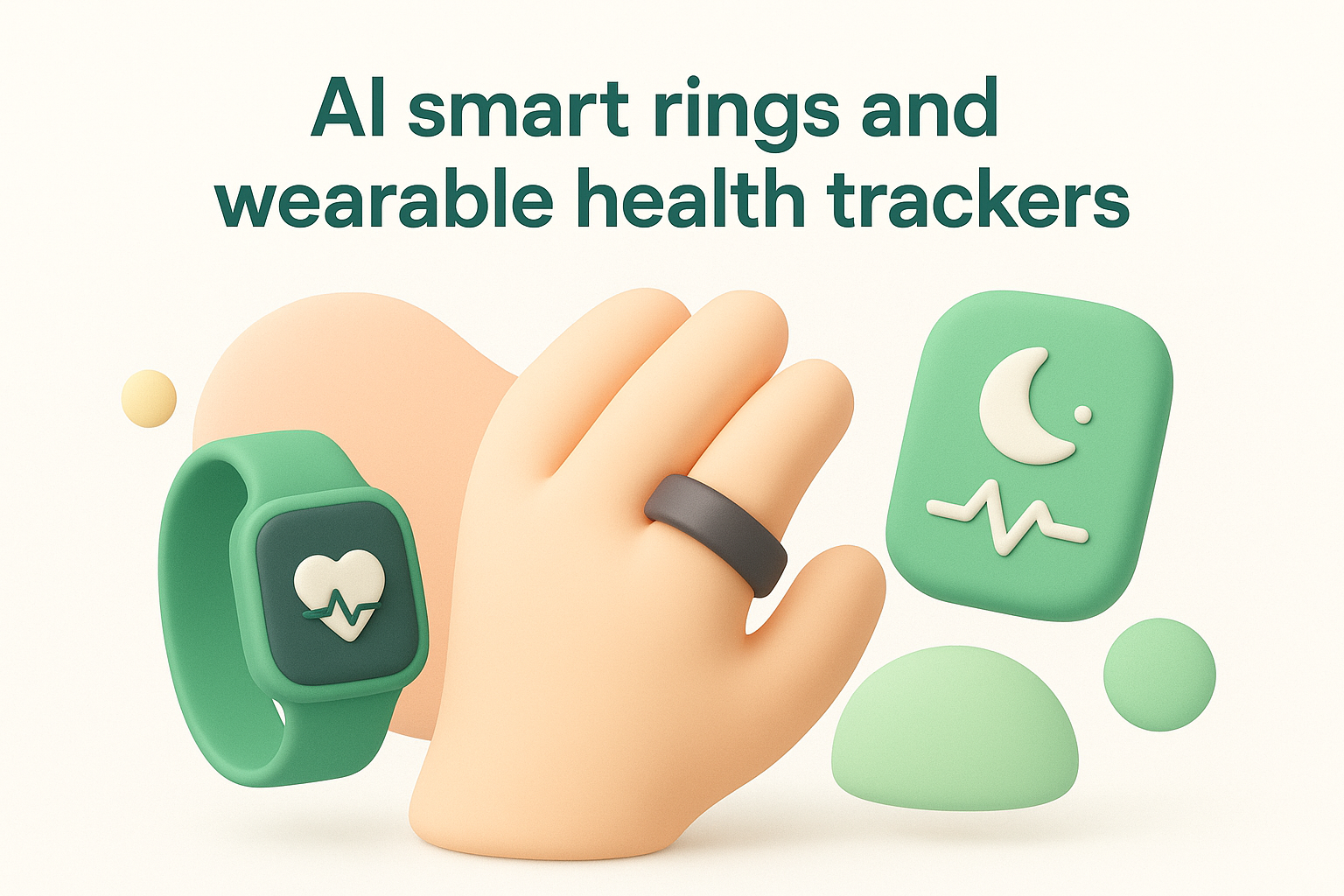
Smart rings pack heart rate, skin temperature, and motion sensors into a band that looks like jewelry. AI models turn that raw data into daily sleep and readiness scores. The innovation is the form factor. A ring is comfortable enough to wear overnight, which is when the most useful data gets captured.
| Product | Launch | Battery | Pricing |
|---|---|---|---|
| Oura Ring 4 | Oct 2024 | Up to 8 days | From $349, plus $5.99 a month |
| Samsung Galaxy Ring | July 2024 | Up to 7 days | About $400, no subscription |
Watches are bulky in bed and need charging almost daily, so many people stop wearing them. A ring lets you track sleep and recovery without a screen competing for your attention. You also get one clear score instead of a wall of charts, which makes the data easier to act on.
Athletes tracking recovery, people working on better sleep, and anyone tired of wrist notifications get the most value. If you need GPS workouts or on-wrist alerts, a smartwatch is still the better fit.
Hardware like this shows that a new innovation product can be a familiar technology in a smarter shape. The two brands also made opposite pricing bets, a subscription versus none, so business model is part of the product. Decide early how you will charge for ongoing value.
Innovation often means making a technology disappear into something people already wear.
Smart glasses look like ordinary eyewear but add cameras, microphones, open-ear speakers, and a voice assistant. Say "Hey Meta" and you can ask a question, shoot a photo, or translate a sign without touching your phone. The innovation is hands-free AI in a familiar frame. The assistant sees what you see, so it can answer questions about the world in front of you.
| Product | Display | Starting price |
|---|---|---|
| Ray-Ban Meta (Gen 2) | None, camera and audio only | $379 |
| Meta Ray-Ban Display | Small in-lens display | $799 |
Pulling out a phone interrupts whatever you are doing. It is awkward while cooking, cycling, or finding your way through a foreign city. Glasses let you get answers and capture moments without breaking stride, and they keep your hands free for the task itself.
Travelers, creators who film first-person video, and busy commuters get the most from them. People who already wear glasses face the lowest adoption barrier. Expect a trade-off, though. A built-in camera raises privacy questions for the people around you, so check local rules before recording in public spaces.
Meta did not try to turn a gadget into a fashion item. It partnered with an eyewear maker that people already trust, and the result looks like something you would buy anyway. That is a distribution lesson as much as a design one. If your new innovation product asks users to change their habits, borrow credibility from a brand or format they already know.
People adopt new technology faster when it looks like something they already own.
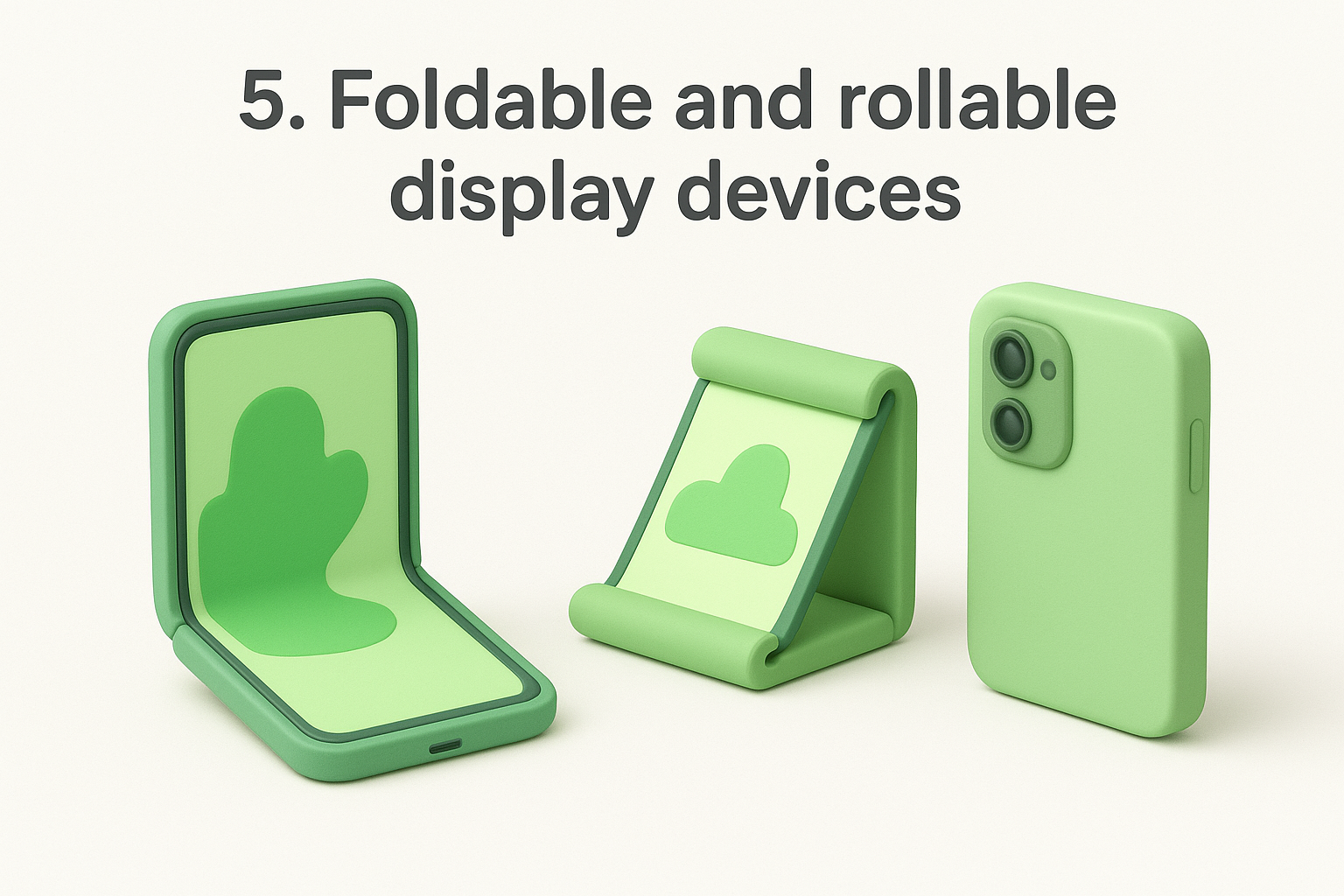
Foldable phones bend along a hinge. Rollable screens slide out of a compact body and grow on demand. The innovation is a screen that changes size to fit the moment, and the newest models finally feel like normal devices. Samsung's Galaxy Z Fold7 is only 8.9 mm thick when folded shut.
| Device | Type | Starting price |
|---|---|---|
| Galaxy Z Fold7 | Book-style foldable phone | $1,999 |
| Pixel 10 Pro Fold | Foldable phone, IP68 rated | $1,799 |
| ThinkBook Plus Gen 6 Rollable | Laptop screen expanding from 14 to 16.7 inches | About $3,300 |
Phone screens hit a ceiling because bigger displays stop fitting in your pocket. Foldables give you a tablet-sized display in a pocket-sized body. Rollable laptops apply the same idea, offering extra screen space only when you need it.
Multitaskers, frequent travelers, and people who read, edit documents, or watch video on the go get the most value. Price is the catch. If you want a cheap, rugged phone, a standard slab is still the smarter buy, and these devices suit buyers who will use the larger screen daily.
Early foldables had a trust problem, not a concept problem. Buyers feared cracked screens and weak hinges. Manufacturers kept refining durability, added water and dust resistance, and slimmed the bodies until the fear faded. If your new innovation product has an obvious weak point, fix the trust issue first. Then let real usage data guide the next version.
A bold idea only becomes a product once people stop worrying it will break.
Air up is a drinking bottle that makes plain water taste like peach, lime, or cola. A scent pod sits on the mouthpiece. When you sip, the aroma travels to your nose from the back of your throat, and your brain reads it as flavor. This effect is called retronasal smell.
Plain water bores a lot of people, so they reach for soda, juice, or energy drinks. Flavor drives the habit, and water has none.
Syrups and powders fix the taste but add sugar or artificial sweeteners. Here, you keep drinking plain water while getting the taste you crave.
People cutting back on soda, parents trying to get kids to drink more water, and desk workers who forget to hydrate get the most from it. It also suits anyone who wants flavor without sweeteners.
Taste is personal, though. Some people find the aroma weaker than a real drink, and you will keep buying refill pods for as long as you use it.
Air up did not invent a new beverage. It applied an existing fact about how smell and taste work to a daily habit. A new innovation product can come from borrowing science from another field, so look at biology, psychology, or materials research for a fresh angle on an old problem.
The best product innovation idea can be a known fact applied to an everyday habit.
The pods also show a smart business model. The bottle is a one-time purchase, and the pods create repeat revenue that rewards a product people love.
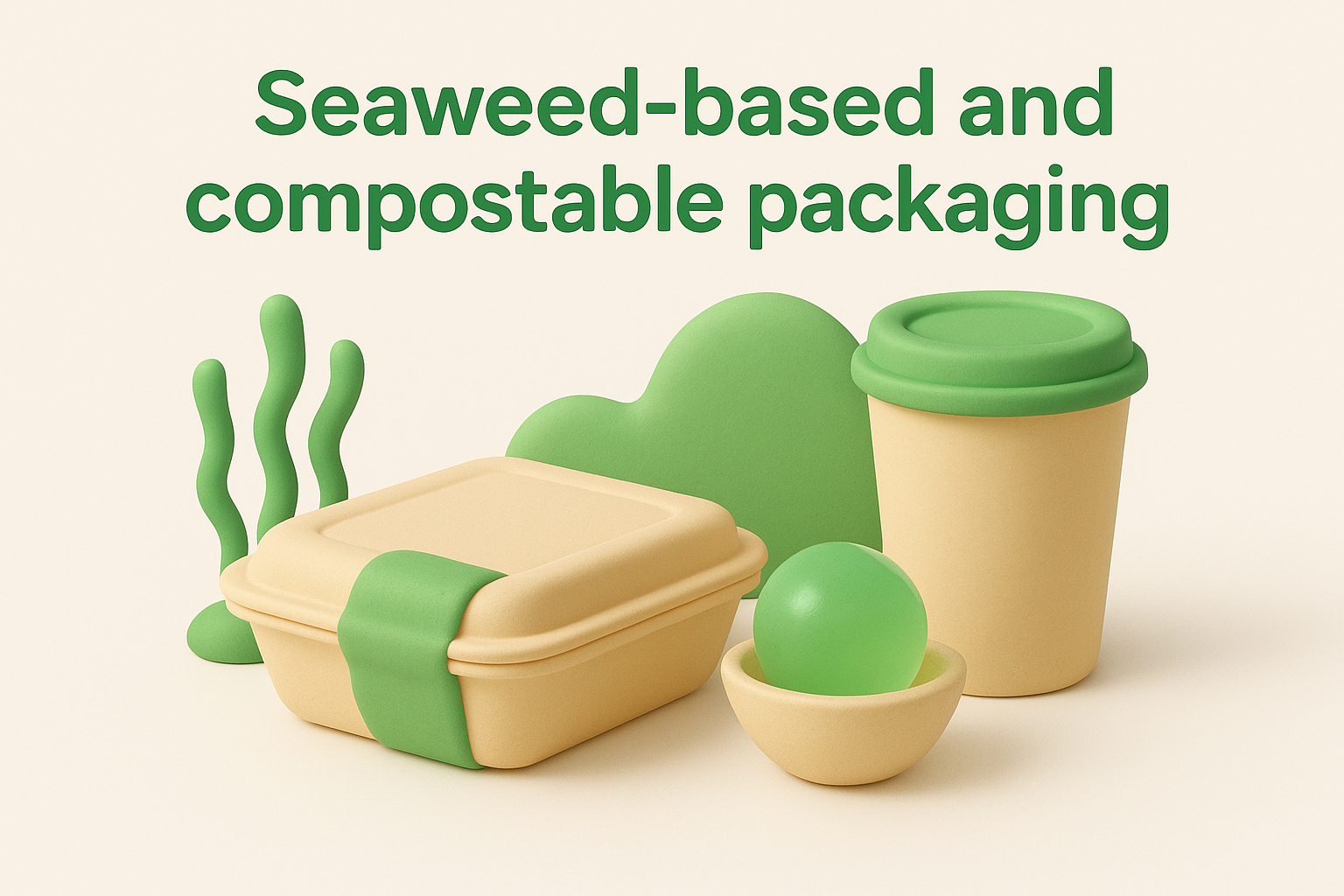
Seaweed packaging swaps plastic for a material that grows fast and needs no farmland, fresh water, or fertilizer. London startup Notpla lines takeaway boxes with a seaweed coating and makes Ooho, an edible capsule that holds water or sauces. The innovation is a material that breaks down naturally while still doing plastic's job. Notpla won the 2022 Earthshot Prize, a sign that the idea has real credibility.
Plastic packaging is used for minutes and lingers for centuries. The EPA reports that plastic containers and packaging made up about 14.5 million tons of US municipal waste in 2018. Seaweed coatings give brands a lower-waste alternative that does not depend on fossil fuels.
Greasy takeaway boxes show the gap well. Food residue often makes them impossible to recycle, so a coating that breaks down on its own fixes a problem recycling bins never solved.
Food delivery brands, event organizers, and consumer goods companies under pressure from customers and regulators are the natural buyers. Sauce sachets and drink cups are strong fits. Expect higher costs than plastic and check certifications, because compostable does not always mean home-compostable.
Notpla did not try to replace every box at once. It proved the concept in visible pilots, handing out Ooho capsules at the London Marathon and testing coated boxes with Just Eat. If your new innovation product asks buyers to trust something unfamiliar, start with a small, public trial.
The bigger lesson is parity. A greener option has to match the old one on performance, and then price is the only objection left.
Sustainable products win when they work as well as the thing they replace.
Solar glass uses transparent or semi-transparent photovoltaic layers to turn windows and facades into power generators. Solar electric vehicles apply the same idea to the car body. Aptera's three-wheeler, for example, claims up to about 40 miles of daily range from sunlight alone. The innovation is generation built into surfaces that already exist, so nothing extra gets bolted on.
Rooftop panels need space and permits, and dense cities offer little of either. EVs, meanwhile, depend on chargers that are not always nearby. Solar surfaces trim grid demand and give you a trickle of free energy wherever the sun reaches. Treat them as a supplement. Glass produces less power than standard panels, and a car's gains swing with the weather.
Architects, commercial developers, and fleet operators with daytime parking get the most value. Drivers in sunny regions benefit too. If you live somewhere cloudy and park in a garage, the solar roof adds little, and a standard EV is the better buy.
Lightyear's first car launched at about $250,000, and the company struggled to scale. Solar EVs show that a new innovation product can work in physics and still fail on price. Check that buyers will pay for the benefit, not just that the technology functions.
A technology that works still needs a price people will pay.
Solar glass has an easier path. It replaces material builders already buy, so adoption means a swap, not a new habit.
AI tutors use large language models to guide a student through a problem instead of handing over the answer. Khan Academy's Khanmigo asks questions and nudges, much like a patient teacher. The innovation is one-on-one help at software cost.
Educational psychologist Benjamin Bloom found in the 1980s that students with one-on-one tutoring outperformed classroom peers by about two standard deviations. Most families cannot afford a private tutor, and teachers cannot sit with 30 students at once.
An AI tutor offers on-demand, patient help at any hour. It answers the fifth "why" without getting tired.
Students stuck on homework, language learners who want conversation practice, and teachers who need help drafting lessons get the most value. Parents of younger kids should stay close by.
Accuracy is the catch. These tools can still state wrong facts with confidence, so verify math and factual answers before trusting them.
The smartest design choice in Khanmigo is what it refuses to do. A chatbot that solves homework instantly is easy to build, but it defeats the purpose of learning. A new innovation product wins when it serves the user's real goal, not the request they typed.
Build for the outcome your user wants, not the shortcut they ask for.
Test your own idea the same way. Ask what success looks like for the user, then check whether your features help them reach it.
Microsoft 365 Copilot puts an AI assistant inside Word, Excel, PowerPoint, Outlook, and Teams. It can draft a document, summarize a meeting you missed, or turn a report into a slide deck. The innovation is AI built into tools people already use, grounded in your own emails, files, and calendar. Business plans launched at about $30 per user per month, so it is priced as a serious productivity investment.
Knowledge workers lose hours to status updates, long email threads, and blank-page first drafts. Copilot takes over that busywork. You start from a draft you can edit, and you can ask questions about your own files instead of hunting through folders.
Managers, analysts, and sales teams buried in meetings and documents get the most value. Companies with well-organized files and clear permissions see better results, because the assistant only draws on what it can access. Always review the output. It can misread context or get a number wrong, so treat it as a fast first draft, not a final answer.
Microsoft did not ask anyone to open a new app. It met users inside their existing workflow, and that is why adoption does not depend on a new habit. If your new innovation product needs people to change how they work, ask whether it can live inside a tool they already open every morning.
The best AI feature is the one users never have to go looking for.
Pricing teaches a second lesson. A premium add-on only sells when users can measure the hours it saves.
The ten products above look different, but the ones worth learning from share a few traits. They solve a specific, painful problem, and they remove the barrier that kept people from a solution that already existed. A clever new innovation product with no clear problem behind it is just a demo.
Five patterns show up again and again. Each one is a test you can run on your own product innovation idea before you spend a dollar building it.
| Pattern | Example from the list | Question to ask |
|---|---|---|
| Lower a barrier | Over-the-counter CGMs | What stops people from buying today? |
| Fit existing habits | Smart rings, Copilot | Can it live inside something users already wear or open? |
| Earn trust first | Foldable displays | What weak point will buyers worry about? |
| Prove it in public | Notpla packaging | Can you run a small, visible trial? |
| Serve the real goal | Khanmigo | What outcome does the user actually want? |
Pattern matching only gets you so far. Lightyear showed that a working technology can still fail on price, so confirm demand before you commit your budget.
Ask your users directly. Collect their requests in one place, count the repeats, and build what keeps coming up. A tool like Koala Feedback makes that count easy, though a spreadsheet works for a first pass.
An idea is worth pursuing when real people have already shown they want it.
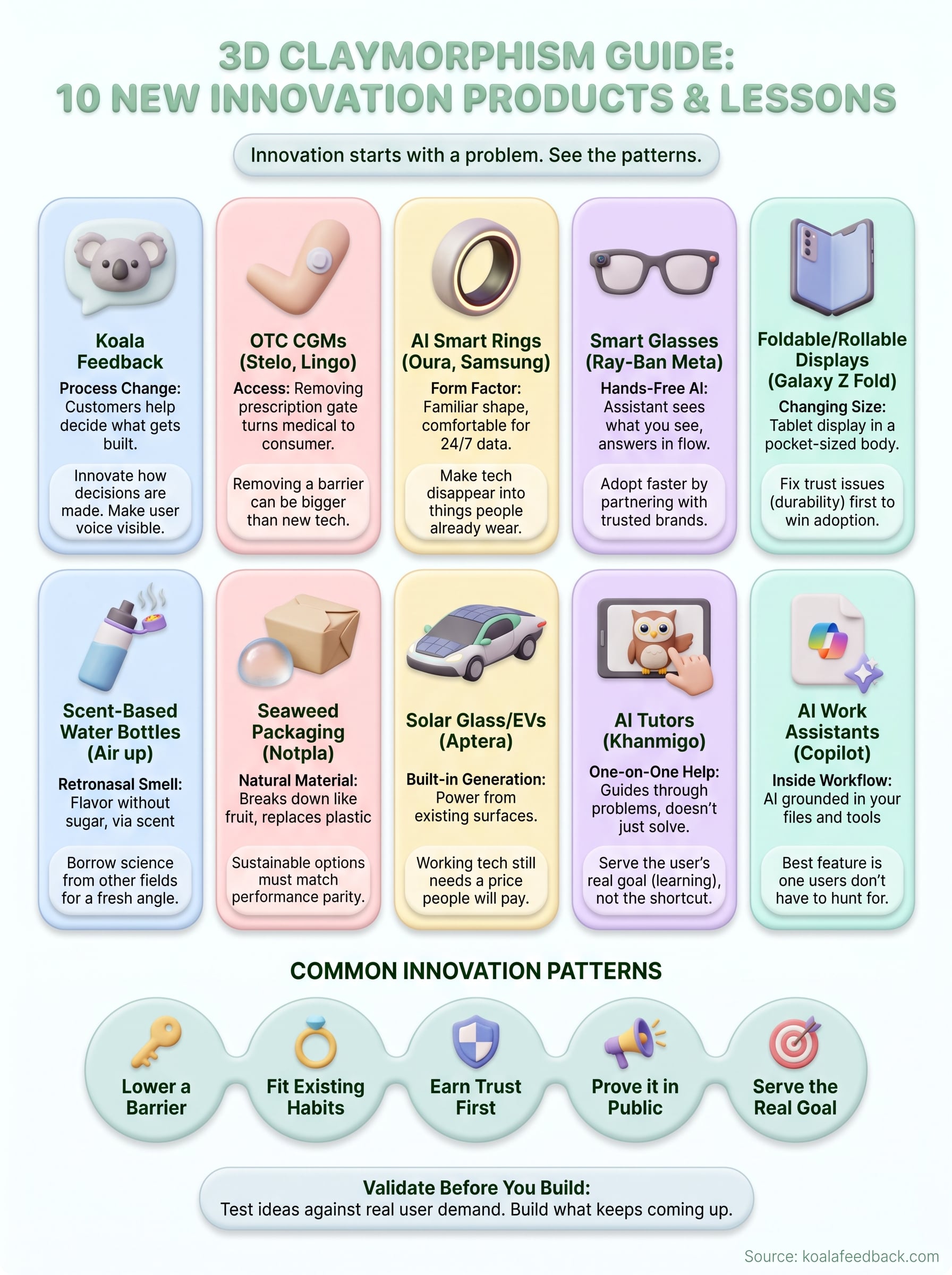
These ten products look nothing alike, yet each one found a real problem and removed the friction around it. Whether the barrier was access, form factor, trust, or price, the winning move was understanding what people struggled with. That thread runs through every new innovation product on this list.
Your next step is simple. Pick the lesson that fits your product and test it against real demand. A strong product innovation idea survives contact with users, so ask them early and count what repeats.
Make that listening a habit. With Koala Feedback, you can gather requests in one portal, let users vote, and share a public roadmap, so you build what matters most and keep customers informed. Start there, and your next idea will arrive with proof.

Start today and have your feedback portal up and running in minutes.