A software roadmap is a high-level plan that shows where a software product is heading, what the team will build, and roughly in what order. It describes goals and outcomes over time, not individual tasks. A software application roadmap for a mobile app, a web app, or an internal tool works the same way. It gives product, engineering, and customers one shared view of direction.
Think of it as a map, not a schedule. It tells people where you are going and why, and it leaves room to change route when you learn something new. Don't confuse it with the "developer roadmaps" that list skills a programmer should study. This article is about the product plan.
Below, you will see why teams keep a roadmap, what goes into one, which formats work for which audience, and how to build one step by step. Koala Feedback builds tools for collecting user feedback and publishing public roadmaps, so the examples lean on how product teams turn user input into a plan.
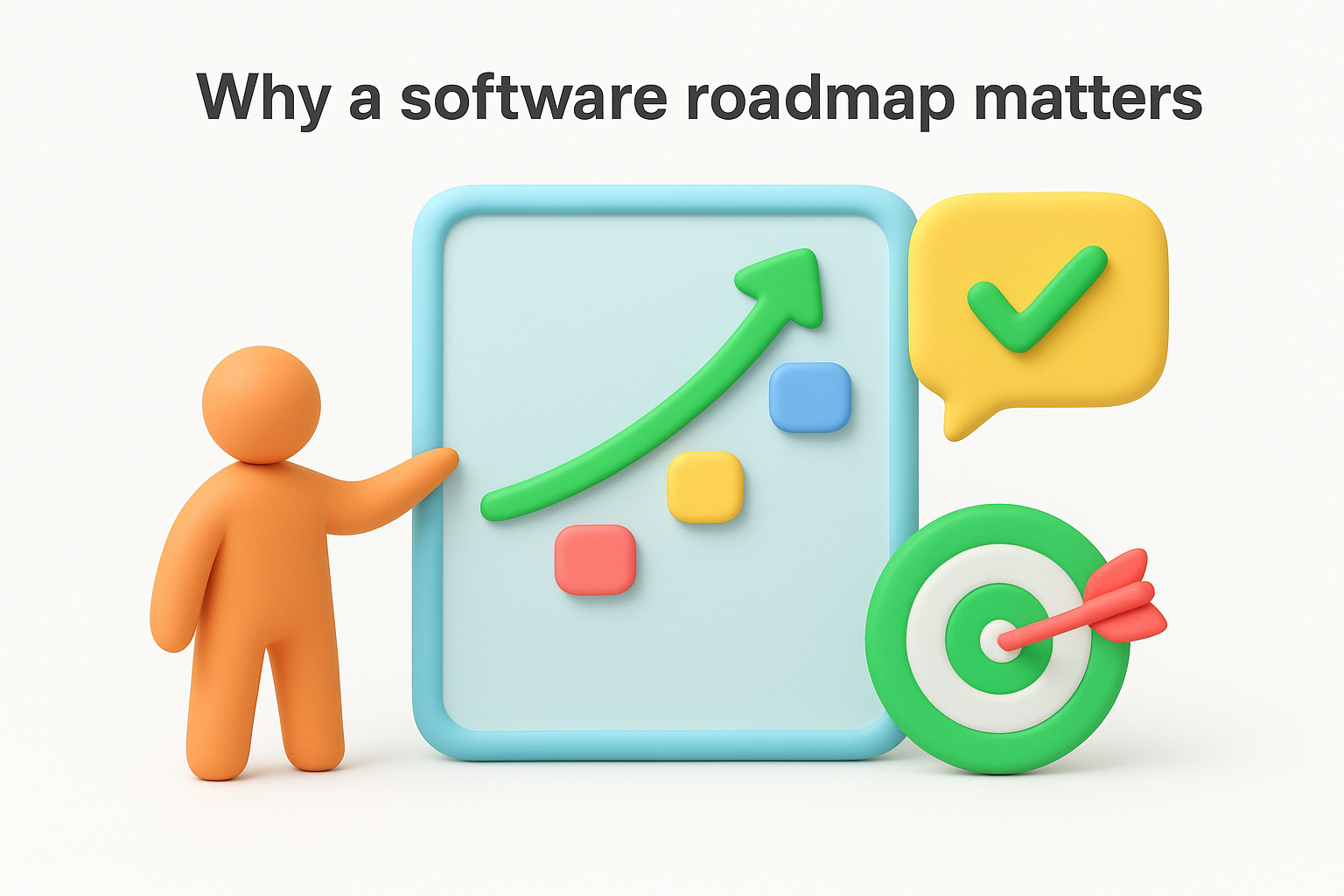
A software roadmap matters because it makes priorities visible and open to debate. Without one, direction lives in a few heads and shifts with whichever request arrived last. With one, the team can explain what comes next and why, and people can challenge the plan before work starts instead of after it ships.
Different groups read the same roadmap for different reasons:
One document replaces a dozen hallway conversations, and that is most of its value.
Feedback on its own is just a pile. A roadmap is where it becomes a decision. When requests arrive through a portal with votes and comments, you can see which problems affect the most users and place the biggest ones on the plan with a clear status.
A visible roadmap also cuts repeat questions. Users can check the plan themselves instead of opening another support thread, and your team spends less time explaining the same decision.
A roadmap is a statement of priorities, and a priority only exists when something else has to wait.
A software roadmap contains goals, initiatives, timeframes, statuses, and the reasoning behind them. It does not contain task lists, story points, or sprint assignments. Those belong in the backlog.
| Element | Question it answers | Example |
|---|---|---|
| Goal or vision | Why are we building this? | Reduce drop-off during onboarding |
| Initiative or theme | What are we working on? | Guided account setup |
| Timeframe | Roughly when? | Now, next, later, or Q1 |
| Status | Where does it stand? | Planned, in progress, completed |
| Rationale | Why this and not something else? | Most requested by new users |
Goals and rationale are the elements teams skip most often, and they matter most. A roadmap of bare feature names invites arguments about features. A roadmap that ties each item to a goal invites arguments about outcomes, which is the conversation you want.
Several nearby artifacts get mistaken for the roadmap:
Keep these separate. When a roadmap fills up with tickets and exact dates, it stops being a communication tool and becomes a project plan that goes stale in weeks.
If your roadmap lists tasks instead of goals, you have built a backlog with a nicer title.
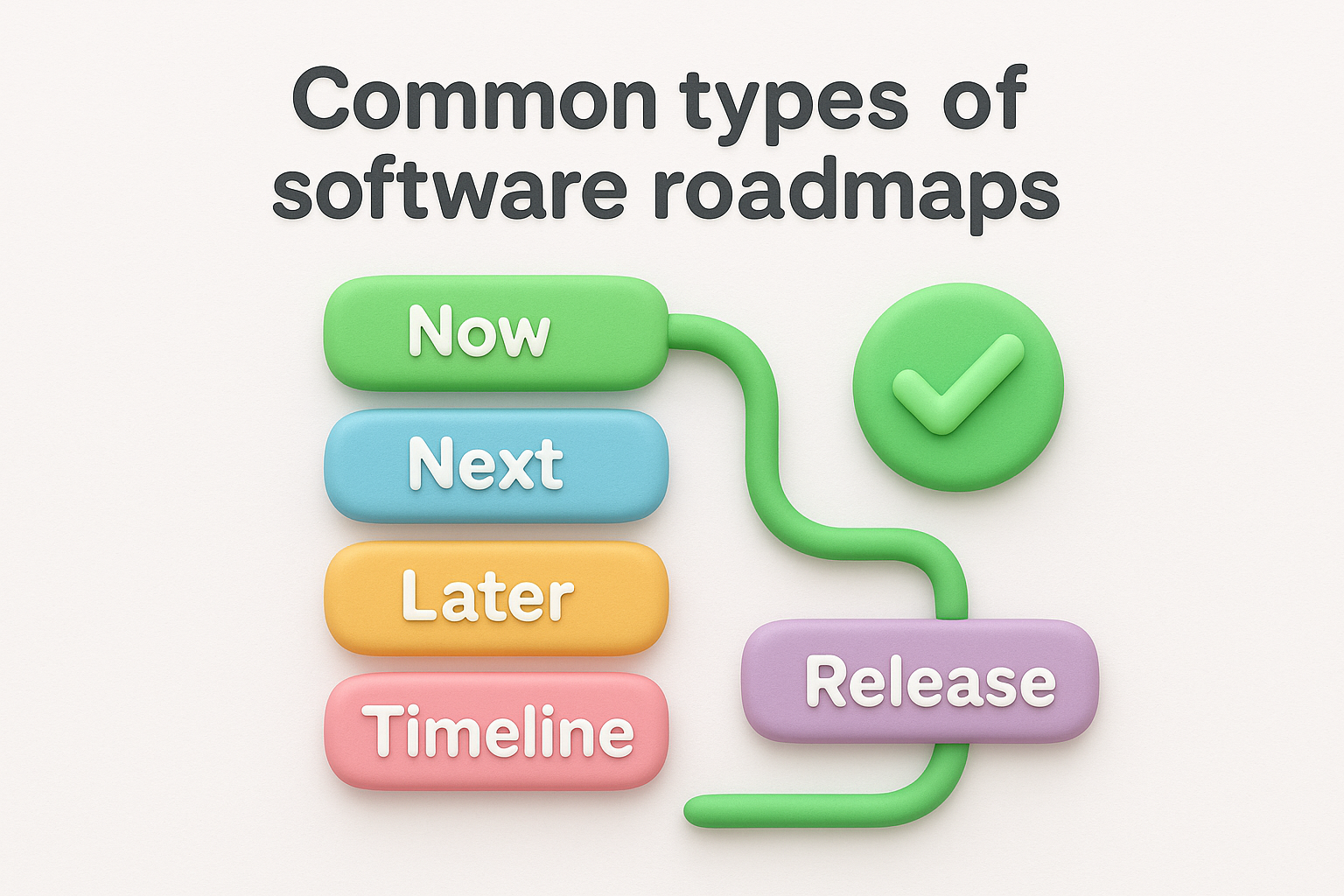
The most common types are now-next-later, timeline, release, strategic, and technical roadmaps. The right one depends on who reads it and how much certainty you really have.
| Type | Best for | Main audience | Trade-off |
|---|---|---|---|
| Now-next-later | Uncertain plans, early-stage products | Team and customers | No dates |
| Timeline (quarterly) | Coordinating launches and deadlines | Leadership, sales | Dates read as promises |
| Release | Versioned software with set ship dates | Engineering, QA | Narrow and tactical |
| Strategic | Showing goals and big bets | Executives | Too abstract for users |
| Technical | Architecture, debt, infrastructure | Engineering | Needs translating into business value |
For most product teams, start with now-next-later. It commits to order without committing to dates, so it holds up when priorities shift. Add a timeline only when a hard deadline forces one. Many teams keep two versions: a detailed internal roadmap and a simpler public one.
Here is a now-next-later roadmap for a small invoicing app:
Each line names an outcome and carries a status. A customer reading it knows what to expect, and nobody has been handed a date that may slip.
Pick the format that matches your level of certainty, not the one that looks most impressive.
You build a software roadmap by setting goals, collecting input, ranking ideas, placing them in time horizons, and sharing the result. Then you review it on a fixed schedule. Plan on a few hours for the first version, not a few weeks.
Koala Feedback supports steps 2 through 5. A feedback portal collects ideas with votes and comments, and prioritization boards group them by product area. A public roadmap then shows planned, in progress, and completed work with customizable statuses. The free Starter plan includes five statuses, which covers a basic now-next-later setup.
A roadmap that no one updates does harm, because it tells people the wrong thing with confidence. Update statuses as work moves, and when you drop an item, say so and explain why. Users forgive a cancelled feature far more readily than silence.
A roadmap earns trust through regular updates, not through ambitious promises.
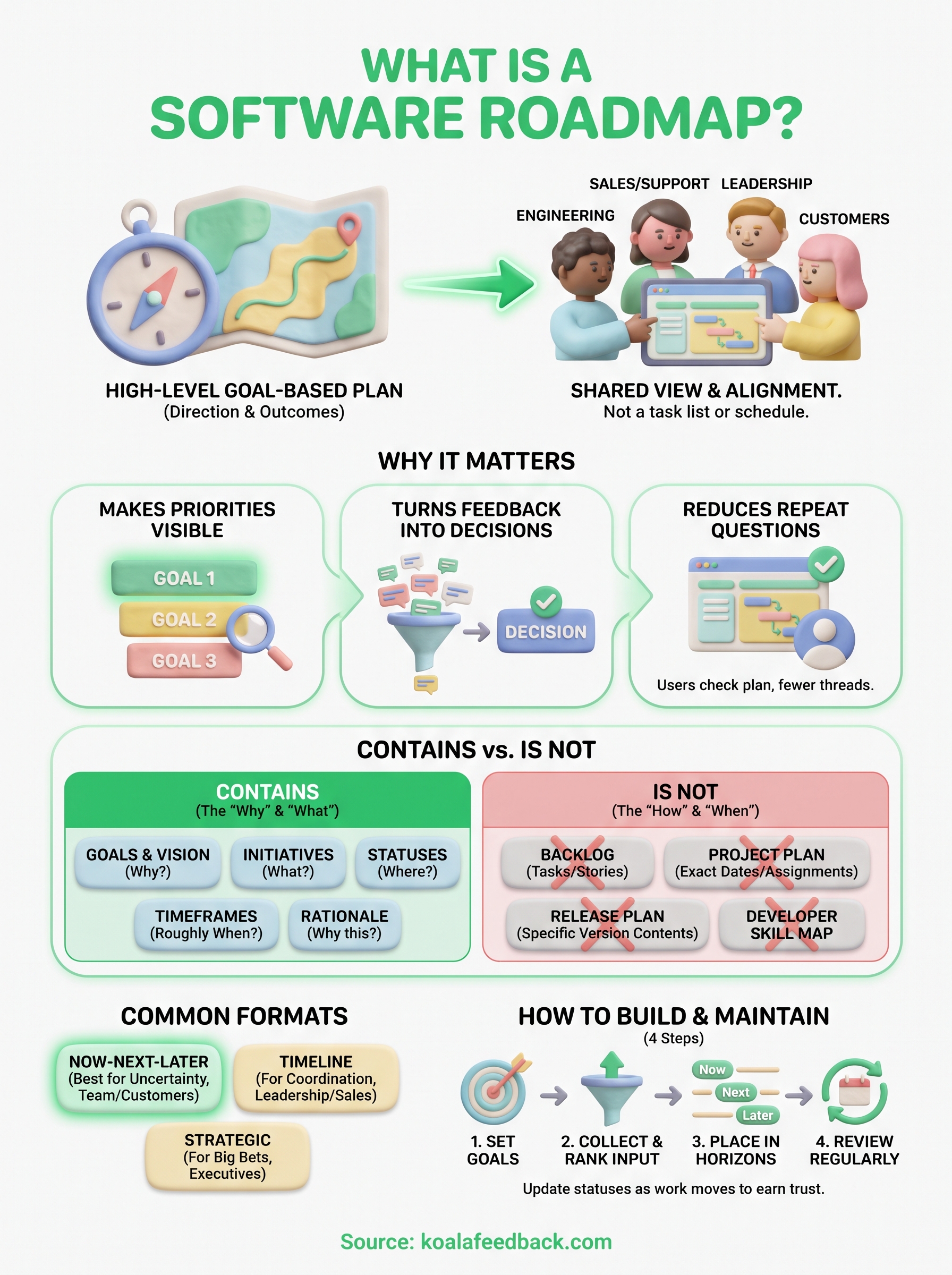
A software roadmap is a short, goal-based view of where your product is going and in what order. It holds goals, initiatives, statuses, and reasons. It leaves out tasks and exact dates. The format matters less than the habit: collect input in one place, rank it honestly, publish the plan, and keep it current.
If you have no roadmap today, draft a now-next-later version for the next quarter using the steps above. You can create a free Koala Feedback account to collect requests, organize them, and publish your roadmap in a few minutes.

Start today and have your feedback portal up and running in minutes.