You built a detailed product roadmap that maps out your vision and priorities. But here's the problem. Your engineering team keeps asking about timeline changes. Sales promises features that aren't on the schedule. Users submit the same feature requests over and over. The roadmap exists, yet everyone seems to be working from different playbooks.
The issue isn't your roadmap itself. The issue is how you communicate it. A roadmap only creates value when the right people understand it at the right time. You need a clear communication strategy that gets everyone aligned without creating confusion or false expectations.
This guide breaks down exactly how to communicate your product roadmap effectively. You'll learn why roadmap communication drives better outcomes, how to craft your roadmap narrative, ways to customize it for different audiences, which channels work best for sharing updates, and how to keep the conversation going. By the end, you'll have a repeatable process for turning your roadmap into a tool that actually guides your team and keeps users informed.
Your roadmap holds critical information that shapes decisions across your organization. When you communicate it effectively, you create a shared understanding of where the product is headed. Sales teams stop promising features that aren't planned. Engineers focus on the right priorities. Support teams prepare customers for upcoming changes. Everyone moves in the same direction instead of operating on assumptions.
Poor roadmap communication creates real problems. Teams waste time building the wrong features when they misunderstand priorities. Users lose trust when you ship updates they never expected while ignoring their requests. Investors question your strategy when they can't see clear progress. Learning how to communicate product roadmap effectively prevents these disconnects and keeps stakeholders aligned on your vision.
Clear roadmap communication transforms your product strategy from a document into a tool that guides daily decisions.
Most roadmaps live in scattered places. Product managers keep detailed plans in project management tools that only the development team sees. Executives get quarterly presentations with high-level themes. Customers submit feedback through support channels without knowing what you're building. This fragmentation means each group forms their own picture of your product direction, and those pictures rarely match.
Transparent roadmap communication solves this visibility gap. When you share appropriate versions of your roadmap with each audience, you build trust and reduce confusion. Your team understands the reasoning behind decisions. Users see that you're listening to their feedback and making progress. Stakeholders stay informed without needing constant updates. The result is less friction, better collaboration, and products that truly serve your users' needs.
Before you share your roadmap with anyone, you need to understand the narrative behind it. Your roadmap isn't just a list of features with dates. It tells a story about where your product is going and why. When you clarify this story first, you give your audience context that transforms raw information into meaningful direction. You answer the questions people actually care about: What problems are you solving? Why did you prioritize these initiatives? How does this align with your overall vision?
Your product vision provides the foundation for every roadmap conversation. It explains the ultimate destination you're working toward. Start by writing a clear, one-sentence vision statement that describes the future state you want to create. For example, "We help small businesses automate their customer feedback collection so they can focus on building better products." This vision becomes the anchor point that justifies every decision on your roadmap. When someone questions why a feature made the cut, you can connect it back to this vision and show how it moves you closer to that destination.
A strong product vision turns your roadmap from a task list into a strategic document that guides decisions.
Strategic themes group related initiatives into high-level categories that support your vision. Instead of presenting fifty individual features, you organize them under three to five themes. These themes might include "Improve user onboarding," "Expand enterprise capabilities," or "Reduce technical debt." When learning how to communicate product roadmap effectively, themes become your organizing principle that makes complex plans digestible. Each theme should connect directly to business goals or user needs. Create a simple table that maps your themes to their purpose:
| Theme | Purpose | Key Initiatives |
|---|---|---|
| Streamline feedback collection | Reduce friction in capturing user input | In-app widgets, email integrations |
| Enhance prioritization | Help teams make better decisions | Voting features, impact scoring |
Every feature on your roadmap should link to a specific outcome you want to achieve. Don't just say "We're building a mobile app." Explain that "We're building a mobile app so users can submit feedback on the go, which will increase feedback volume by 40%." This outcome-focused approach shows stakeholders the value behind each initiative rather than just describing functionality. When you present features this way, people understand not just what you're building, but why it matters and how you'll measure success.
Different audiences need different versions of your roadmap. Your executive team wants strategic direction, not implementation details. Engineers need specific requirements that guide their work. Customers want transparency without getting overwhelmed by internal planning. When you master how to communicate product roadmap effectively, you create customized views that serve each group's unique needs. This doesn't mean maintaining separate roadmaps. You maintain one source of truth and present different slices of it based on who's looking.
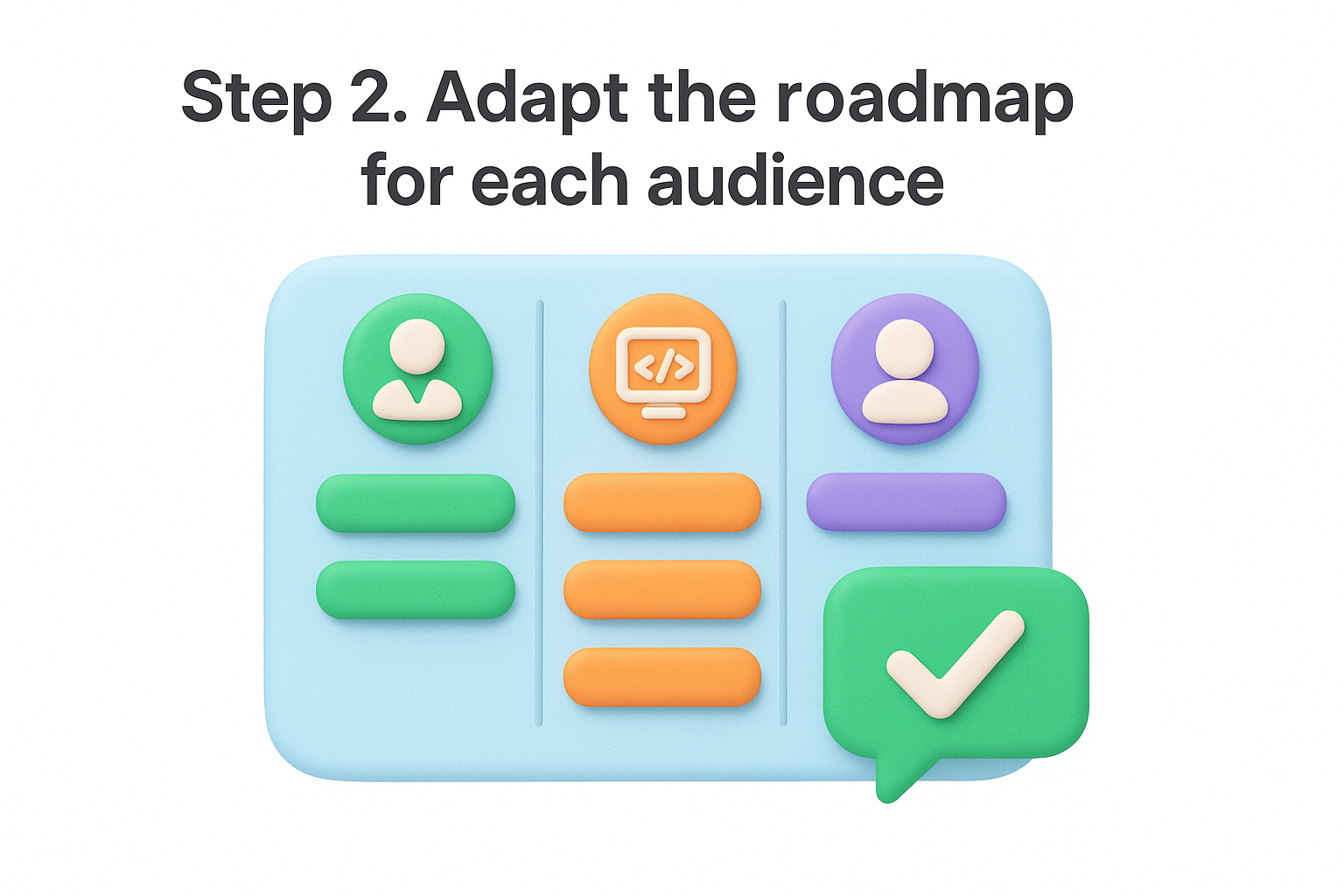
Executives care about strategic alignment and business impact. Strip away granular details and focus on high-level themes that connect to company goals. Show how your roadmap supports revenue growth, reduces churn, or enters new markets. Use quarters or months instead of specific dates to communicate timing. Present three to five major initiatives with clear business outcomes attached. For example, "Q2: Launch enterprise features (Target: 15% increase in average contract value)." Keep your executive roadmap to one page that fits on a screen without scrolling.
Executives need confidence that your roadmap drives business results, not a list of every feature you're building.
Your internal teams need detailed information that guides daily work. Share specific features, technical requirements, dependencies, and realistic timelines. Include acceptance criteria, design mockups, and integration points. Break down initiatives into actionable tasks that engineers can estimate and execute. Add status indicators that show what's in progress, what's blocked, and what's coming next. Use your project management tool to provide this granular view. Internal roadmaps should answer questions like "What am I building?" and "What technical constraints should I consider?"
Sales, marketing, and support teams need a roadmap version they can discuss with customers without creating false expectations. Focus on completed features, in-progress work with high confidence, and near-term plans without specific dates. Emphasize benefits over technical specifications. Instead of "Implementing SSO via SAML 2.0," say "Adding single sign-on for enterprise customers." Give these teams talking points about why you prioritized certain features and how they solve customer problems. This arms them with context to handle questions intelligently.
Public roadmaps require the most careful balance between transparency and flexibility. Share your general direction and major themes without committing to specific dates or detailed functionality. Use status categories like "Planned," "In Progress," and "Released" rather than calendar dates. Highlight how user feedback shaped your priorities to show you're listening. Consider this simple format:
| Status | Initiative | Why it matters |
|---|---|---|
| Released | Feedback widgets | Capture input where users already work |
| In Progress | Advanced voting | Help prioritize based on customer demand |
| Planned | Mobile app | Enable feedback submission on any device |
External roadmaps build trust when you update them regularly and deliver on what you promise. Users appreciate knowing your direction even when you can't commit to exact timelines.
The channel you choose to share your roadmap matters just as much as the content itself. A detailed slide deck works well for quarterly executive reviews but overwhelms users who just want quick updates. A public portal gives customers transparency but lacks the context you need to provide in team meetings. When you match your format to the situation and audience, your roadmap communication becomes more effective and requires less repeated explanation.
Use live presentations for decisions that require discussion and alignment. Schedule roadmap reviews with executives, planning sessions with engineering teams, and kickoff meetings when launching major initiatives. Create simple slide decks that present your roadmap story visually. Include no more than one key point per slide to keep attention focused. Walk through your strategic themes first, then dive into specific initiatives that matter to that audience. Leave time for questions and capture feedback during the conversation. This format works best when learning how to communicate product roadmap effectively because it allows you to read the room and adjust your message in real time.
Live presentations create space for dialogue that builds shared understanding and surfaces concerns early.
Roadmapping software provides continuous visibility without scheduling meetings. Use dedicated platforms that display your roadmap in different views based on who's accessing it. Engineering teams can filter by sprint or technical area. Sales can view customer-facing features. Users can check status updates anytime they want. Set up automated notifications when you move items from planned to in-progress or mark features as complete. This reduces the need for status update emails while keeping everyone informed. Digital formats also create a single source of truth that stays current as plans evolve.
Create written roadmap summaries for teams that need detailed context. Publish quarterly roadmap updates in your internal wiki or knowledge base that explain the reasoning behind priorities. Write release notes that connect shipped features back to your roadmap themes. Share blog posts with customers that describe your product direction in plain language. Include this basic structure in written roadmap communications:
Written formats give people something to reference later when questions come up.
Communicating your roadmap isn't a one-time event. Your roadmap changes as you learn from users, compete in the market, and adjust to business priorities. The most effective approach to how to communicate product roadmap involves creating a continuous feedback loop where you share updates, gather reactions, and refine your plans based on what you discover. This iterative process keeps your roadmap relevant and ensures stakeholders stay informed as circumstances evolve.
Set a consistent cadence for sharing roadmap updates with each audience. Review your roadmap with executives every quarter to align on strategic direction. Hold monthly planning sessions with engineering teams to discuss upcoming work. Send product updates to customers every six weeks that highlight recent releases and preview what's next. Consistency builds trust because people know when to expect information. Create a simple update calendar that tracks when each audience receives roadmap communications:
| Audience | Update Frequency | Format |
|---|---|---|
| Executives | Quarterly | Presentation + written summary |
| Engineering | Monthly | Planning meeting + tool updates |
| Customers | Every 6 weeks | Email + public portal update |
Regular updates prevent surprises and reduce the number of one-off questions you receive.
Ask specific questions after you present your roadmap to understand what landed and what confused people. Survey customers about which planned features excite them most. Debrief with sales teams to learn what objections prospects raised. Check with engineering about technical concerns or dependencies you missed. Track this feedback systematically in a central location so you can identify patterns. When multiple users request the same capability or teams consistently question a priority, you have data to inform adjustments.
Regular feedback collection transforms your roadmap from a broadcast into a conversation that improves with each iteration.
Update your roadmap based on what you learn, then communicate why you made those changes. When you deprioritize a planned feature, explain the business reason to affected stakeholders. When user feedback shifts your direction, share that context publicly to show you're listening. Document significant changes in release notes or roadmap update posts. Transparency about adjustments builds credibility rather than eroding it, as long as you explain your reasoning clearly and keep commitments you've already made.
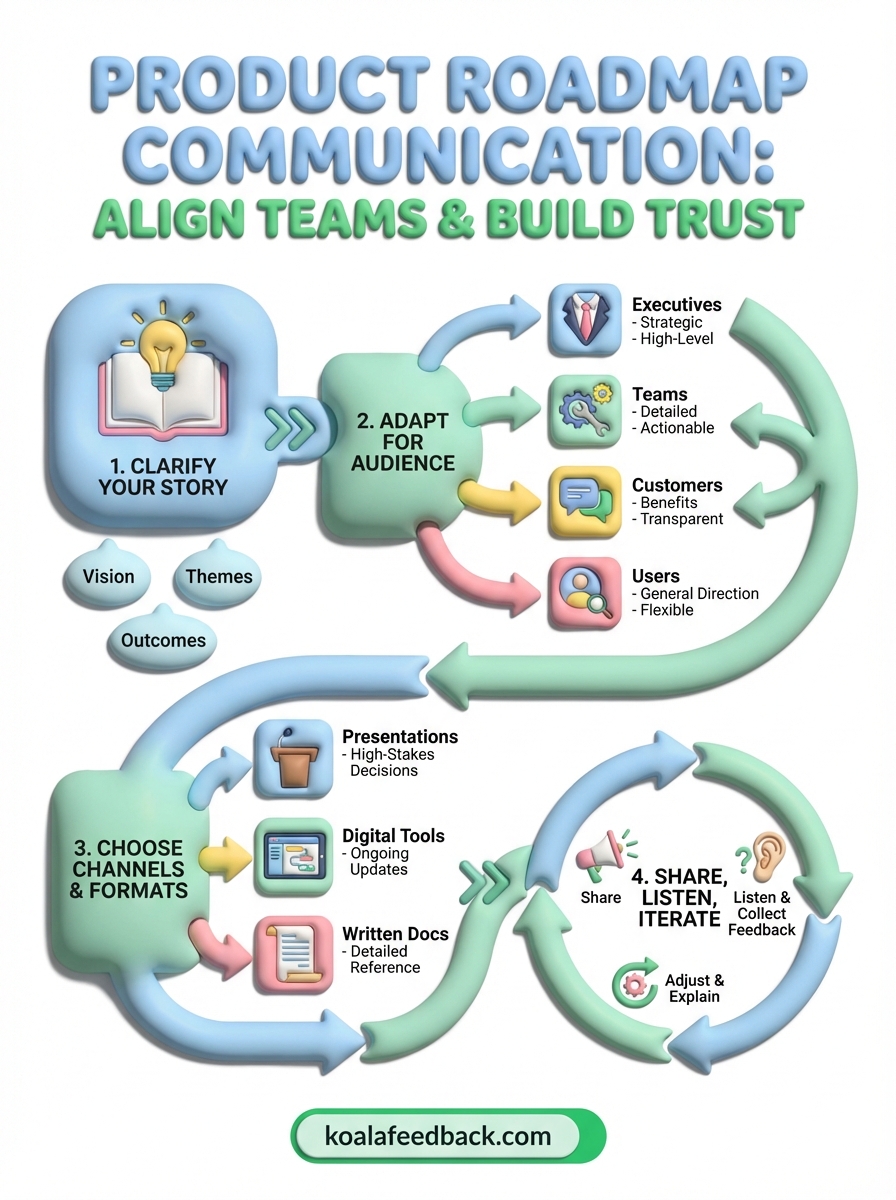
You now have a complete process for how to communicate product roadmap effectively across your organization. Start by clarifying your roadmap story with a clear vision and strategic themes. Adapt that story for each audience using formats that match their needs. Share updates regularly through the right channels and gather feedback that improves your planning over time.
Effective roadmap communication requires the right tools to support your process. Koala Feedback helps you collect user input, prioritize features based on actual demand, and share public roadmaps that keep customers informed. Build transparency into your product development from day one. Take what you learned here and transform your roadmap from a planning document into a tool that aligns teams, engages users, and drives better product decisions.

Start today and have your feedback portal up and running in minutes.