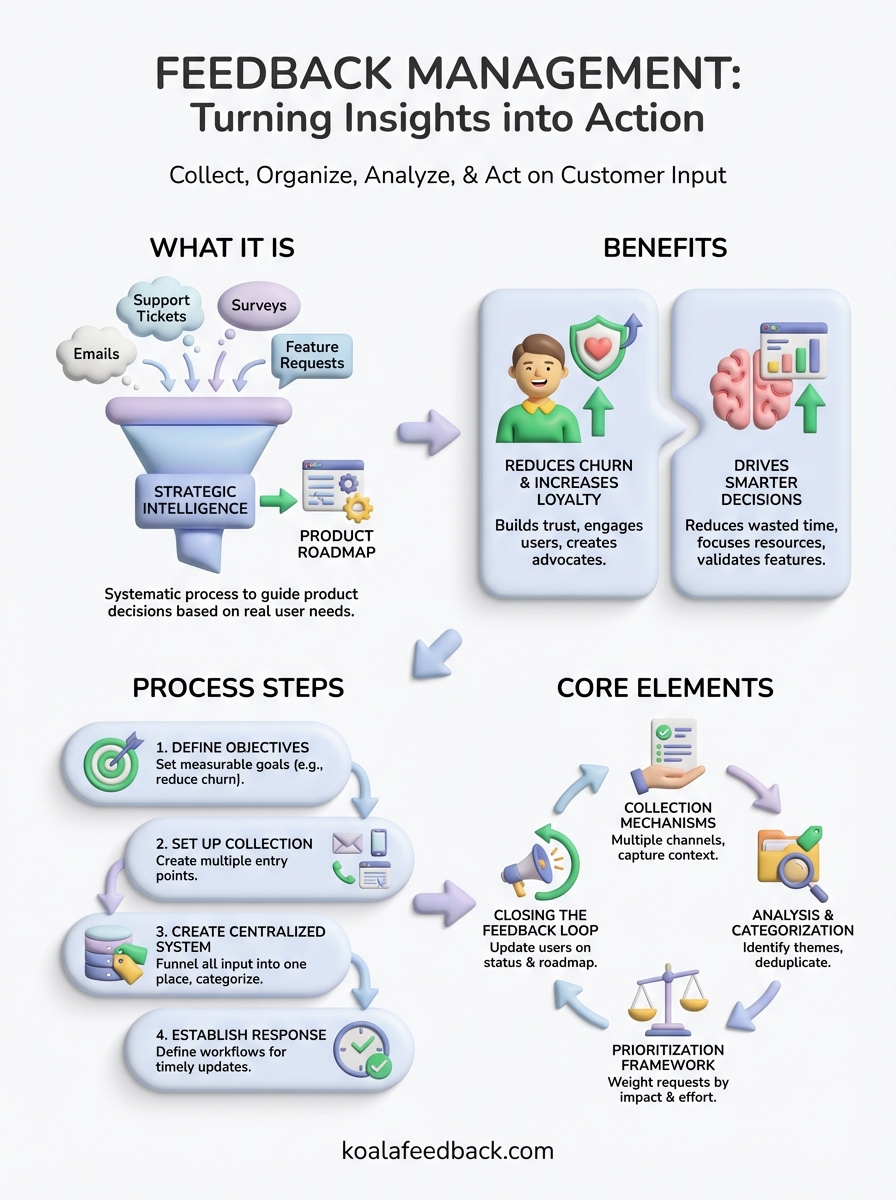
Feedback management is how you collect, organize, analyze, and act on input from your customers or users. It turns scattered comments, feature requests, and complaints into a system that guides your product decisions. Instead of letting valuable insights sit in random support tickets or email threads, you create a structured process that captures what people actually want and need.
This article breaks down everything you need to know about feedback management. You'll learn why it matters for your business, how to build a process that works, and what elements make a feedback system effective. We'll also show you practical examples and tools you can use right away. Whether you're managing feedback for the first time or looking to improve your current approach, you'll find actionable steps to collect better insights and make smarter product choices.
Your product's success depends on how well you understand what users actually need. Without a clear system to manage feedback, you miss patterns that could prevent churn, identify your biggest opportunities, or warn you about problems before they escalate. When you implement proper feedback management, you transform random comments into strategic intelligence. You stop guessing which features to build and start making decisions based on real data from the people who pay for your product.
Users who feel heard stick around longer. When you collect feedback systematically and show customers you're acting on their input, you build trust that keeps them engaged. Studies consistently show that customers who see their suggestions implemented become your strongest advocates. They tell others about your product, leave positive reviews, and renew their subscriptions because they know their voice matters. Ignoring feedback sends the opposite message: that you don't care about their experience.
"Your most unhappy customers are your greatest source of learning." (Bill Gates)
Understanding what is feedback management means recognizing its role in strategic planning. You reduce wasted development time by building features users actually request instead of guessing what might work. Your roadmap becomes a reflection of real market demand rather than internal assumptions. When you track which issues appear most frequently, you identify critical problems faster. This approach helps you allocate resources more efficiently, focusing your team's energy on changes that move the needle. Instead of debating opinions in meetings, you reference concrete data showing exactly what users want and how urgently they need it.
Building an effective feedback management process starts with creating a framework that captures, organizes, and acts on user input consistently. You need a repeatable system that prevents feedback from disappearing into email inboxes or support tickets where nobody can find it later. The right process transforms what is feedback management from a vague concept into concrete steps your team follows every day. This means deciding where feedback lives, who handles it, and how you turn insights into action.
Start by identifying what you want to achieve with feedback management. Your objectives should align with specific business outcomes like reducing churn by 15%, increasing feature adoption by 25%, or cutting support tickets by 30%. When you set measurable goals, you can track whether your feedback process actually works. Different teams might prioritize different outcomes based on their stage of growth or current challenges.
Document what types of feedback matter most to your business right now. A new startup might focus on product-market fit feedback, while an established company might prioritize retention signals. This clarity helps your team filter noise from valuable insights and ensures everyone understands which feedback deserves immediate attention versus what can wait.
You need multiple ways for users to share feedback because they all have different preferences. Some customers will email you directly, others prefer in-app prompts, and many will only speak up if you ask them specifically through surveys. Your job is to make feedback easy to give regardless of how someone wants to communicate.
Create dedicated spaces where users can submit ideas like feedback portals or feature request boards. These centralized locations let customers see what others have suggested and vote on existing requests instead of duplicating submissions. Support conversations, social media mentions, and user interviews also generate valuable feedback that needs a home in your system.
Scattered feedback across different tools wastes time and creates blind spots. You must funnel all input into one place where your team can see patterns, track frequency, and measure demand. This centralization prevents duplicate work when multiple people suggest the same feature and helps you spot trends that individual comments might miss.
"The single biggest problem in communication is the illusion that it has taken place." (George Bernard Shaw)
Tag and categorize feedback as it arrives so you can filter by product area, user segment, or priority level later. Good categorization turns hundreds of individual comments into organized themes that inform your roadmap. You'll quickly see which problems affect the most users and which features would deliver the highest impact.
Feedback without action breeds frustration and distrust. Define who reviews new submissions, how quickly you respond, and what updates you share with users. A simple workflow might include acknowledging receipt within 24 hours, triaging priority within a week, and updating requesters when status changes. These commitments show users their input matters and keeps them engaged with your product's direction.
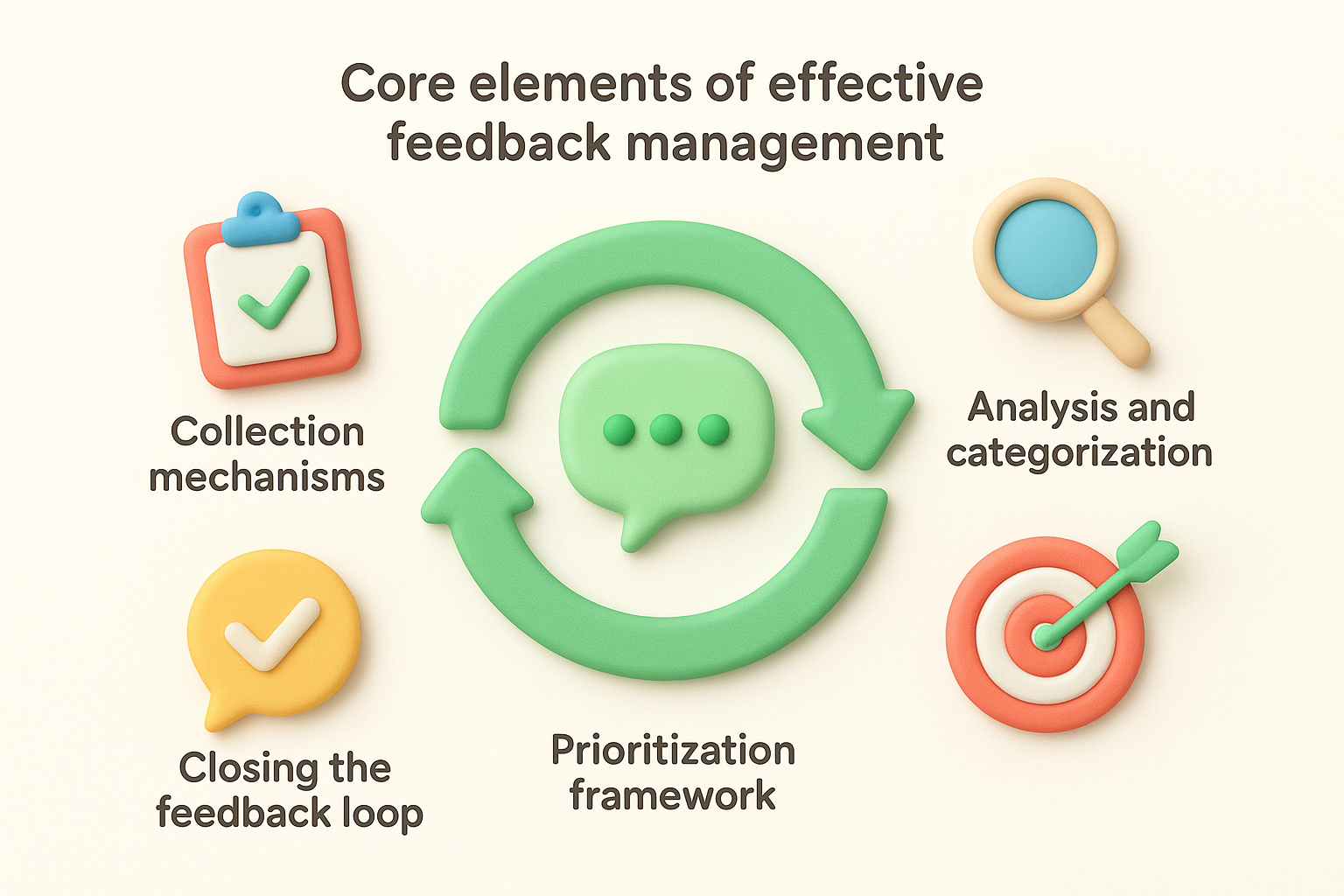
Understanding what is feedback management requires knowing the specific components that make it work. A feedback system only succeeds when it combines structured collection, smart analysis, strategic prioritization, and consistent communication. Each element connects to the next, creating a cycle that continuously improves your product based on real user needs. Missing any single piece weakens the entire system and reduces the value you extract from user input.
Your feedback collection needs to meet users where they already spend time. Build multiple entry points like in-app widgets, email surveys, support ticket integrations, and dedicated feedback portals so users can share thoughts through their preferred channel. Each collection point should capture the same core information: what the user wants, why they need it, and how it affects their experience with your product.
Track the source and context of every piece of feedback to understand patterns across different user segments. A feature request from a new trial user carries different weight than the same request from a long-term enterprise customer. Context helps you interpret feedback accurately and avoid building features that only serve a vocal minority.
Raw feedback becomes useful when you group similar requests and identify themes. Create a consistent tagging system that organizes input by product area, feature type, and user impact level. This structure lets you quickly answer questions like "What are our top five most-requested mobile features?" or "Which bugs affect our enterprise customers most?"
"Without data, you're just another person with an opinion." (W. Edwards Deming)
Deduplicate similar requests to measure true demand instead of counting the same issue multiple times. When ten users request the same feature in different words, you need to recognize they're all asking for one thing. Good categorization reveals these patterns and prevents you from underestimating how many people actually want a specific improvement.
Not all feedback deserves equal attention. Weight each request based on factors like user impact, business value, implementation effort, and strategic fit with your product vision. A simple scoring system helps you rank feedback objectively instead of relying on whoever speaks loudest or most recently.
Balance quick wins against long-term strategic initiatives in your prioritization. Some feedback points to small changes that unlock immediate value, while other input identifies major features that require months of development. Your roadmap needs both types to maintain momentum and deliver meaningful progress.
Users who never hear back stop participating in your feedback process. Update requesters whenever their feedback status changes, whether you're planning to build it, investigating further, or deciding not to pursue it. Transparency about your decisions builds trust even when you can't implement what someone suggested.
Share your roadmap publicly so users see how their collective input shapes your product direction. This visibility transforms feedback from a one-way complaint channel into a collaborative dialogue about what you're building together.
Choosing the right tools shapes how effectively you implement what is feedback management in your organization. Your feedback system needs software that centralizes collection, organizes submissions, and connects insights to your product roadmap. The market offers solutions ranging from simple feedback widgets to comprehensive platforms that integrate voting, prioritization, and public roadmaps. You want tools that reduce manual work while making patterns visible across all the feedback you collect.
Feedback portals let users submit ideas directly and vote on existing requests to surface the most popular suggestions. These platforms typically include categorization features, status updates, and the ability to filter by product area or user segment. Tools like Koala Feedback provide customizable feedback boards where your team can organize requests and share progress transparently with users.

Survey and polling tools capture structured feedback through questionnaires sent at specific touchpoints like after purchases or feature releases. They work best for targeted questions where you need quantitative data about satisfaction scores or feature preferences. Integration capabilities matter here because feedback should flow automatically into your central system rather than living in isolated survey reports.
"Listen to your customers. But don't always build exactly what they're asking for." (David Cancel)
Analytics platforms track behavioral feedback by showing what users actually do versus what they say they want. Session recordings, heat maps, and feature usage metrics reveal friction points that customers might not articulate directly. Combining behavioral data with explicit feedback gives you complete visibility into user needs.
Companies across industries apply feedback management differently based on their products and customer base. A B2B SaaS company might create a private feedback portal where enterprise customers submit feature requests tied to their account size and renewal dates. This approach lets product teams prioritize features that protect revenue and expand existing accounts.
Consumer apps often embed feedback widgets directly in their interface so users can report bugs or suggest improvements without leaving the application. Mobile banking apps use this method to catch usability issues quickly and route technical problems to support teams automatically. The key is reducing friction between identifying an issue and reporting it to you.
Understanding what is feedback management gives you the foundation, but taking action separates companies that improve from those that stagnate. Start by choosing one collection channel where your users already communicate and build from there. You don't need a perfect system on day one; you need a working process that captures insights consistently and routes them to your product team.
Your feedback process will evolve as your business grows and your needs change. The patterns you discover in user input will reveal which features drive growth and which problems cause churn. Track how feedback influences your roadmap decisions and measure whether acting on user requests actually improves retention and satisfaction metrics.
Koala Feedback provides the centralized platform you need to collect, prioritize, and share progress on user feedback. Build a feedback system that turns customer voices into product improvements instead of letting valuable insights disappear into disconnected tools and forgotten email threads that nobody reviews.

Start today and have your feedback portal up and running in minutes.