The best products that need improvement share three traits. Nearly everyone uses them, the flaw shows up every time, and a better version is physically possible. The six picks below pass that test. Toothpaste tubes and printer cartridges suit an invention pitch. Umbrellas and door handles suit a student redesign brief. Smoke detectors and plastic wrap suit a debate about safety and waste.
If you are stuck on which product needs improvement for a class, a patent sketch, or a forum thread, finding complaints is the easy part. The hard part is finding a flaw you can define, test, and fix. Each pick below tells you what goes wrong, what has already been tried, and where the open design space still sits, so you can start sketching today.
At Koala Feedback, we build software that helps product teams collect and rank user requests, so we see how redesign ideas start. They begin with a specific, repeated complaint, not a hunch. The same rule works for your project, and it explains why these six items were chosen.
The collapsible tube was designed in 1892, and you still cannot squeeze out the last bit of paste. Most tubes also combine plastic and aluminum layers, which makes them hard to recycle even though each material is recyclable on its own.
This problem is already partly solved, which makes it a good case study. Colgate released a tube in 2021 with a friction-free interior coating so paste slides out. Colgate and Unilever have also built recyclable tubes from HDPE, the plastic used in milk jugs. What remains is combining both wins in one affordable tube.
A partly solved problem gives you a stronger case study than an untouched one, because you can show what worked and what is still missing.

A typical collapsible umbrella is flimsy when the weather gets rough. In a strong gust, the canopy flips inside out or the ribs bend and snap. Even a surviving umbrella has a second flaw: closing it puts a dripping wet canopy right next to your clothes, car seat, or bag.
The core engineering question is how to let the canopy yield to wind and spring back. Vented canopies and flexible ribs attack that directly. Reverse-folding designs, which close with the wet side inward, attack the dripping problem. No single product does everything well at a low price, so there is room for a student project.
Wind resistance and compact size pull in opposite directions, and every umbrella redesign is a decision about which one gives way.
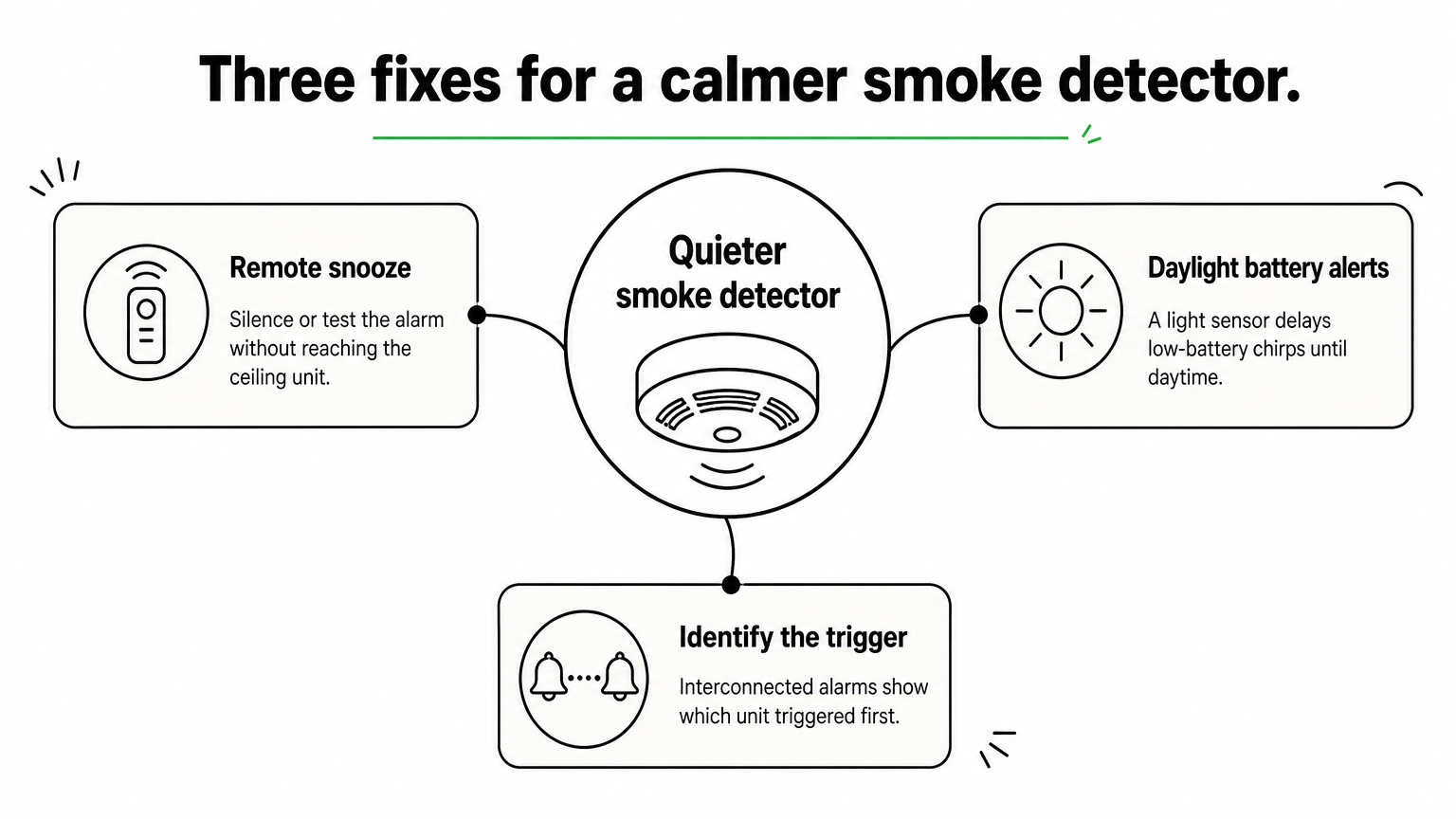
A smoke detector is essential, yet it is also the most irritating device in many homes. A smoky kitchen mistake triggers a shriek, and a dying battery produces a chirp that tends to start in the middle of the night. When detectors are interconnected, one low battery can set off every alarm in the house at once.
The hard part is safety, not comfort. Some models add a hush button, but you usually still have to reach the ceiling unit. A remote silence or snooze control is one fix. A light sensor that delays low-battery alerts until daytime is another. Interconnected systems could also silence the other units so the one that triggered stands out.
A smoke detector that is easier to silence must never become easier to ignore.

You walk up to a public door and push when you should pull. This is so common that designers call such doors "Norman doors," after Don Norman, who wrote about them in The Design of Everyday Things. The handle gives the wrong signal about what to do, and the user takes the blame.
The principle is let the shape of the hardware say what the door does. A flat plate says push, and a graspable handle says pull. When a door needs a sign, the hardware has failed. This is a good first redesign project because you can test it with strangers in an afternoon.
A door that needs a PUSH sign has already failed at its only job.
Plastic wrap protects food, but one wrong move turns it into a bunched-up mess. The edge disappears into the roll, the film clings to itself instead of the bowl, and the cutting strip often tears off a ragged piece. The box tabs that hold the roll in place barely help. It is also a single-use product, so the waste adds up.
There are two angles here, better dispensing and less waste. A dispenser that holds the loose edge and cuts cleanly solves the first. Reusable covers, such as silicone lids and beeswax wraps, address the second, though they do not seal as flexibly. A redesign that matches cling-film convenience with reusable materials would be a real improvement.
The unsolved part is not wrapping food. It is getting a clean edge every single time.
A printer only has to turn a digital file into paper, yet it asks you to buy small, expensive cartridges that run out at awkward moments. Cartridges are bulky plastic, and ink left unused can dry out. Some printers also block or warn about third-party cartridges, which makes the running cost hard to control.
Here, the flaw is as much a pricing model as an engineering problem. Refillable tank printers already exist and show that lower running costs are possible. What is still missing is clear fill-level indication, standard refill bottles, and a recycling route that people will actually use. It suits a project on business models as well as hardware.
The flaw in many printers is the pricing model, not the engineering.
If you are still asking what product needs improvement most, choose the one where you can name a specific, repeatable failure. Toothpaste tubes, umbrellas, smoke detectors, door handles, plastic wrap, and printer cartridges all pass that test. Each has a flaw people notice daily, and each has room for a better answer.
The same discipline applies to the products you build. Gather the complaints, count the repeats, and fix the ones people mention most. If you work on software, you can collect and prioritize feedback on your own product with Koala Feedback. Signing up is free, and a feedback portal can be running in minutes.

Start today and have your feedback portal up and running in minutes.