Your team collects feedback from support tickets, sales calls, user interviews, and in-app surveys. But it all lands in different places. Spreadsheets pile up. Slack threads get buried. Great ideas vanish before anyone can act on them. You know your users want something, but you can't prove which features matter most.
A product feedback strategy fixes this. It gives you a system to capture every piece of feedback, organize it so patterns emerge, and use that data to make confident roadmap decisions. No more building features based on whoever yells loudest.
This guide walks you through building your feedback strategy from scratch. You'll learn how to define clear goals and metrics, pick the right channels for your users, centralize and tag feedback so you can spot trends, and prioritize what to build next. By the end, you'll have a repeatable process that turns scattered user opinions into a roadmap your team and customers both trust.
Without a structured approach, feedback becomes noise. Your support team logs bugs in Zendesk, your sales team tracks feature requests in Salesforce, and your product manager collects survey responses in Google Forms. Nobody sees the full picture. You miss the fact that 30 different customers asked for the same integration last month.

A product feedback strategy solves this problem by creating one source of truth for all user input. When you centralize feedback, you can count how many users want each feature, identify which segments care most, and see patterns that scattered data hides. This transforms gut decisions into data-backed priorities.
A centralized feedback system lets you prove which features drive the most customer demand.
The strategy also builds trust with your users. When you collect feedback publicly, vote on ideas, and share your roadmap, users see their voices matter. They stop sending the same requests repeatedly because they know you tracked it. This transparency turns frustrated customers into engaged partners who understand your product direction and champion your decisions.
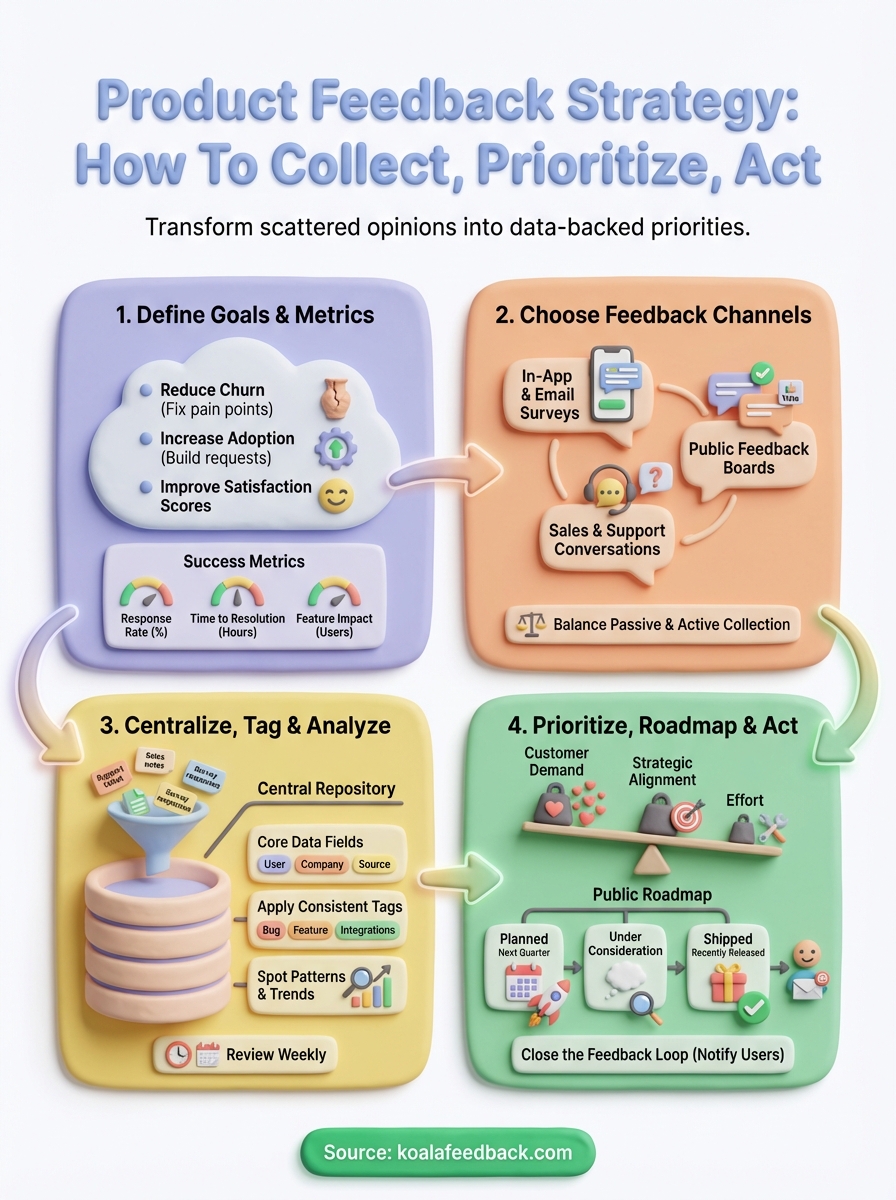
Your product feedback strategy starts with clear goals. Before you collect a single piece of feedback, decide what you want to achieve. Do you want to reduce churn by fixing top pain points? Increase feature adoption by building what users actually request? Improve customer satisfaction scores? Each goal shapes which feedback you prioritize and how you act on it.
Write down three concrete objectives that tie feedback to business outcomes. Instead of "understand users better," say "identify the top 5 reasons users churn in their first 30 days." Instead of "improve the product," say "validate demand for 3 new features before Q2 planning." Specific objectives make it obvious when you've succeeded and keep your team focused on what matters.
Here's a simple template:
Pick 2-3 metrics that prove your feedback program works. Track response rate (what percentage of users submit feedback), time to resolution (how long before you close the loop), and feature impact (how many users requested something you shipped). You should also measure roadmap confidence by comparing predicted adoption against actual usage after launch. These numbers show whether your feedback process drives real product decisions or just creates busywork.

Your feedback channels determine who responds and what insights you get. Pick channels based on where your users already spend time and when they're most likely to share honest opinions. In-app surveys catch users right after they interact with a feature, email works for post-purchase reflection, and public feedback boards let customers vote on ideas together. The right mix depends on your product type and user behavior.
Study how your users actually engage with your product. If they log in daily, in-app widgets or pop-up surveys work well because you catch them during active sessions. For users who interact less frequently, email surveys after key milestones (like completing onboarding or hitting usage limits) yield better response rates. B2B products often get deeper insights from sales and support conversations because enterprise customers discuss needs during calls and demos.
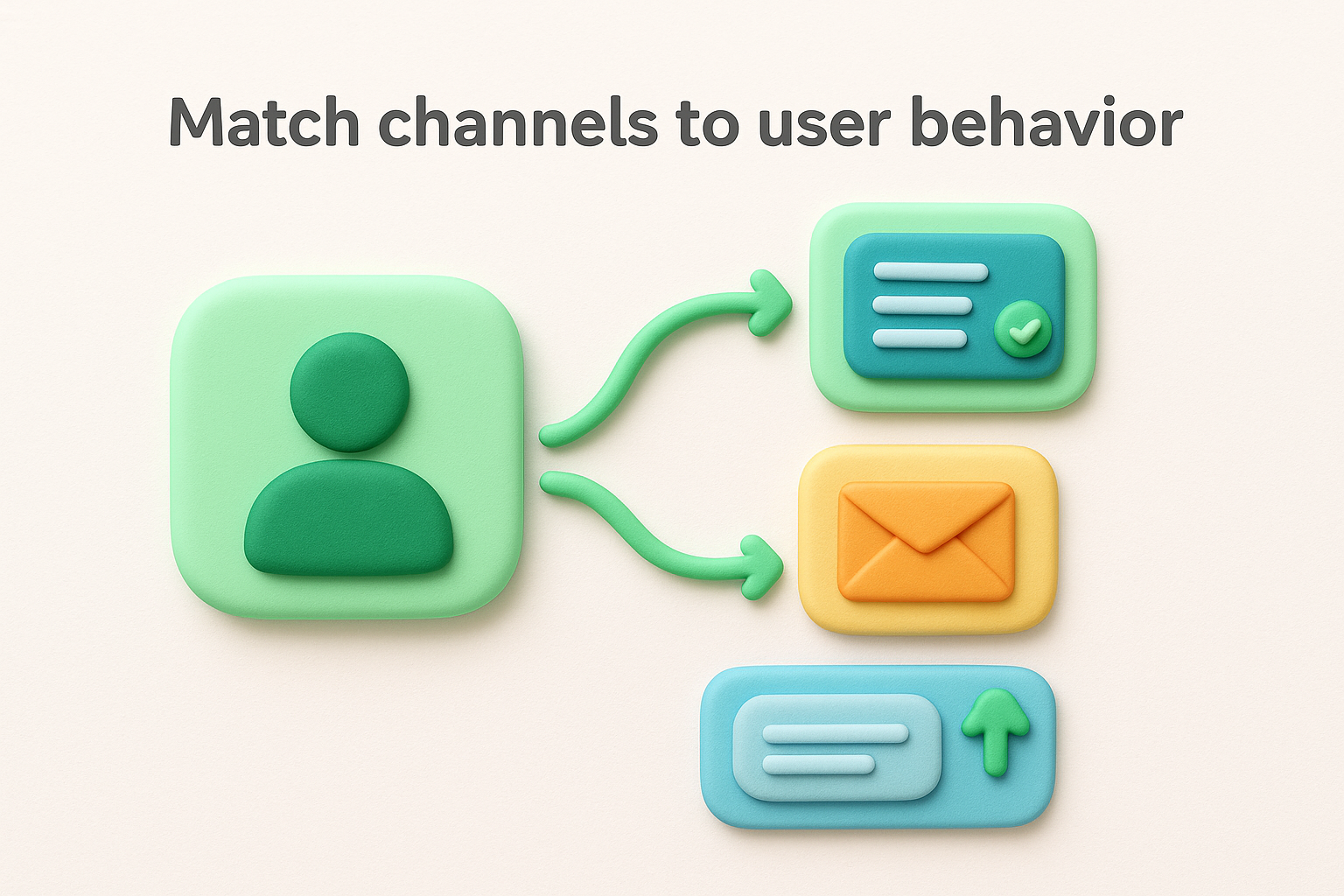
Consider these channel combinations based on product type:
Set up passive channels that collect feedback continuously without interrupting users. A public feedback board lets customers submit ideas anytime, while support ticket tagging captures pain points automatically. These channels generate steady data without survey fatigue. Active channels like NPS surveys or user interviews require direct asks but deliver richer context about the "why" behind requests. Your product feedback strategy needs both types to capture volume and depth.
Passive channels give you quantity; active channels give you the story behind the numbers.
Scattered feedback costs you insights. When support tickets live in Zendesk, feature requests hide in Salesforce, and survey responses sit in Google Sheets, nobody can connect the dots. You need one place where every piece of feedback lands, gets tagged with context, and becomes searchable. This single repository transforms random comments into patterns you can act on.
Choose a feedback management tool that captures input from all your channels. Your repository should automatically pull in support tickets, email responses, sales notes, and public board submissions. Each feedback item needs core data fields that make it useful: the user's name, company, plan tier, submission date, original message, and source channel. Without this context, you can't prioritize based on customer value or identify which segments want specific features.
Here's what to track for each feedback item:
Create a tagging system that groups similar feedback automatically. Use tags for product area (billing, dashboard, integrations), request type (bug, feature, improvement), and customer segment (enterprise, startup, trial). Consistent tags let you filter feedback instantly. Instead of reading 500 individual requests, you see "72 requests tagged billing + enterprise" and know where demand concentrates.
Review your tagged feedback weekly to identify trends. Sort by vote count to find popular requests. Filter by customer tier to see what your highest-value accounts want. Look for clusters where multiple tags overlap, like "integrations + enterprise + urgent." These patterns show you which features drive the most business impact. Your product feedback strategy succeeds when you can answer "how many customers want this?" with exact numbers instead of guesses.
Centralized feedback turns scattered opinions into quantifiable demand you can defend to stakeholders.
Once you've centralized and tagged your feedback, you face the hardest decision: what to build next. Your product feedback strategy needs a clear prioritization method that balances customer demand against business goals and technical feasibility. Then you communicate decisions back to users so they know their voice shaped your roadmap.
Create a scoring system that evaluates each feature request against multiple factors. Start with a simple formula that weights customer impact, strategic alignment, and effort. For example, score each request from 1-10 on customer value (how many users want it and their account tier), strategic fit (does it support your yearly goals), and implementation cost (developer weeks needed). Multiply value by fit, then divide by cost to get your priority score.
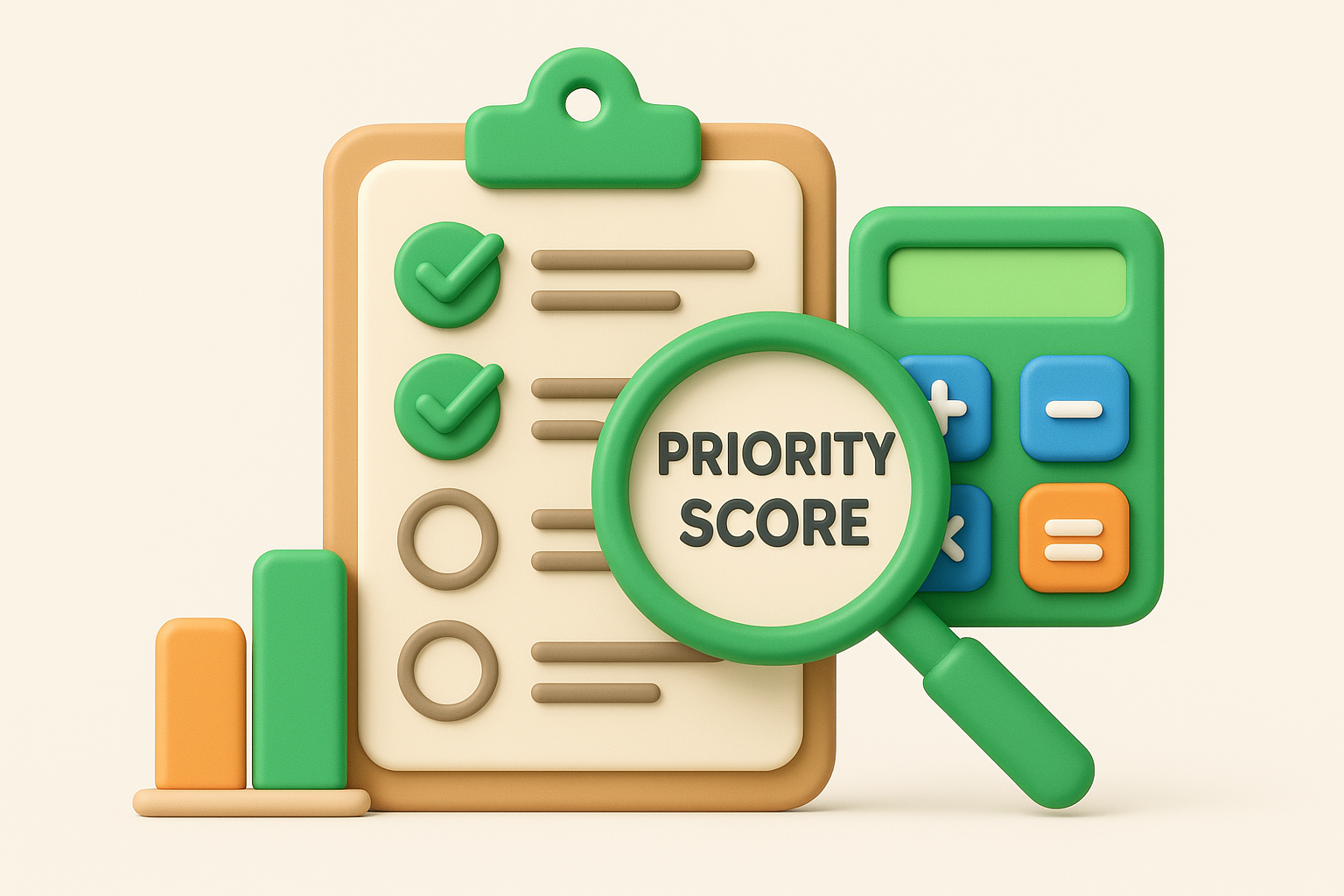
Here's a template you can adapt:
| Factor | Weight | Score (1-10) | Weighted Score |
|---|---|---|---|
| Customer demand | 3x | [votes/requests] | [calculation] |
| Strategic alignment | 2x | [fit with goals] | [calculation] |
| Implementation effort | -1x | [weeks needed] | [calculation] |
| Total Priority Score | [sum] |
Move high-priority items from your feedback repository to your public roadmap. Group features into three stages: planned (committed for next quarter), under consideration (validating demand), and shipped (recently released). Your roadmap becomes the single source of truth that shows users exactly what you're building and when. Update it monthly so customers stop asking "when will you build this?" because they can check your roadmap themselves.
Notify users when their requested features move to in progress or shipped status. Send automated emails to everyone who voted on an idea when you change its status. Thank them for the suggestion, explain your timeline, and share early access when available. This closes the loop and proves you listened, which drives future engagement and reduces duplicate requests.
When users see their feedback turn into shipped features, they become your most vocal advocates.
Your product feedback strategy works only when you implement it consistently. Start this week by picking your first feedback channel and setting up your central repository. Write down your three objectives and the metrics you'll track monthly. Then collect your first 20 feedback items and practice tagging them using the system you defined.
Review your tagged feedback at the end of week one. You'll spot patterns immediately, even with small data sets. Use those insights to score your top five requests using your prioritization framework. Share the results with your team and move one item to your roadmap.
Need a platform that handles collection, centralization, and roadmaps in one place? Koala Feedback gives you feedback boards, voting, automatic tagging, and public roadmaps so you can launch your complete product feedback strategy in hours instead of weeks. Your users get a voice, and you get the data to build what matters most.

Start today and have your feedback portal up and running in minutes.