Most teams treat design product innovation like a mysterious talent some companies just have. It isn't. It's a repeatable process built on watching how people actually struggle with your product, then designing solutions they didn't know to ask for. If you're stuck shipping the same incremental updates every quarter, the gap usually isn't creativity. It's a broken feedback loop between users and the people making roadmap decisions.
This article breaks down what innovation in product design actually requires: a system for capturing real user pain points, a way to prioritize which ideas deserve engineering time, and a process for testing concepts before you commit resources. You'll walk away with a clear framework instead of vague inspiration.
We'll also look at 8 examples of product innovation design done well, from physical products to SaaS features, so you can see these strategies applied in practice. Along the way, you'll notice a pattern: the companies pulling ahead aren't guessing. They're running structured feedback and prioritization processes, something tools like Koala Feedback are built to support directly.
Most SaaS teams collect feedback the hard way: scattered Slack threads, a support inbox nobody reads twice, and a spreadsheet someone updates once a quarter. That's the starting point Koala Feedback was built to fix, and it's the same starting point most product teams face when they try to practice design product innovation without a real system behind it.
Product teams weren't short on ideas from users. They were short on a way to organize those ideas into anything actionable. A feature request buried in an email thread carries the same weight as one repeated by fifty customers, unless someone builds a system that surfaces patterns. Without that system, prioritization decisions default to whoever complains loudest or whichever exec sat in the last meeting, not the features that would actually move retention or revenue.
Koala Feedback approaches this as an information design problem first, not a database problem. It gives every business a public feedback portal where users submit ideas directly, then automatically groups similar submissions so duplicate requests collapse into one trackable item instead of ten disconnected ones. Voting and comments let users signal demand without a product manager chasing them down for input.
That structure feeds directly into prioritization boards, where teams organize requests by product area and weigh them against effort and impact. Once a decision gets made, a customizable public roadmap communicates it back, with statuses like planned, in progress, and completed keeping users informed without a single status-update meeting.
Good product innovation design isn't about generating more ideas. It's about building a system that tells you which ideas actually matter.
Here's how the pieces work together:
| Feature | What it replaces | Outcome |
|---|---|---|
| Feedback portal | Scattered emails and support tickets | One centralized source of user input |
| Automatic categorization | Manual spreadsheet sorting | Duplicate requests merged, patterns visible |
| Voting and comments | Guesswork on demand | Data-backed prioritization signals |
| Public roadmap | Ad hoc status updates | Transparent, ongoing user communication |
Innovation rarely starts with a brilliant, unprompted idea. It starts with listening infrastructure that turns raw complaints into a ranked list of problems worth solving. Teams that build this infrastructure early stop debating whose opinion should drive the roadmap and start pointing to data instead. If you're serious about innovation product design as an ongoing practice rather than a one-time sprint, the feedback loop has to run continuously, not just when someone remembers to ask users what they think.
Fitbit didn't invent the pedometer, but it turned a niche fitness accessory into a mainstream habit-tracking device. Before Fitbit, step counters existed mostly in clinical or athletic settings, clunky, unattractive, and disconnected from any broader picture of health. The bigger opportunity wasn't the hardware. It was making everyday people care about data they'd never tracked before.
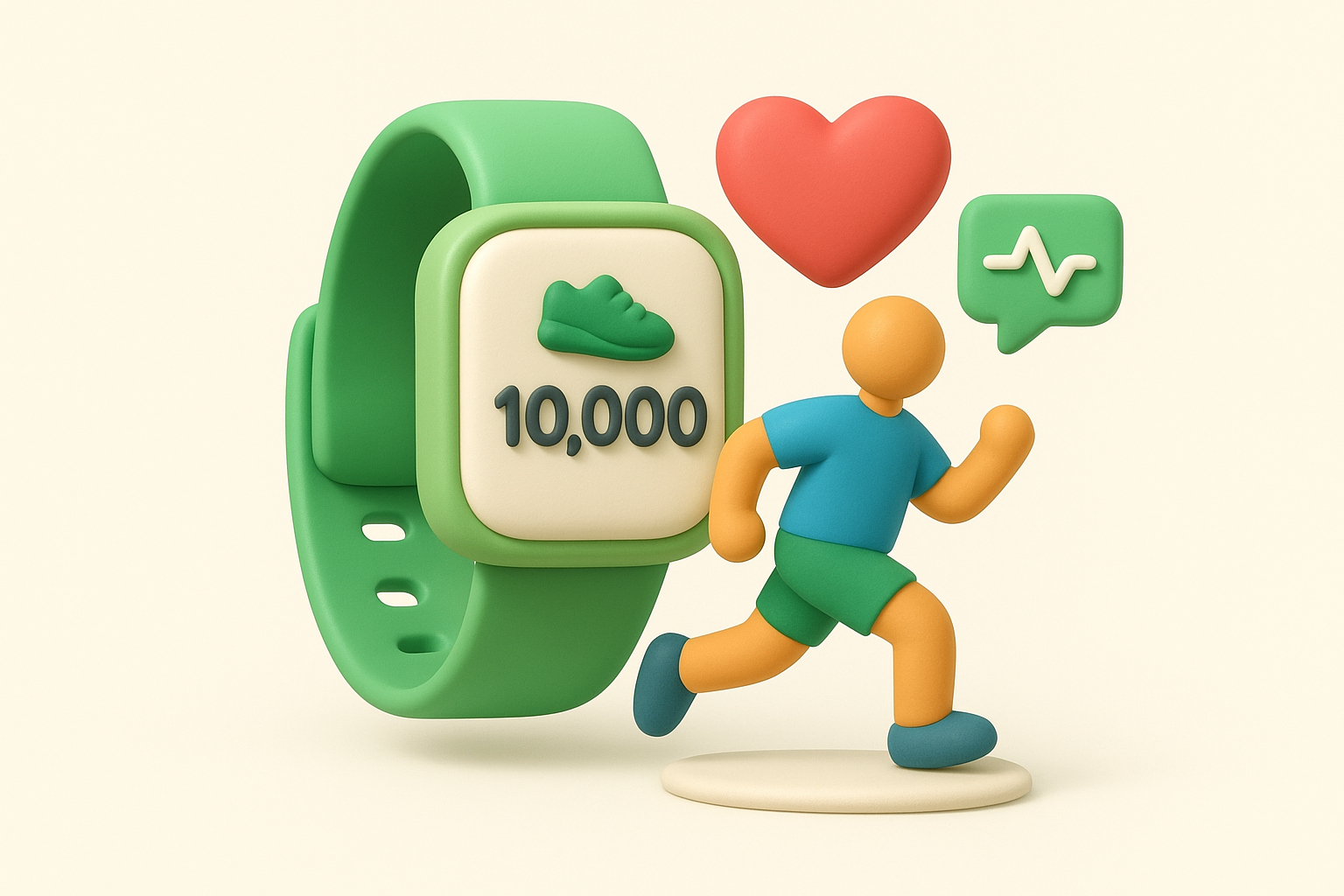
Getting people to exercise consistently is hard, but getting them to notice how inactive they are is harder. Most people had no visibility into their daily movement, sleep quality, or heart rate trends. Fitness trackers that existed were built for athletes, not for someone trying to hit 10,000 steps between meetings. That gap between wanting to be healthier and having no feedback loop to act on is exactly the kind of problem design product innovation is meant to close.
Fitbit's team designed for behavior change, not just data collection. They paired a simple wearable with an app that translated raw numbers into streaks, badges, and social challenges. Suddenly step counts weren't just data, they were a game with friends watching your progress. This is innovation design product thinking applied to habit formation: the hardware mattered less than the motivational layer built on top of it.
The real innovation wasn't the sensor. It was turning a number on a screen into a reason to move.
Data alone rarely changes behavior. Presentation does. If your product collects information users don't understand or act on, you're leaving the actual innovation on the table. Ask what your data means to the person looking at it, then design the interface around that meaning, not just the metric.
Airbnb's founders weren't hospitality experts. They were designers trying to solve their own problem: too much rent, not enough cash, and spare air mattresses on the floor. The bigger challenge they stumbled into had nothing to do with mattresses. It was convincing strangers to sleep in each other's homes, a trust problem no booking engine had ever needed to solve at scale.
Before Airbnb, staying in a stranger's home sounded reckless to most travelers, and renting to strangers sounded worse to homeowners. Hotels solved trust with brand consistency and a front desk. Airbnb had neither. Early growth stalled because listings with grainy photos and vague descriptions gave people nothing to base a decision on. This is a design innovation product problem at its core: how do you manufacture confidence between two people who've never met?
Airbnb's team famously flew to New York and photographed listings themselves, replacing amateur snapshots with professional images that made spaces feel real and safe. That was just the visible fix. Behind it, they built verified profiles, two-way reviews, and secure payment handling so both hosts and guests had something to lose by behaving badly. Innovation in product design here wasn't a new feature category, it was rebuilding the entire trust layer that hospitality depends on, using design and data instead of a brand name.
Trust isn't a feature you add later. It's the product you're actually designing.
If your product asks users to take a risk, whether that's payment, personal data, or letting a stranger into their home, trust has to be engineered deliberately. Look for the moment in your user journey where hesitation peaks, then design specifically for that moment instead of assuming good UX elsewhere will cover it.
James Dyson didn't set out to build a design icon. He set out to fix a vacuum cleaner that kept losing suction, and he did it by testing 5,127 prototypes before landing on one that worked. That kind of stubbornness is rare, but it's also the clearest example of what disciplined design product innovation looks like when it's driven by engineering, not aesthetics.
Standard vacuums relied on bags that clogged with dust, choking airflow and killing suction within minutes of use. Everyone accepted this as normal. Manufacturers kept selling bags instead of solving the actual mechanical failure, because replacement bags were profitable. Dyson treated the clogging itself as the real problem, not a quirk customers should just tolerate.
Dyson borrowed cyclonic separation technology from industrial sawmills and miniaturized it for home use, spinning air fast enough to fling dust particles out without a bag at all. Getting there took thousands of failed prototypes, each one a small adjustment to airflow, chamber shape, or motor speed. This is innovation design product thinking at its most patient: no single breakthrough moment, just relentless iteration until the mechanism finally held up.
Real engineering innovation rarely arrives in one leap. It arrives after thousands of small, boring failures.
Dyson later applied the same iterative approach to hand dryers, hair tools, and air purifiers, treating each product category as another airflow problem to re-engineer from scratch.
Breakthroughs usually hide behind a problem everyone else has stopped questioning. Look at the parts of your product users complain about but seem to accept as unavoidable, then commit to testing enough variations to actually fix it. Iteration isn't a consolation prize for lacking a big idea. It's often the only path to one.
Car companies used to treat the vehicle as a finished product the moment it left the factory. Tesla treated it as a platform that keeps improving after the sale. That shift, more than the electric motor, is the piece of design product innovation that legacy automakers still struggle to copy.
Traditional cars shipped with fixed software, fixed features, and no way to improve after purchase. Fix a bug or add a capability, and owners waited for the next model year or a dealership recall. Meanwhile, smartphones had trained an entire generation to expect regular updates that made their devices better over time. Cars fell behind that expectation fast, and nobody in the auto industry treated it as urgent.
Tesla built its cars around a central software architecture instead of dozens of disconnected electronic control units. That single decision made over-the-air updates possible: new features, performance tweaks, and safety fixes install overnight without a service visit. This is innovation product design applied at the architecture level, not the surface level. The dashboard, the autopilot behavior, even acceleration profiles can change through a software push, something the National Highway Traffic Safety Administration has documented as it tracks Tesla's remote recall updates (NHTSA).
The car that gets better after you buy it beats the car that's already finished.
Physical constraints don't have to define your product's lifespan. If any part of your offering can be improved through software after the sale, build the architecture that allows it now, not after competitors make it the expectation. Customers increasingly judge products by how much they'll improve, not just how good they are on day one.
Managing multiple prescriptions used to mean juggling orange bottles, squinting at dosing schedules, and hoping you didn't miss a pill during a busy week. PillPack looked at that daily mess and asked a simple question: why does the pharmacy hand you the problem to solve instead of solving it for you? That question turned into one of the more practical examples of design product innovation in healthcare.
Patients on five or more medications faced a real adherence problem, not because they didn't care, but because the packaging gave them no help. Bottles arrived on different refill schedules, with different labels, and zero guidance on which pills to take together. Missed doses weren't a willpower failure. They were a design failure baked into how pharmacies had packaged medication for decades.
PillPack sorted medications into individual packets labeled with the exact date and time to take them, synced every prescription to a single refill cycle, and shipped everything to the customer's door. This is innovation design product thinking applied to a system nobody had questioned in years: the packet, not the pill, was the actual product they redesigned. Amazon recognized the value quickly, acquiring PillPack in 2018 to fold pharmacy delivery into its broader logistics network (Amazon).
Sometimes the biggest innovation isn't the product inside the box. It's the box.
Look at the parts of your product experience that feel like someone else's problem to manage. If users are stitching together information from multiple sources just to use your product correctly, that stitching is your opportunity. Redesign the delivery, not just the feature.
Most laptops are sealed boxes. Crack one open and you void the warranty, and good luck sourcing a replacement screen or battery six years later. Framework looked at that throwaway cycle and built a laptop meant to be opened, upgraded, and repaired for a decade instead of replaced every three years. It's one of the more literal examples of design product innovation applied to an industry that profits from planned obsolescence.
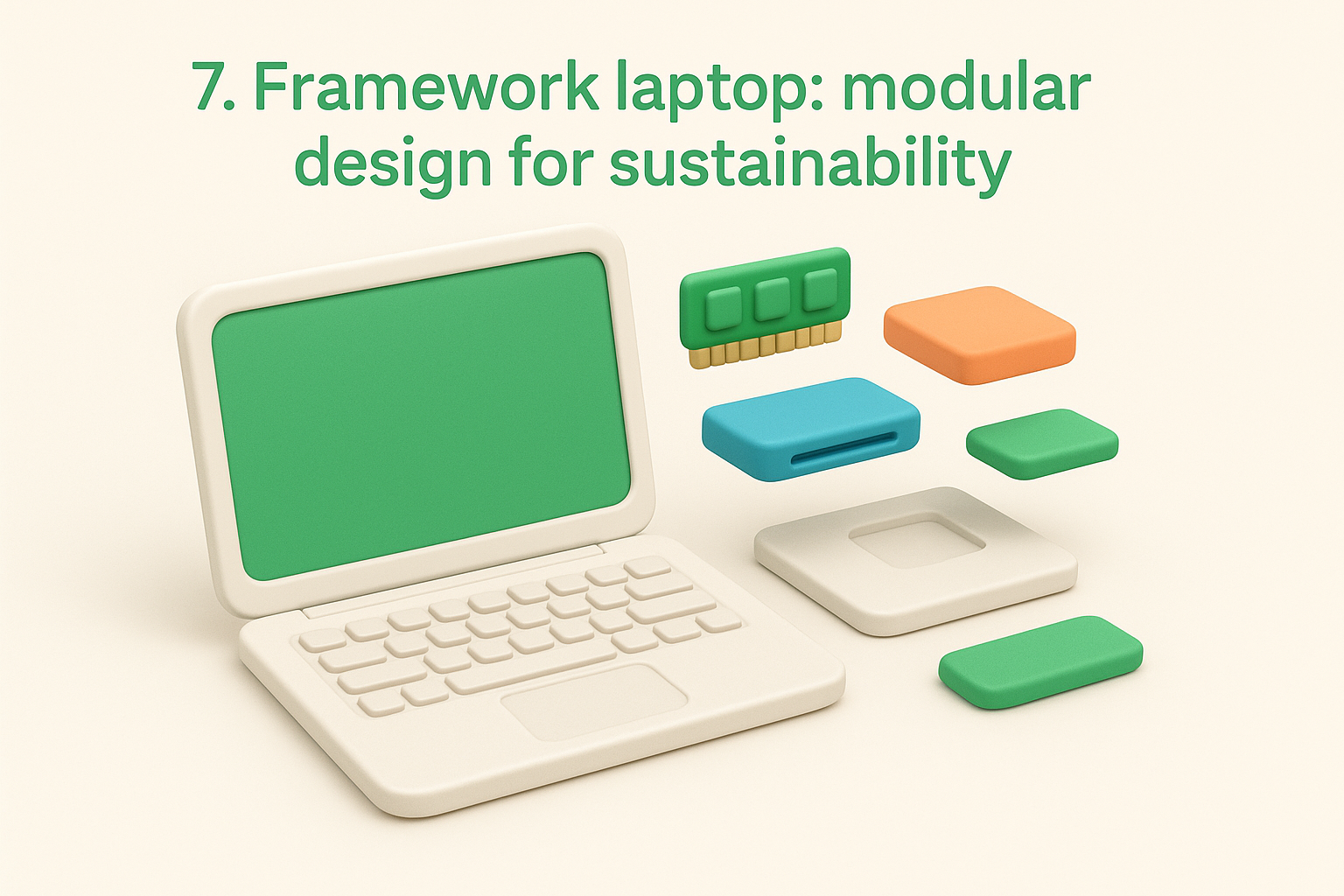
Electronics manufacturers design for margins, not longevity. A cracked screen or a dying battery usually means buying a whole new laptop, because parts aren't available and repairs aren't economical. That model generates enormous e-waste and locks customers into upgrade cycles they didn't ask for. Framework's founders saw a repairability gap nobody in consumer electronics was addressing, and treated it as a design brief rather than an unfortunate cost of doing business.
Framework built a laptop with modular components: keyboard, ports, RAM, storage, even the mainboard, all swappable with standard screwdrivers and no proprietary adhesive. Buyers choose expansion cards for USB-C, HDMI, or extra storage and rearrange them as needs change. This is innovation in product design working against the industry's default incentives, proving a laptop can be profitable without being disposable.
A product built to be opened lasts longer than one built to be replaced.
Sustainability sells when it's paired with genuine practicality, not just marketing language. Framework didn't ask customers to sacrifice performance for repairability; it gave them both. If your product category treats obsolescence as inevitable, examine whether that's a real constraint or just an assumption nobody has challenged since the category was invented.
Language apps existed long before Duolingo, but most of them felt like homework with a login screen. Duolingo looked at that dropout problem and rebuilt the experience around a simple insight: people stick with things that feel like games, not chores. It's a clean example of design product innovation solving a motivation problem, not a content problem.
Learning a new language takes months of daily practice, and most learners quit within the first few weeks. Traditional courses front-loaded grammar rules and vocabulary lists, then left learners to grind through drills with no feedback loop and no sense of progress. The content wasn't the barrier. Staying motivated long enough to see results was, and nobody had designed for that specific failure point.
Duolingo built streaks, XP points, leaderboards, and friendly reminder nudges directly into the core experience, turning daily practice into something closer to a habit loop than a study session. Short lessons that take five minutes lowered the barrier to starting, while progress bars and league rankings gave learners a reason to come back tomorrow. This is innovation design product thinking focused entirely on retention mechanics, borrowed from gaming rather than education.
People don't quit because language is hard. They quit because nothing keeps them coming back.
If your product requires sustained effort over weeks or months, retention design matters as much as the core value you're delivering. Look at where users drop off, then ask what would make tomorrow's session feel worth returning for. Sometimes the innovation isn't a new feature at all, it's borrowing motivation mechanics from an entirely different industry.
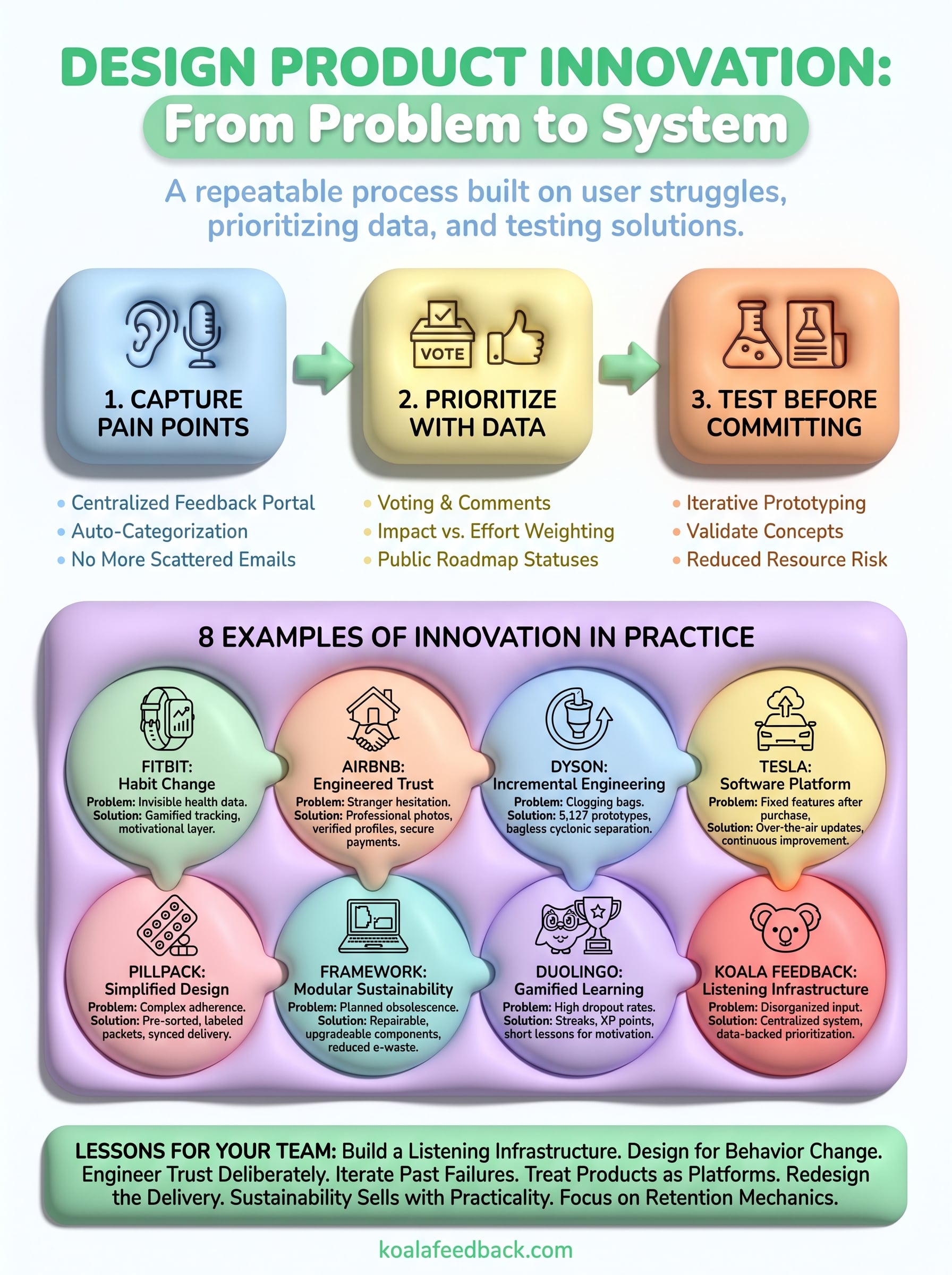
Every example here started the same way: someone noticed a problem users had stopped questioning, then built a system to fix it instead of guessing at a solution. That's the real throughline behind design product innovation. Fitbit made data motivating, Airbnb engineered trust, Dyson iterated past thousands of failures, and Koala Feedback turned scattered complaints into a ranked list of what to build next. None of it happened by accident, and none of it required a genius idea nobody had thought of before.
Your product almost certainly has a version of this problem already sitting in your support inbox or a half-updated spreadsheet. The gap isn't inspiration. It's infrastructure. Give users a real channel to surface what's broken, let patterns emerge instead of guessing, and prioritize based on data instead of whoever spoke up last. If you want that system running this week instead of next quarter, try Koala Feedback free and see what your users have been trying to tell you.

Start today and have your feedback portal up and running in minutes.