You know your product needs to evolve. User needs shift. Competitors move faster than expected. Your roadmap fills with requests that pull your team in every direction. Without a clear process to guide product innovation, you end up guessing which features matter most or building things nobody asked for.
This article breaks down 11 product innovation best practices that product teams actually use to build better products. You'll learn how to collect and prioritize feedback, validate ideas before building, structure your discovery process, and keep users informed about progress. Each practice includes specific frameworks and tools you can apply right away. Whether you're launching your first feature or refining an established product, these methods help you make decisions backed by real user input instead of assumptions.
You can't innovate effectively when feedback sits scattered across email threads, support tickets, and Slack messages. Product innovation best practices start with creating a single source of truth for all user input. When you centralize feedback, you gain visibility into what users actually need instead of relying on the loudest voice in the room or the latest request that landed in your inbox.
This practice requires you to capture every piece of user feedback in one platform where your team can access, organize, and analyze it. You create a dedicated space where users submit ideas, vote on features they care about, and see what others have requested. Centralization eliminates duplicate work because you can automatically group similar requests and spot patterns that reveal which problems affect the most users.
Start by setting up a feedback portal that users can access directly from your product. You want to make submission frictionless so users don't abandon the process halfway through. Configure automatic categorization to sort incoming feedback into logical groups based on product areas or feature types. Enable voting so users can signal which ideas matter most to them. Review your centralized feedback weekly to identify trends and update request statuses so users know you're listening.
Centralizing feedback transforms scattered complaints into actionable product strategy.
Koala Feedback provides the core infrastructure you need to centralize user input. You get a customizable portal, automatic deduplication, voting systems, and prioritization boards that organize feedback by product area. The platform connects directly to your roadmap so you can move requests from idea to implementation without switching tools.
You can't build innovative products by brainstorming in a conference room and hoping your ideas stick. Product innovation best practices demand that you root every decision in actual customer problems. When you start with real user pain points instead of feature requests, you understand the underlying need rather than just implementing surface-level solutions. This approach prevents you from building features that look impressive but solve nothing meaningful.
This practice means you dig beneath feature requests to uncover the problems users are trying to solve. When someone asks for a specific button or integration, you need to understand why they want it and what outcome they're seeking. You focus on the job the user needs to complete rather than the solution they've imagined. This shift in perspective opens up multiple ways to address their actual need, many of which might work better than their initial suggestion.
Start your discovery by asking "why" multiple times when you review feedback. You want to understand the context surrounding each request and the frequency of the problem. Interview users who submitted similar feedback to learn how they currently work around the issue. Document the core problem statement in language that describes the user's struggle without proposing a solution. Share these problem statements with your team so everyone aligns on what you're solving before you discuss how to build it.
Understanding the problem transforms feature factories into solution engines.
The Jobs to be Done framework helps you identify what users are hiring your product to accomplish. You ask questions about the circumstances that prompt users to seek a solution, the outcome they want, and the constraints they face. Problem statement templates structure your thinking by forcing you to describe who experiences the problem, what they're trying to do, and why current approaches fail.
You need a repeatable process to guide your team from customer insight to validated solution. Structured discovery frameworks give you that process. When you follow a framework, you avoid skipping critical steps like validating assumptions before building or exploring multiple solutions before committing to one. Product innovation best practices include choosing frameworks that match your team's maturity and the complexity of the problem you're solving.
This practice requires you to adopt a methodology that breaks discovery into clear phases with specific activities and outputs for each stage. You move systematically through understanding the problem, generating potential solutions, and validating your direction with users. Frameworks prevent you from jumping straight to implementation before you've explored the problem space thoroughly. They create checkpoints where you assess whether you have enough evidence to move forward or need to gather more insight.
Choose a framework that fits your team's workflow and stick with it for at least three cycles before switching. Map out the specific activities you'll complete in each phase, such as user interviews during discovery or prototype testing before development. Assign clear ownership for each phase and set timeline expectations so discovery doesn't drag on indefinitely. Document your findings at each stage so future team members can understand the reasoning behind product decisions.
Structured frameworks transform random innovation attempts into predictable discovery processes.
The Opportunity Solution Tree helps you map customer outcomes to specific opportunities and solution options. Design Thinking provides five phases (empathize, define, ideate, prototype, test) that guide you through human-centered problem solving. The Double Diamond framework structures your work into four distinct stages that alternate between divergent exploration and convergent decision-making.
You can't pursue every idea that comes through your feedback system. Product innovation best practices demand that you make explicit choices about which opportunities to tackle first and communicate those decisions transparently. A clear roadmap shows users what you're building, when you plan to ship it, and why certain features take priority over others. When you share your priorities publicly, you manage expectations and demonstrate that you're actively working on the problems users care about.
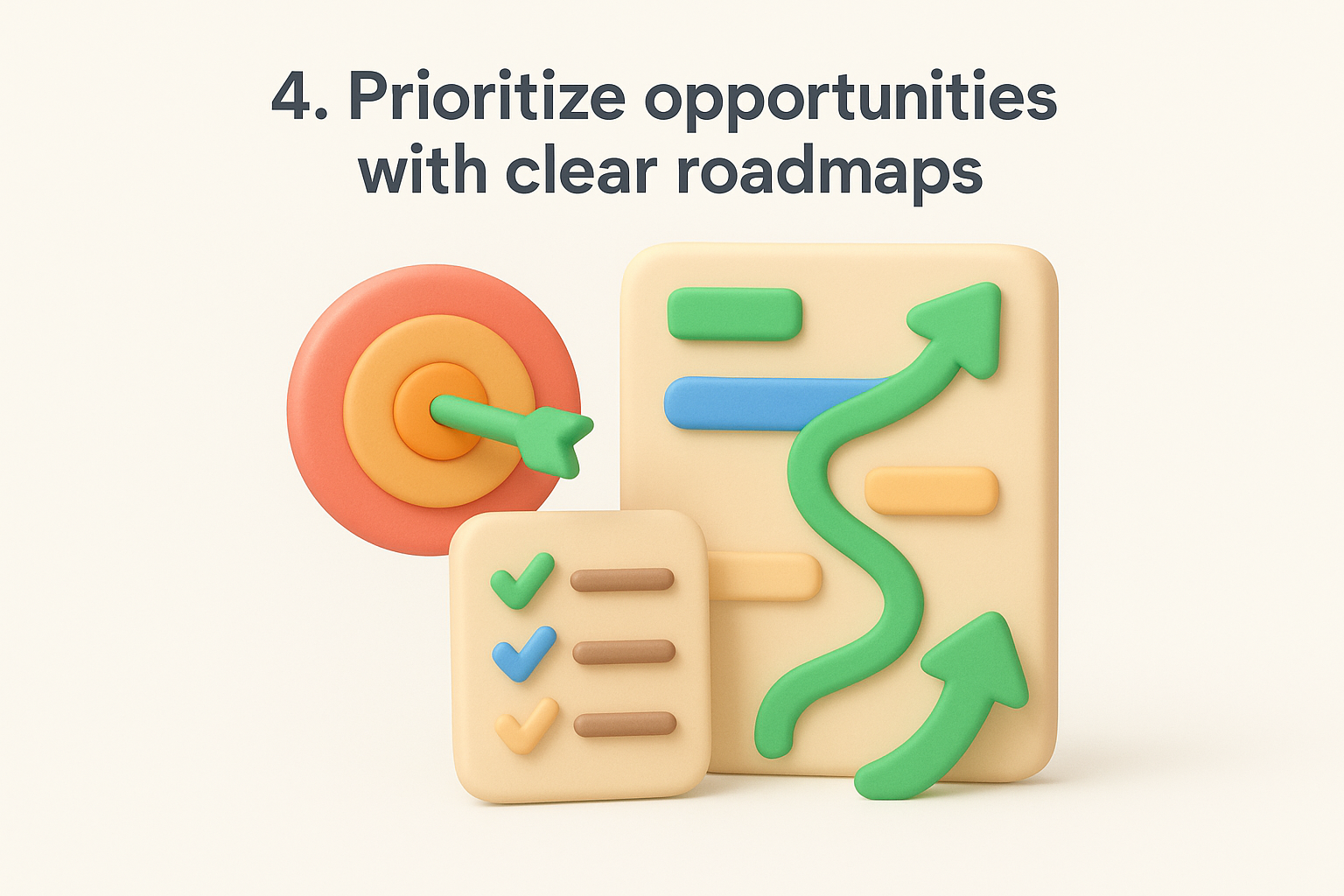
This practice requires you to evaluate each opportunity against criteria like user impact, strategic alignment, technical feasibility, and resource requirements. You rank opportunities based on objective scoring rather than gut feeling or political pressure. Roadmaps translate your prioritization decisions into a visual timeline that shows planned, in progress, and completed work. You update roadmap status regularly so users can track progress and understand where their feedback landed in your queue.
Create a scoring framework that assigns numerical values to factors like number of users affected, revenue potential, and alignment with company goals. Apply this framework consistently to every opportunity so you can compare requests objectively. Build your roadmap in quarterly or monthly increments with clear status labels that indicate development stage. Share the public roadmap with users through your feedback portal and link directly to the original feedback requests so people can see their input in action.
Transparent roadmaps transform frustrated users into patient partners who trust your process.
RICE scoring (Reach, Impact, Confidence, Effort) helps you quantify the value of each opportunity relative to the work required. MoSCoW prioritization categorizes features into Must-have, Should-have, Could-have, and Won't-have buckets. Koala Feedback connects your prioritization boards directly to customizable roadmaps with status updates that automatically notify users when you ship their requested features.
You waste time and money building features that miss the mark when you skip validation. Lean experiments let you test your assumptions before you commit significant resources to development. Product innovation best practices include running small, fast experiments that prove or disprove your hypotheses about user behavior and solution effectiveness. When you validate ideas early, you catch problems when they're cheap to fix rather than after you've shipped code that nobody uses.
This practice means you design tests that answer specific questions about whether users will adopt your solution and whether it solves their problem. You create experiments with clear success criteria defined upfront so you know exactly what evidence you need to proceed. Each experiment targets one key assumption like "users will click this button" or "this workflow reduces completion time by 30%." You keep experiments small and quick so you can run multiple iterations in the time it would take to build a full feature.
Write down your riskiest assumptions about user behavior or solution viability for each opportunity on your roadmap. Design experiments that test these assumptions with minimal effort, such as fake door tests that measure interest or landing pages that gauge demand. Set specific success metrics and thresholds before you start, like "20% of users click through" or "50% complete the workflow." Run your experiment for a defined period, analyze the results, and decide whether to proceed, pivot, or stop based on the data you collected.
Small experiments prevent large failures by revealing what users actually do instead of what you hope they'll do.
Hypothesis templates structure your thinking by forcing you to state what you believe, why you believe it, and how you'll measure success. A/B testing platforms let you compare different approaches with real users to see which performs better.
You can't know if your solution works until real users interact with it. Building high-fidelity features before testing wastes development resources on ideas that fail basic usability checks. Prototypes let you learn quickly by putting rough versions of your solution in front of users before you write production code. When you test early, you catch design flaws, confusing workflows, and misaligned expectations when they're trivial to fix instead of after you've invested weeks in development.
This practice requires you to create low-fidelity representations of your solution that users can interact with and provide feedback on. You build just enough to test your core assumptions about how users will navigate the feature and whether it solves their problem. Prototypes range from paper sketches to clickable wireframes to functional demos that mimic real behavior without backend systems. You test these prototypes with actual users in their work environment to observe how they respond to your design choices.
Start with paper sketches or basic wireframes that show the key screens and user flows you plan to build. Recruit users who submitted related feedback and schedule 30-minute testing sessions where they complete specific tasks using your prototype. Watch for confusion points, navigation issues, and terminology problems that indicate your design doesn't match their mental model. Iterate on your prototype based on feedback before moving to development.
Early testing transforms expensive development mistakes into cheap prototype adjustments.
Figma provides collaborative prototyping with clickable interactions that simulate real product behavior. Paper prototyping requires only sketches and sticky notes but reveals fundamental usability issues quickly. Usability testing frameworks guide you through task design, observation techniques, and feedback collection methods that extract actionable insights from user sessions.
You can't improve what you don't measure. Shipping features without instrumentation leaves you blind to whether your product innovation actually solves user problems. Tracking the right metrics tells you if users adopt new functionality, complete critical workflows, and achieve the outcomes you designed for. When you instrument your product properly, you catch performance issues, identify drop-off points, and gather evidence that informs your next round of innovation decisions.
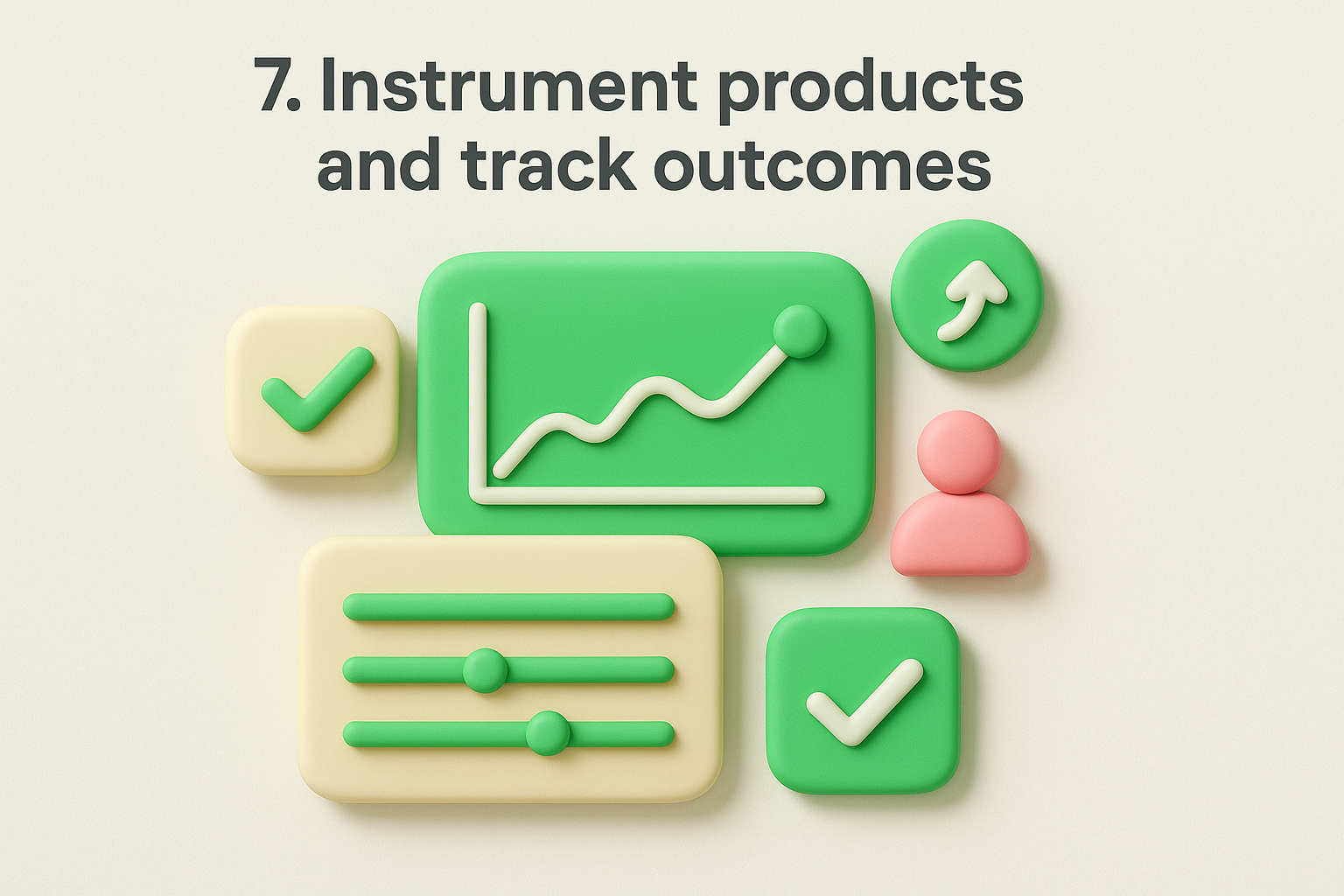
This practice requires you to embed tracking throughout your product that captures user interactions, feature usage, and outcome completion. You define specific metrics before launch that align with the goals you set for each feature. Instrumentation goes beyond vanity metrics like page views to measure meaningful behaviors such as task completion rates, time to value, and return usage patterns. You create dashboards that surface this data so your team can monitor product health and spot problems immediately after release.
Identify the critical user actions that indicate success for each feature you build, such as completing a workflow or achieving a specific result. Implement tracking for these actions using analytics tools that capture events without slowing down your product. Set up automated alerts that notify you when metrics fall outside expected ranges or when error rates spike. Review your dashboards weekly to assess whether shipped features deliver the outcomes you predicted and use this data to guide decisions about iteration or deprecation.
Metrics transform opinions about product success into evidence-based decisions.
Event tracking systems capture specific user actions like button clicks, form submissions, and feature activations. The HEART framework (Happiness, Engagement, Adoption, Retention, Task Success) helps you choose metrics that reflect true product health rather than superficial activity. Cohort analysis reveals how different user groups respond to new features over time, showing you whether initial adoption translates into sustained usage.
You risk stagnation if you only pursue incremental improvements, and you risk chaos if you chase only radical innovations. Product innovation best practices include maintaining a balanced portfolio that allocates resources across different types of innovation. When you balance your portfolio, you deliver quick wins that keep users satisfied while investing in breakthrough ideas that position your product for long-term growth. This approach prevents you from becoming irrelevant to competitors who innovate at different speeds and scopes.
This practice means you categorize opportunities based on how much change they require from users and how much value they create. You divide your innovation efforts into core improvements that enhance existing features, adjacent innovations that expand into new use cases, and transformational bets that could redefine your product category. Each category demands different resources and timelines, so you allocate your capacity proportionally rather than letting one type dominate your roadmap. You monitor your portfolio regularly to ensure you maintain the right balance between safe bets and ambitious swings.
Map every opportunity on your roadmap to an innovation category based on scope and risk level. Allocate roughly 70% of your capacity to core improvements, 20% to adjacent innovations, and 10% to transformational projects. Review your portfolio quarterly to verify you're maintaining this balance and adjust if you've drifted too far toward safety or risk. Track outcomes separately for each category so you can assess whether your transformational bets justify the investment and whether your core improvements maintain user satisfaction.
Portfolio balance transforms volatile innovation efforts into predictable product growth.
The Three Horizons model helps you categorize opportunities based on time to impact and market maturity. Innovation matrices plot ideas on axes of risk versus reward to visualize where you're concentrating effort.
You can't innovate effectively when product, engineering, and design work in separate silos with misaligned priorities. Cross functional teams bring together the diverse skills needed to move from customer problem to shipped solution without handoffs that slow progress and dilute intent. When you structure teams around outcomes rather than functional departments, you eliminate the coordination overhead that kills momentum and create accountability for results instead of just completing assigned tasks.
This practice requires you to assemble small teams that include product management, engineering, design, and any other functions critical to delivery. You assign these teams ownership of specific customer outcomes or product areas so they can make decisions without escalating to leadership for approval on every detail. Each team operates with autonomy within guardrails you establish around strategy, architecture, and user experience standards. Members stay together long enough to build deep context about their domain and the users they serve.
Start by mapping your product into logical domains based on user workflows or feature categories. Form teams of five to nine people that include at minimum a product manager, designer, and engineers. Give each team clear outcome-based goals like reducing time to complete a workflow or increasing feature adoption rather than just shipping a list of features. Co-locate teams when possible and create dedicated communication channels that keep the team aligned without pulling in the entire organization.
Cross functional teams transform slow sequential handoffs into fast parallel collaboration.
The Spotify model provides patterns for organizing autonomous squads that align through tribes and chapters. Team topologies help you structure teams based on cognitive load and communication patterns that optimize for flow.
You face dozens of frameworks that promise to guide your innovation work, but applying the wrong one wastes time and creates confusion. Different problems demand different approaches, and forcing every situation through the same framework leads to shallow analysis and misguided solutions. Product innovation best practices include matching your framework to the complexity of the problem, your team's experience level, and the stage of discovery you're in. When you choose thoughtfully, frameworks accelerate progress instead of adding bureaucratic overhead.
This practice requires you to evaluate frameworks based on context rather than defaulting to whatever approach you used last time. You assess whether the problem involves mostly known factors that need optimization or unknown variables that demand exploration. Frameworks that work for incremental feature improvements often fail when you're tackling transformational innovations that require reimagining core workflows. You need to match the tool to the job rather than bending every problem to fit your favorite methodology.
Start by characterizing the problem you're solving in terms of uncertainty, complexity, and stakeholder alignment. Choose lightweight frameworks like RICE scoring for straightforward prioritization decisions and more comprehensive approaches like Design Thinking when you need to deeply understand user needs. Avoid framework stacking where you try to use multiple methodologies simultaneously, which creates confusion about which steps matter. Train your team on two or three core frameworks so everyone can execute them properly instead of superficially applying ten different methods.
The right framework clarifies your path forward while the wrong one adds complexity without insight.
The Cynefin framework helps you categorize problems as simple, complicated, complex, or chaotic so you can select appropriate decision-making approaches. Framework selection matrices compare different methodologies based on factors like team size, problem complexity, and time constraints to guide your choice.
You collect feedback and build features based on user input, but many teams forget the final critical step of telling users what happened to their requests. Closing the loop means updating users when you ship features they asked for and showing them how their feedback shaped your product decisions. When you share progress transparently, you transform one-time feedback contributors into engaged advocates who trust your development process and continue providing valuable input. Product innovation best practices include making feedback loops visible so users see their impact on your roadmap.
This practice requires you to notify users when their feedback status changes from planned to in progress to completed. You connect shipped features back to the original feedback requests that inspired them so users can see the direct line between their input and your product improvements. Closing the loop proves you listen instead of just collecting feedback into a black hole where requests disappear without acknowledgment. You create a virtuous cycle where users provide better feedback because they see you act on it consistently.
Configure automatic notifications that alert users when feedback they submitted or voted on moves to a new status on your roadmap. Write release notes that reference specific feedback requests and thank users who contributed to shaping each feature. Update your public roadmap immediately after shipping so users can track progress without asking for status updates. Send targeted emails to users who requested completed features, inviting them to try the new functionality and provide additional feedback on whether it solved their problem.
Transparent progress updates transform skeptical users into loyal partners who champion your product.
Koala Feedback automates status notifications when you move feedback through your roadmap stages, keeping users informed without manual work. Release notes templates structure your communication to highlight user contributions and link directly to the feedback that drove each feature. Public changelog tools display your shipping velocity and demonstrate consistent progress on user priorities.
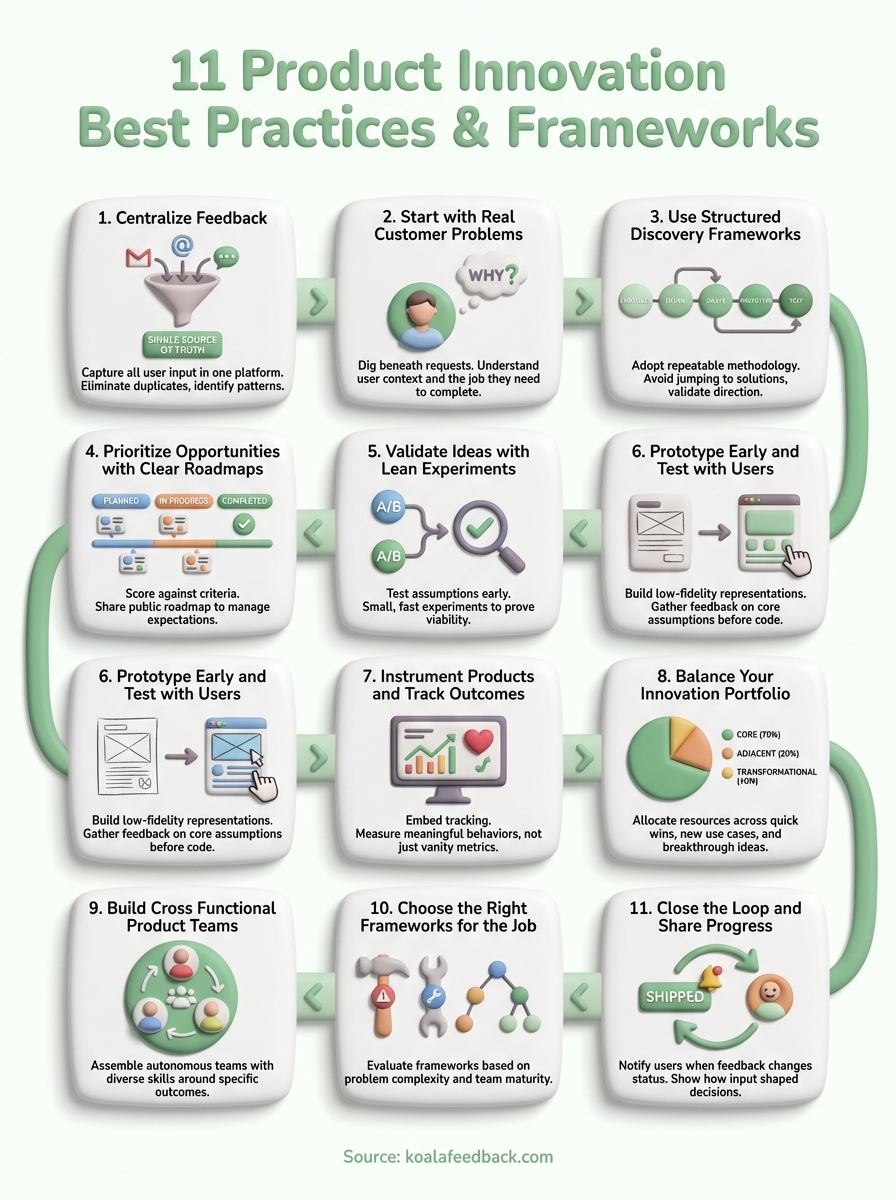
You now have 11 product innovation best practices that transform scattered feedback into strategic decisions. These frameworks give you the structure to collect user input, validate assumptions, and ship features that solve real problems. Applying even three or four of these practices will improve how your team prioritizes work and communicates progress.
Start by centralizing your feedback so you can see patterns across all user requests. Koala Feedback provides the portal, prioritization boards, and public roadmap you need to implement these best practices without building custom systems. Pick the frameworks that match your current challenges and add more as your process matures. Your users will notice when you respond to their input with transparent roadmaps and consistent updates about the features they requested.

Start today and have your feedback portal up and running in minutes.